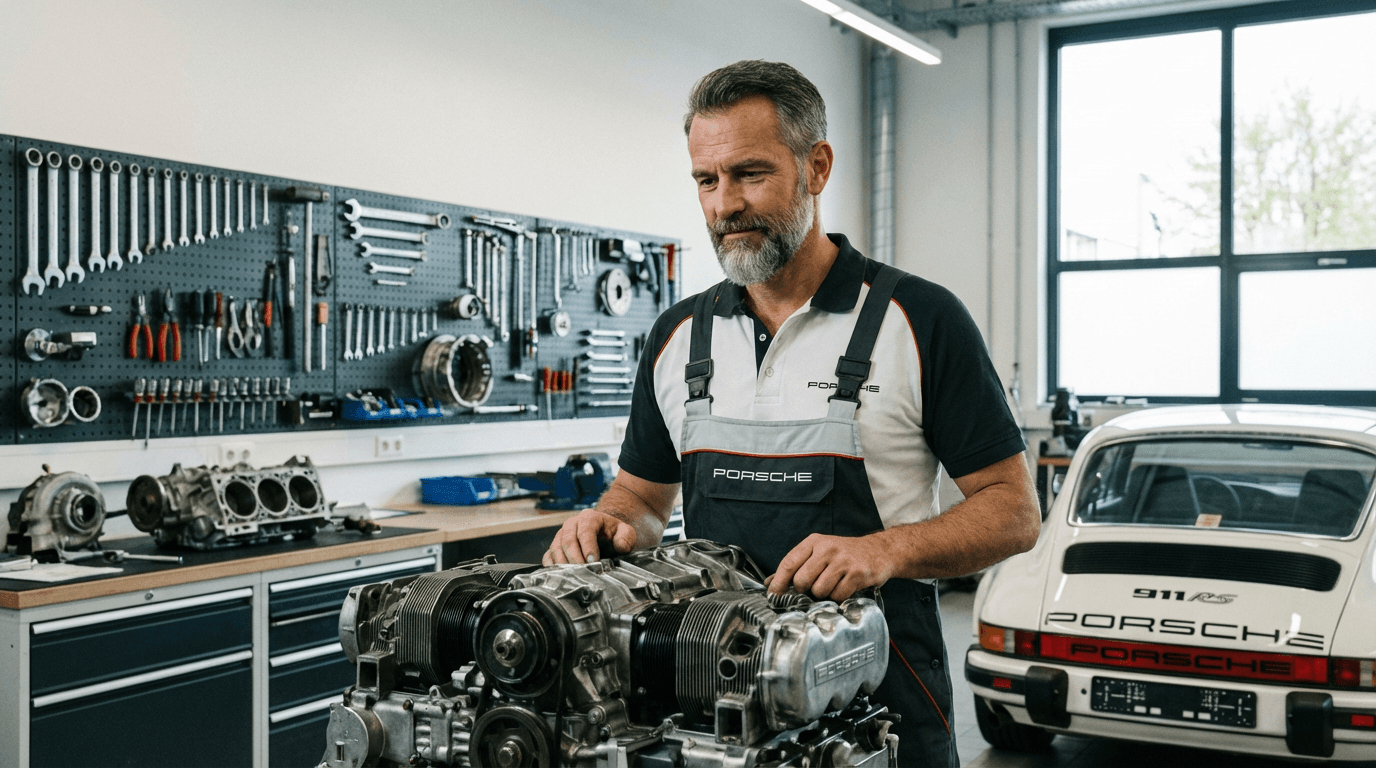
Finding the right specialist for your Porsche is arguably the most important ownership decision after the car itself. The right shop keeps your Porsche running perfectly and preserves its value. The wrong shop can cause expensive damage, void warranties, and create safety issues. Here is what to look for, what to avoid, and the specific questions to ask before trusting anyone with your Porsche.
Certification and Training
Gold Meister Certification
Porsche's technician training program has four levels: Bronze, Silver, Gold, and Gold Meister. Each level requires hundreds of hours of training and passing rigorous examinations. Gold Meister is the highest factory certification available and indicates comprehensive expertise across all Porsche systems.
When evaluating a shop, ask specifically about the lead technician's certification level. A shop may employ several technicians at various levels, but the person diagnosing and performing critical work on your car should hold at minimum Gold certification, and ideally Gold Meister.
This certification is important because Porsche engineering is genuinely different from other manufacturers. The flat-six engine layout, the rear-engine weight distribution, the PDK transmission, and the PASM suspension system all require specific knowledge that general automotive training does not cover.
Ongoing Training
Porsche releases new models and updated procedures regularly. A good specialist invests in ongoing training to stay current. Ask when the shop's technicians last attended formal training. If the answer is "several years ago," the shop may not be current on newer model procedures.
Diagnostic Equipment
PIWIS III
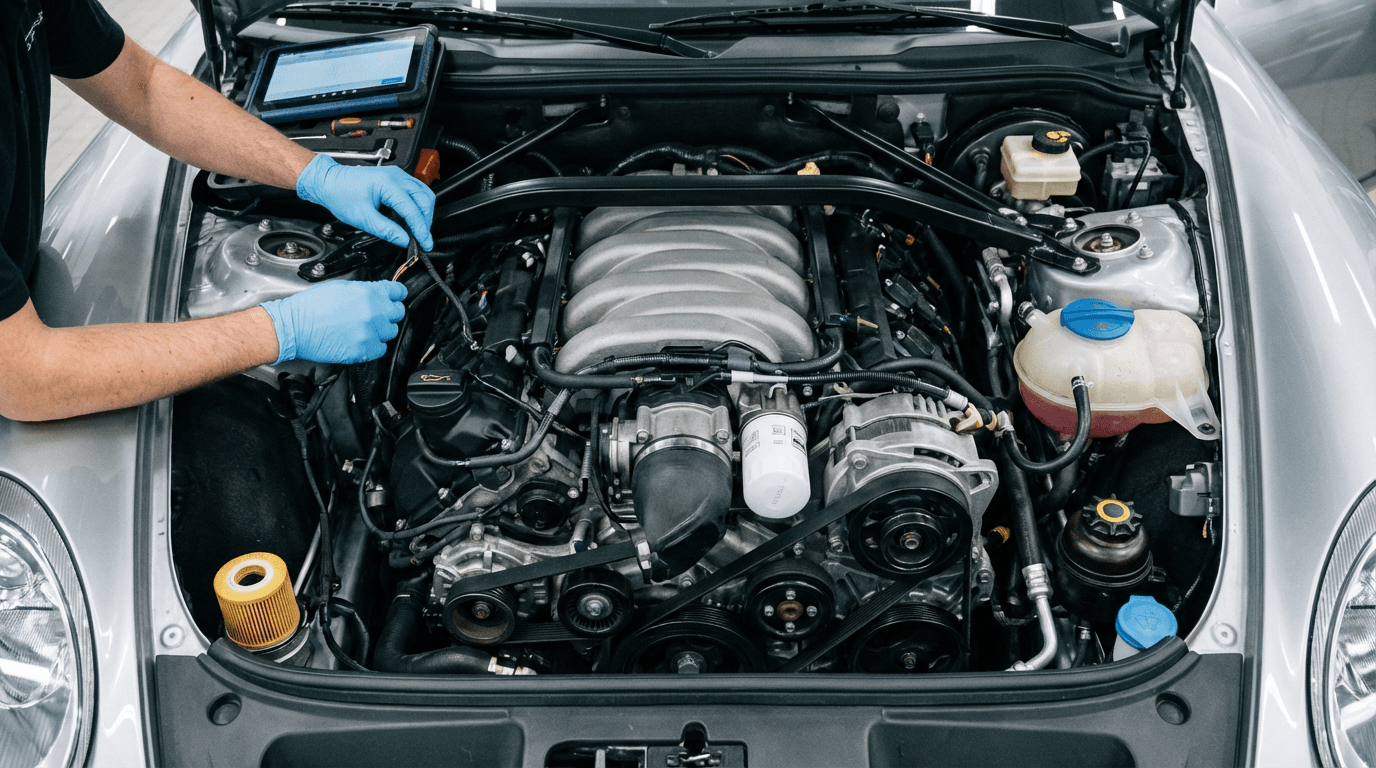
This is non-negotiable. PIWIS III is Porsche's current factory diagnostic system, and it is the only tool that provides complete access to all control modules, guided fault finding, coding capability, and software updates.
Ask specifically: "Do you have a current PIWIS III system?" Acceptable answers include "yes" with the ability to show you the hardware. Unacceptable answers include references to "Porsche-compatible" aftermarket scanners, PIWIS II (the previous generation, which cannot fully communicate with 991.2 and newer models), or vague claims about "equivalent" diagnostic capability.
PIWIS III requires an annual subscription that costs thousands of dollars. A shop that invests in this subscription is serious about Porsche service. One that tries to get by with aftermarket tools is cutting corners that will eventually affect diagnostic accuracy.
Alignment Equipment
If the shop offers alignment and suspension work, ask about their alignment equipment. The best option is a modern Hunter alignment rack with Porsche-specific specifications loaded. Porsches with rear-axle steering require four-wheel alignment with specific measurement procedures that not all alignment equipment supports.
Parts Quality
Genuine Porsche Parts
A quality specialist uses genuine Porsche parts for all maintenance and repair work. This is important for several reasons:
- Warranty compliance under the Magnuson-Moss Act requires equivalent parts
- Genuine parts include correct specifications for torque, clearance, and material
- Resale value is better maintained with documented genuine parts usage
- Some aftermarket Porsche parts are genuinely inferior (particularly gaskets, seals, and electrical components)
Ask the shop about their parts sourcing. They should be able to show you Porsche-branded packaging for common items like oil filters, brake pads, and spark plugs.
When Aftermarket Is Acceptable
There are cases where quality aftermarket parts are acceptable or even preferred:
- Performance brake pads (Pagid Racing, Hawk, etc.) for track use
- Upgraded coolant pipes (aluminum replacing known-problematic plastic OEM units)
- Performance exhaust systems for non-warranty cars
- Upgraded suspension components for specific driving purposes
A knowledgeable specialist will use genuine parts by default and discuss aftermarket options only when there is a specific advantage, with your informed consent.
Transparent Pricing and Communication
Written Estimates
Before any work begins, you should receive a written estimate itemizing:
- Parts with part numbers and prices
- Labor time and rate
- Any additional charges (shop supplies, disposal fees)
A shop that resists providing written estimates or gives only verbal ballpark figures is a red flag.
Communication During Service
The best shops communicate proactively. When they find something unexpected during an inspection, they call you with an explanation, photos if possible, and a clear recommendation. They do not simply add items to the invoice without discussion.
Ask the shop about their communication process. How will they contact you? What happens if they find additional issues? Can they send photos of what they find? The answers reveal how the shop treats its customers.
No-Surprise Billing
Your final invoice should match the estimate, with any authorized additions clearly itemized. If a shop regularly exceeds its estimates without prior approval, find a different shop.
Specialization vs. Generalization
Porsche-Only vs. Multi-Brand
A shop that works exclusively on Porsches will generally have deeper expertise than one that services multiple European brands. The technicians see the same platforms repeatedly, developing pattern recognition for common issues and familiarity with model-specific procedures.
That said, some excellent independent shops service a small range of related brands (Porsche, Audi, VW) that share platforms and components. The key is that Porsche should be a primary focus, not an afterthought.
Model Specialization
Within the Porsche world, some shops specialize further. There are shops known for air-cooled Porsches, 911 GT cars, Cayenne and Macan SUVs, or classic restoration. If your car falls into a specific category, a specialist within the specialty can offer an additional level of expertise.
Red Flags: When to Walk Away
No Porsche-Specific Diagnostic Equipment If a shop claims to work on Porsches but does not have PIWIS III, they are limited in what they can properly diagnose and service. This is not a minor limitation; it affects everything from oil change intervals to PDK service to basic brake work on cars with electronic parking brakes.
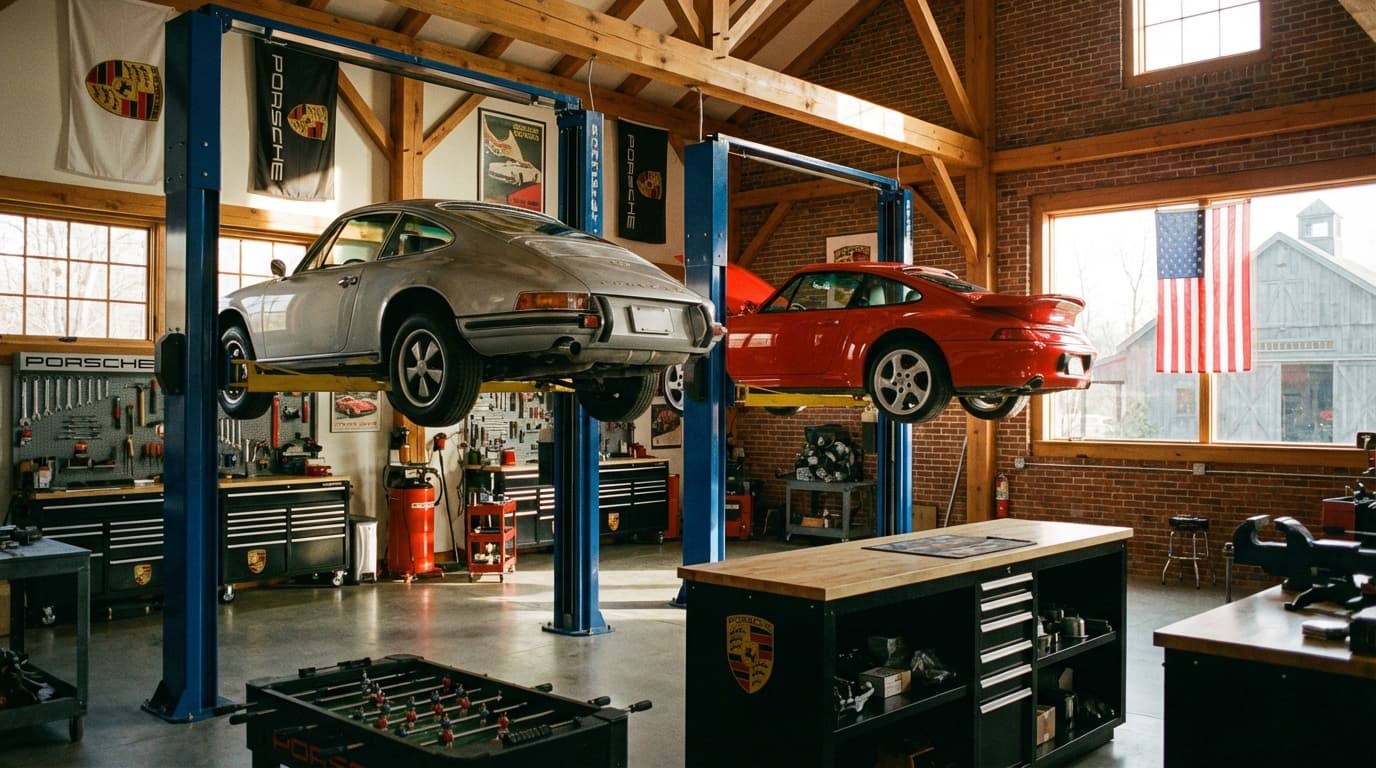
Reluctance to Show the Facility A quality shop is proud of its workspace and happy to give tours. Clean, organized bays with proper equipment are indicators of professional operation. If a shop discourages visits or keeps you away from the work area, question why.
Pressure to Commit Before Diagnosis Some shops quote large repair packages before a proper diagnosis. A good specialist diagnoses first, explains findings clearly, and then provides repair options. If you feel pressured to approve major work without understanding what is wrong, seek a second opinion.
No Insurance Proof Ask about garage keeper's liability insurance. This coverage protects your car while it is in the shop's custody. A shop servicing high-value Porsches should carry adequate coverage. If they cannot provide proof of insurance, your car is at risk.
Bad Reviews Regarding Communication Online reviews that mention surprise charges, unexplained delays, or poor communication are more concerning than the occasional negative review about pricing. Every shop has unhappy customers, but a pattern of communication failures indicates a systemic problem.
Questions to Ask Before Your First Visit
Here is a practical checklist for evaluating any Porsche specialist:
- What certifications do your technicians hold? (Looking for Gold Meister)
- Do you have current PIWIS III diagnostic capability? (Should be yes)
- Do you use genuine Porsche parts? (Should be yes, with specific exceptions discussed)
- What is your labor rate? (Independent: $140-$180/hour is typical; higher is not necessarily better)
- Can you provide written estimates before beginning work?
- How do you communicate findings during service? (Photos, phone calls, portal)
- Do you provide digital service records? (Important for warranty and resale)
- What insurance do you carry for customer vehicles?
- How long have you been working on Porsches specifically?
- Can I see your facility?
The answers to these questions tell you nearly everything you need to know. A confident, qualified shop answers all of them without hesitation.
The Value of a Long-Term Relationship
The best ownership experience comes from finding one specialist and building a long-term relationship. Over time, your technician learns your car's history, your driving style, and your priorities. They can predict issues before they occur and tailor their recommendations to your specific situation.
This relationship also protects you financially. A shop that knows your car well catches problems earlier, recommends preventive work at the right time, and avoids unnecessary services. The trust built over years of honest service is worth more than any discount.
Whether you are following the 911 maintenance schedule, addressing a check engine light, or considering a dealer vs. independent decision, the quality of your specialist determines the quality of your ownership experience. Choose carefully, ask the right questions, and invest in a relationship that will serve both you and your Porsche well for years to come.
Ready to schedule your Porsche service? Contact Repasi Motorwerks or call (203) 257-0987.