The pre-purchase inspection represents the most important step before buying any used Porsche. The cost—typically a few hundred dollars depending on model complexity—is trivial compared to discovering expensive problems after signing paperwork and driving away. Yet many buyers skip this step, trusting seller representations, visual impressions, or their own casual assessment. The ones who later become our service clients sometimes wish they had made a different choice.
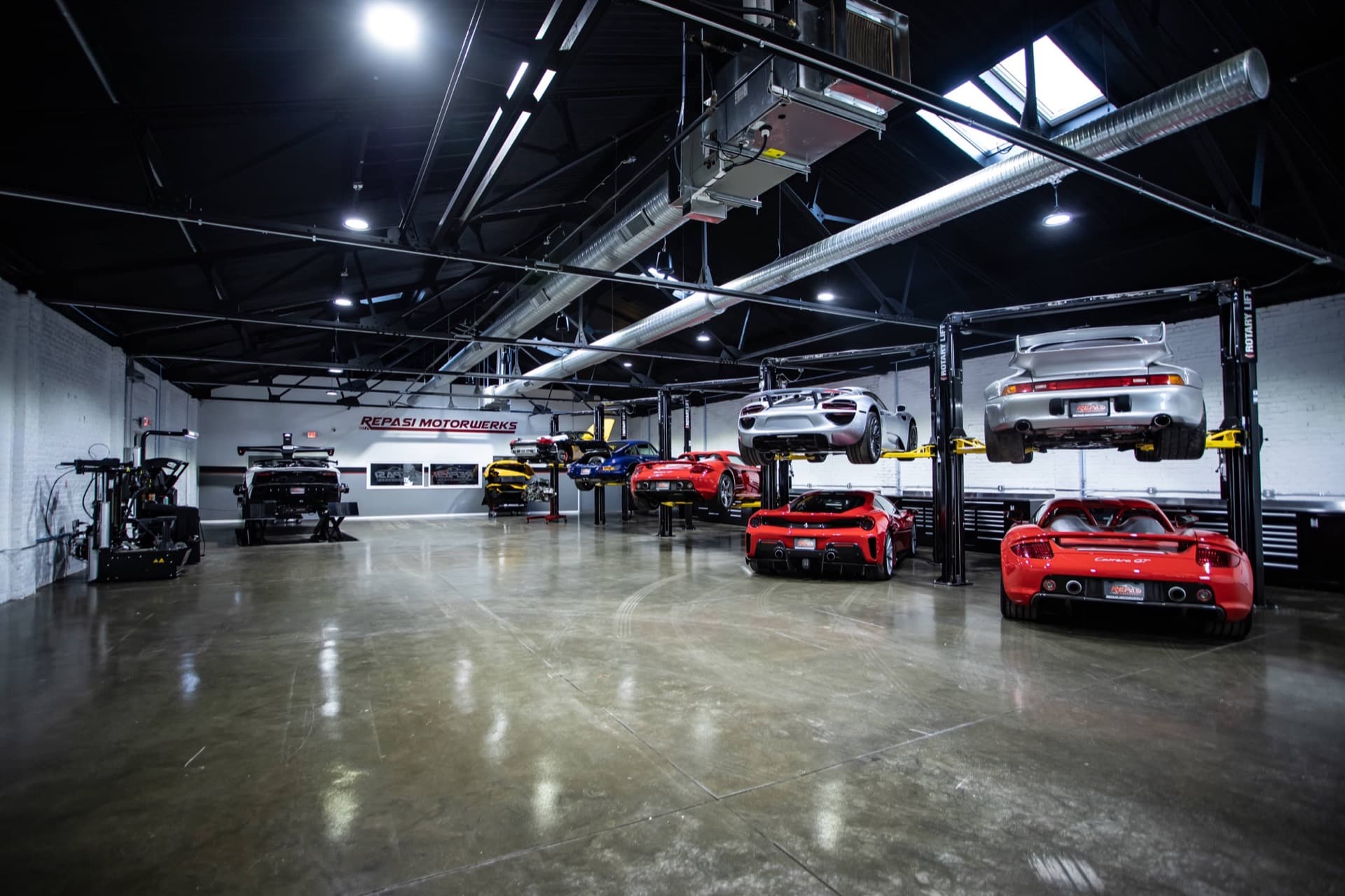
At Repasi Motorwerks, we perform dozens of pre-purchase inspections each year, from vintage air-cooled 911s to current GT3s and everything in between. This guide explains what thorough inspection involves and why each element matters for prospective buyers. A good PPI starts with a good specialist — read our guide to choosing a Porsche specialist.
What Inspection Actually Accomplishes
A pre-purchase inspection isn't about finding reasons to avoid a car. It's about providing complete information so buyers can make informed decisions. Sometimes we inspect cars with issues and recommend purchase anyway—because the issues are known, priced appropriately, and the buyer understands what they're getting into.
The goal is never to kill deals. It's to ensure buyers know exactly what they're purchasing. The best outcome is a buyer who proceeds confidently with complete information, or a buyer who walks away from a problematic car before making an expensive mistake. Either way, the buyer wins.
Documentation Review: Before We Touch the Car
Inspection begins before we see the vehicle. Reviewing available documentation provides context for the physical evaluation and often reveals patterns worth investigating.
Service records show maintenance consistency and repair history. Previous PPI reports indicate known concerns and what prior buyers were told. Vehicle history reports reveal accidents, title issues, and ownership patterns. Original window stickers confirm factory specifications and original options. Warranty documentation shows what has been covered and what coverage might remain.
Documentation gaps don't automatically disqualify a car, but they affect our assessment and may impact value. A fifteen-year-old Porsche with complete records from recognized specialists is worth more than the same car with sporadic or missing documentation. The records demonstrate care that the car itself cannot prove.
We contact previous service providers when possible to verify records and gather additional context. This research sometimes reveals issues not apparent from documents alone—repairs that weren't fully documented, or concerns that were raised but never addressed.
Exterior: Reading the Car's History
The exterior inspection begins before opening any doors. We walk around the car from multiple angles, observing overall condition, panel alignment, and signs of previous work.
Paint depth meters measure coating thickness across every major panel. Factory paint shows consistent thickness—typically one hundred to one hundred thirty microns across body panels. Previous repairs show as thicker readings from filler and repaint. This doesn't mean the car has been in a major accident—many Porsches have had minor cosmetic repairs over their lives—but it provides information the seller may not have disclosed.
Panel gaps and alignment reveal more than cosmetic history. Inconsistent gaps can indicate previous collision repair or replacement parts. We measure gaps at multiple points and compare left-to-right symmetry. Original panels typically show even, factory-consistent spacing.
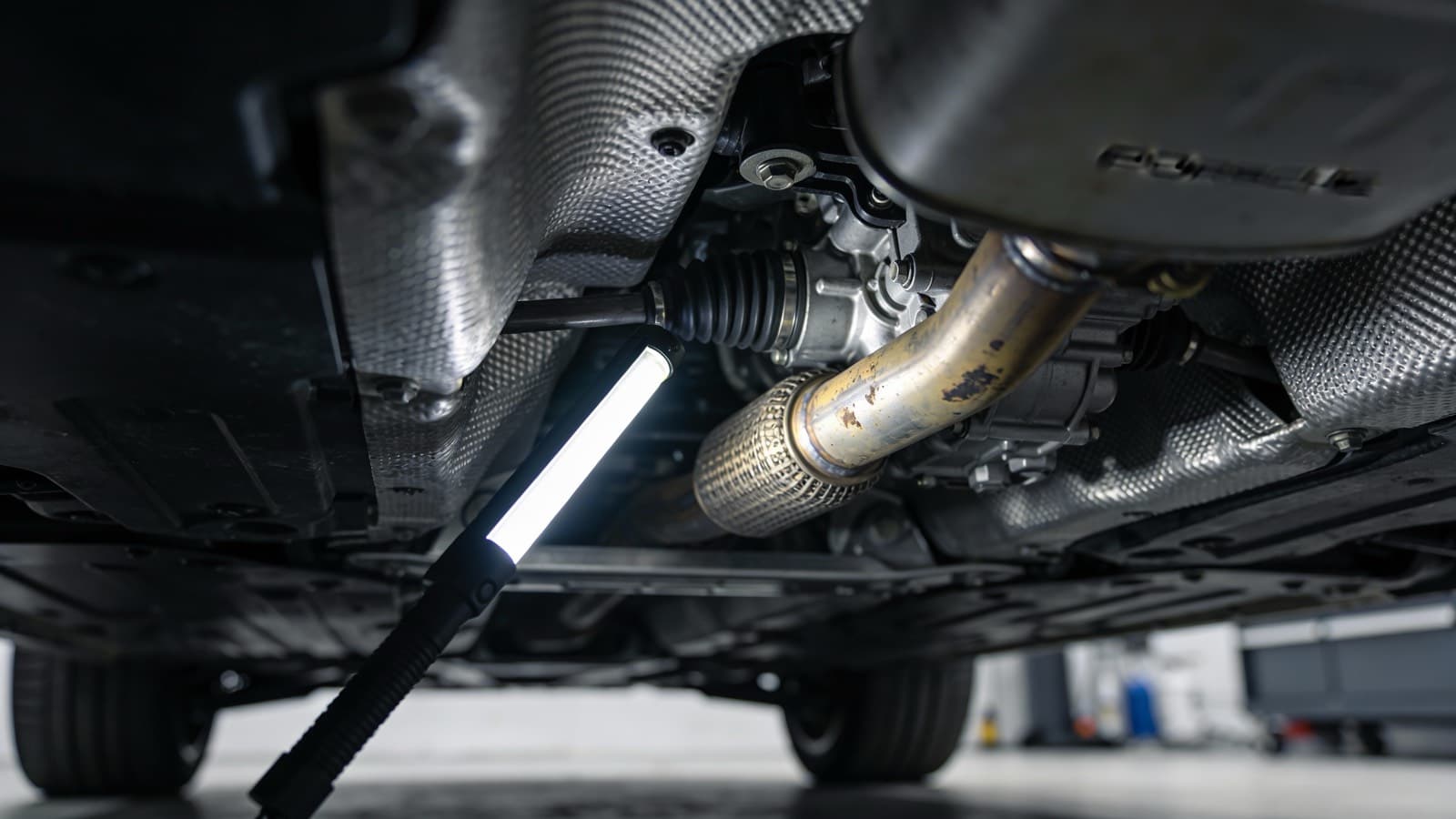
The undercarriage often reveals more than the visible exterior. Using a lift, we inspect frame rails and structural members for damage or repairs. Oil pan and transmission get examined for impact damage. Exhaust system condition and routing get noted. Fuel and brake lines get checked for age-related deterioration. Suspension mounting points get examined for cracks or stress. We photograph significant findings for discussion with buyers.
Interior: Use Patterns and Electronics
Interior condition reveals much about how a car has been used and maintained. Wear patterns tell stories that sellers may not volunteer.
Leather and Alcantara wear, cracking, and discoloration indicate age and use intensity. Dashboard integrity—cracks, warping, UV damage—shows whether the car has been protected from sun exposure. Carpet wear patterns are particularly telling: driver's side wear is normal, but passenger side wear on a supposed low-mileage car suggests the odometer may not tell the complete story. Headliner condition, trim piece integrity, and component completeness all contribute to the overall assessment.
Modern Porsches have extensive electronic systems, and we verify their operation systematically. All warning lights must cycle correctly during startup. Infotainment systems get tested for full functionality. Climate control operation gets verified across all modes. Windows and sunroof must operate correctly. Power seats must move in all directions. Gauges must function accurately.
For PCM-equipped cars, we check software version and update status. Outdated software can indicate deferred maintenance or reluctance to visit authorized service—patterns that may extend to other maintenance areas.
Mechanical: Where Problems Hide
The mechanical inspection is the heart of any PPI. We evaluate engine, transmission, and drivetrain components with attention to both current condition and indicators of future problems.
Engine compartment examination covers oil level and condition, coolant level and contamination status, belt condition and routing, hose age and integrity, and electrical connections for corrosion or damage. Low oil level, wrong viscosity, contamination—these indicate maintenance patterns that affect long-term reliability.
We start the engine cold whenever possible. Cold start behavior reveals issues that disappear once warm: smoke on startup from valve seals or piston rings, unusual noises from hydraulic lifters or timing chain components, rough idle from injectors, ignition, or air leaks. Once warm, we check oil pressure at idle and elevated RPM, temperature behavior and stabilization, throttle response and smoothness, and exhaust smoke under load.
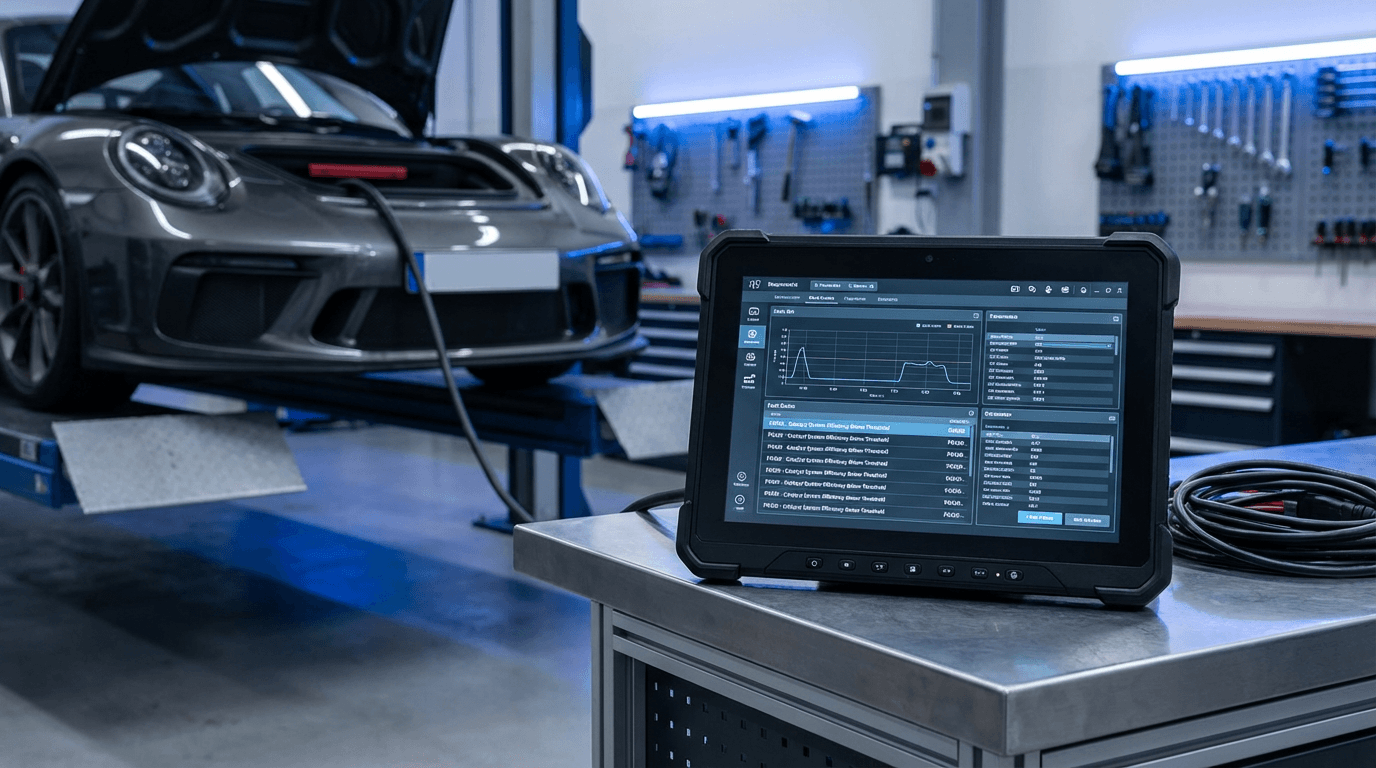
Every inspection includes comprehensive diagnostic scanning using factory-level equipment. We check fault codes in all modules—some cars store twenty or more modules—and examine live data for abnormal readings. Adaptation values on applicable systems reveal patterns the car's computer has detected. Service interval status and history confirm what maintenance has been performed.
Stored codes can reveal intermittent problems or previous issues that were addressed without clearing the fault memory. The car's electronic history provides context that physical inspection alone cannot.
Brake System: Safety Critical
Brake system condition affects both safety and near-term expenses. Inspection approach differs based on brake type.
Steel brakes get measured for rotor thickness and runout, pad thickness, caliper function, and fluid condition. Rotors below minimum thickness need replacement. Runout beyond acceptable limits causes brake pulsation. Pads below four millimeters for street use need attention. Calipers must move smoothly without sticking. Fluid should be clear with low moisture content.
Porsche Ceramic Composite Brakes require specific evaluation. Surface cracking is common with age and not always problematic. Deep cracks extending through the rotor mean replacement is needed. Glazing or discoloration from overheating indicates past abuse. PCCB pad material remaining matters significantly since these pads are expensive.
PCCB replacement costs eight to fifteen thousand dollars per axle. Rotor condition significantly affects purchase value calculations.
Road Test: What the Shop Cannot Reveal
Every car we inspect gets driven. The road test reveals problems that don't appear during static inspection.
We drive at least ten to fifteen miles including highway speeds, varied throttle application, and various brake pressures. Engine performance under load tells a different story than idle behavior. Transmission behavior through the gears reveals synchronizer and clutch condition. Brake feel and effectiveness confirm what measurement suggested. Suspension noises and handling characteristics become apparent. Alignment issues that the car's straight-line static appearance concealed show themselves.
The overall driving impression matters too. A car can pass individual tests yet feel wrong in a way that suggests hidden problems. The road test provides the complete picture that component-by-component inspection cannot.
Model-Specific Concerns
Different Porsche eras and models carry different known issues worth specific attention.
Air-cooled 911s require examination of chain tensioner condition and type, case integrity looking for cracks or repairs, rust in hidden areas like rocker panels, floors, and battery boxes, heater box condition, and suspension mount corrosion. These are old cars, and age-related issues are normal—but the severity varies enormously.
Water-cooled 996 and 997 911s carry the IMS bearing concern on applicable engines, bore scoring symptoms on M96 and M97 engines, coolant pipe integrity issues, rear main seal condition, and air-oil separator function. These known failure modes should be specifically investigated.
Modern 991 and 992 models have their own patterns: oil consumption issues on 991.1 Carreras, PDK mechatronic health, PCCB condition, and suspension component wear. GT cars add track use evidence and history, clutch condition on manual examples, and roll cage hardware inspection on RS models.
Carrera GTs and 918 Spyders require specialized inspection: clutch measurement on the CGT, carbon tub examination, hybrid system function on the 918, specialized fluid requirements, and compression testing. These cars demand inspectors with specific experience.
What You Receive
Following our inspection, we provide a written report including overall condition assessment with numerical rating, specific findings organized by category, photographs documenting concerns and positive findings, recommended immediate repairs with estimated costs, anticipated upcoming maintenance, and value impact assessment when requested.
We follow up with verbal consultation to discuss findings and their significance, answer specific questions, provide purchase recommendation if requested, and offer context for negotiation if you proceed.
When to Walk Away
Based on hundreds of inspections, certain findings should give serious pause.
A seller who refuses inspection is sending a clear message. Undisclosed accident damage means trust is broken—where there's one hidden issue, there are usually more. IMS bearing failure signs on applicable models indicate expensive repair is imminent. Bore scoring symptoms on applicable engines suggest engine replacement may be needed. Title issues—salvage, rebuilt, or lemon titles—affect value significantly.
Significantly below-market pricing usually indicates hidden problems. The market prices these cars efficiently enough that genuine bargains are rare. A car priced well below comparable examples is telling you something.
Getting Started
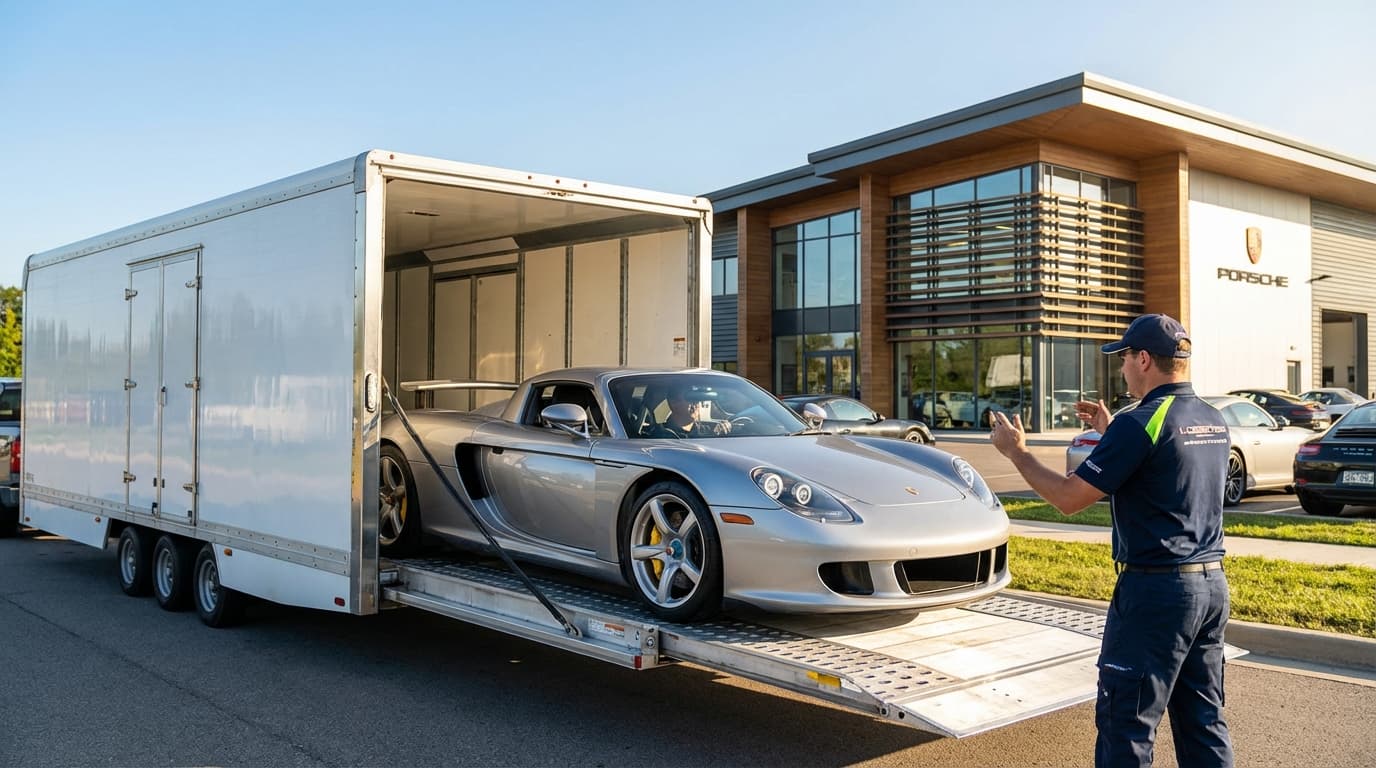
Contact us to schedule a pre-purchase inspection. We can inspect vehicles at our Stratford, Connecticut facility or coordinate inspections elsewhere. For distant locations, we can recommend trusted colleagues in other regions.
The investment in proper inspection protects against far more expensive discoveries after purchase. It's the best insurance any used Porsche buyer can obtain.
Considering a used Porsche purchase? Contact Repasi Motorwerks to schedule a pre-purchase inspection. We'll tell you exactly what you're buying—before you make the commitment.