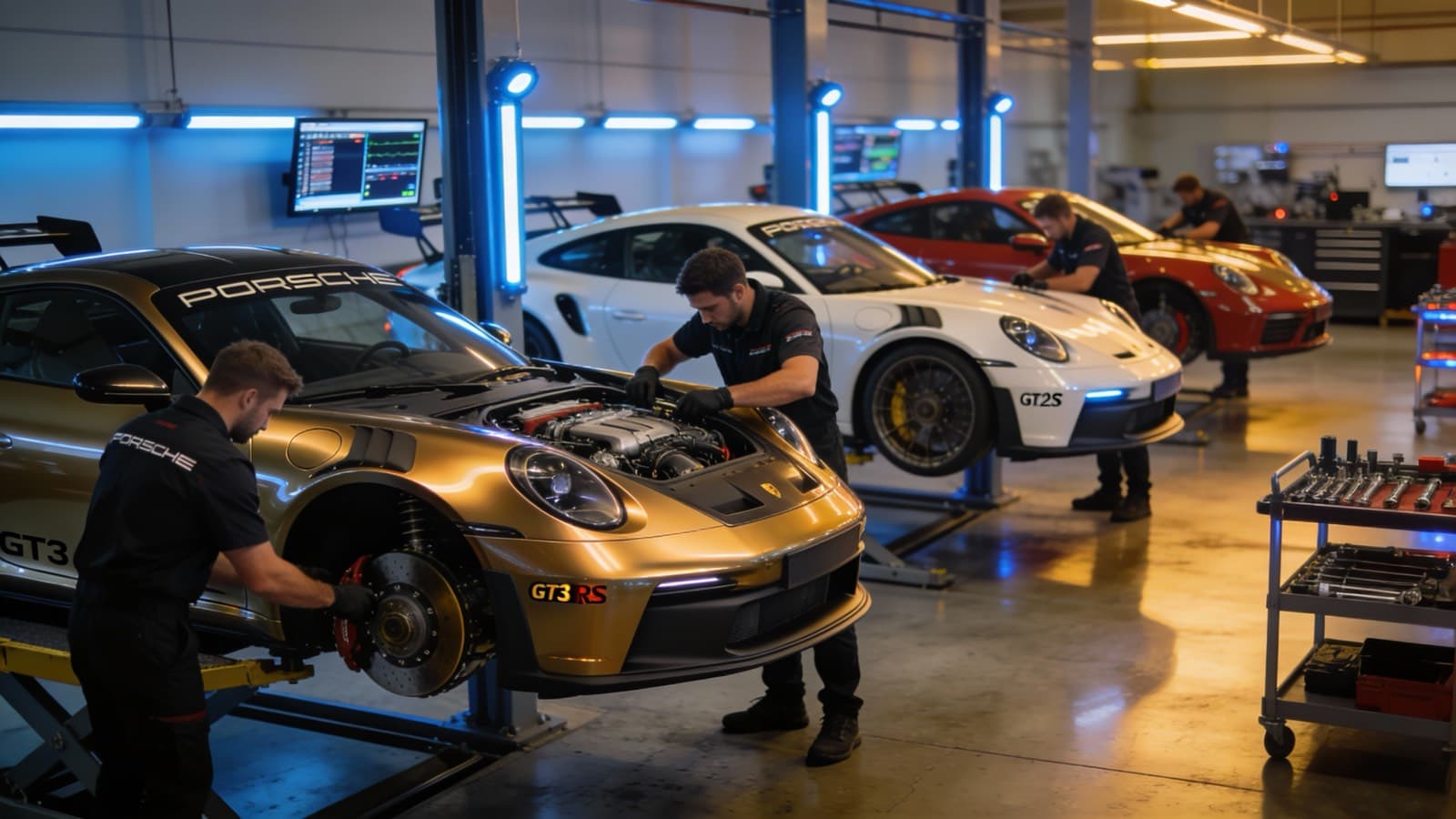
Porsche GT cars exist in a different category than standard 911s or any other sports car wearing the shield. These aren't simply faster versions of regular Porsches—they're purpose-built machines designed for people who understand the difference between a sports car and a true driver's car. The GT3, GT3 RS, GT2 RS, and GT4 represent Porsche's motorsport division expressing itself in road-legal form, and they demand maintenance that respects their engineering.
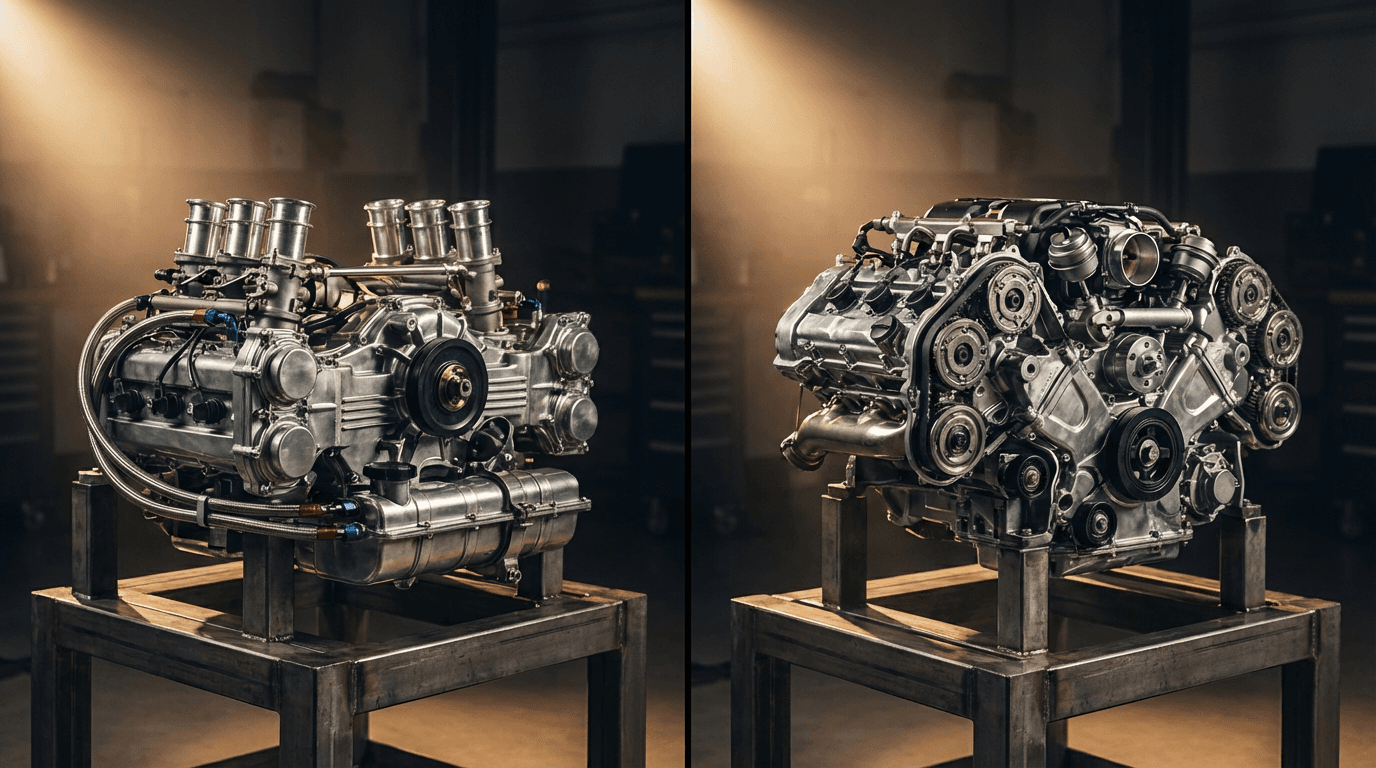
The engines tell the story clearly. A GT3's naturally aspirated flat-six doesn't share its internals with a Carrera's engine—it uses different pistons, different connecting rods, different valve timing, higher compression, and a redline that climbs past nine thousand RPM. The GT2 RS twin-turbo unit produces seven hundred horsepower through components engineered for that specific output. These aren't tuned versions of standard engines. They're purpose-built powerplants that tolerate less and demand more. For a comprehensive GT3 ownership resource, read our Ultimate GT3 Owner's Guide.
The rest of the car follows the same philosophy. Suspension systems prioritize track capability over street comfort, subjecting components to stress levels that standard Porsches never approach. Brake systems—often the ceramic composite units that Porsche developed for racing—require specific knowledge to inspect and service properly. Aerodynamic components generate real downforce that matters at speed, and they're correspondingly expensive when damaged.
Owners who understand what they've bought approach maintenance accordingly. Those who don't discover the difference when problems develop that proper care would have prevented.
The Annual Foundation
Every GT car needs comprehensive annual service regardless of how many miles it covered. The nature of GT ownership—often weekend and track use rather than daily driving—makes calendar intervals as important as odometer readings. Systems degrade with time as well as use, and cars that sit can develop problems that driven cars avoid.
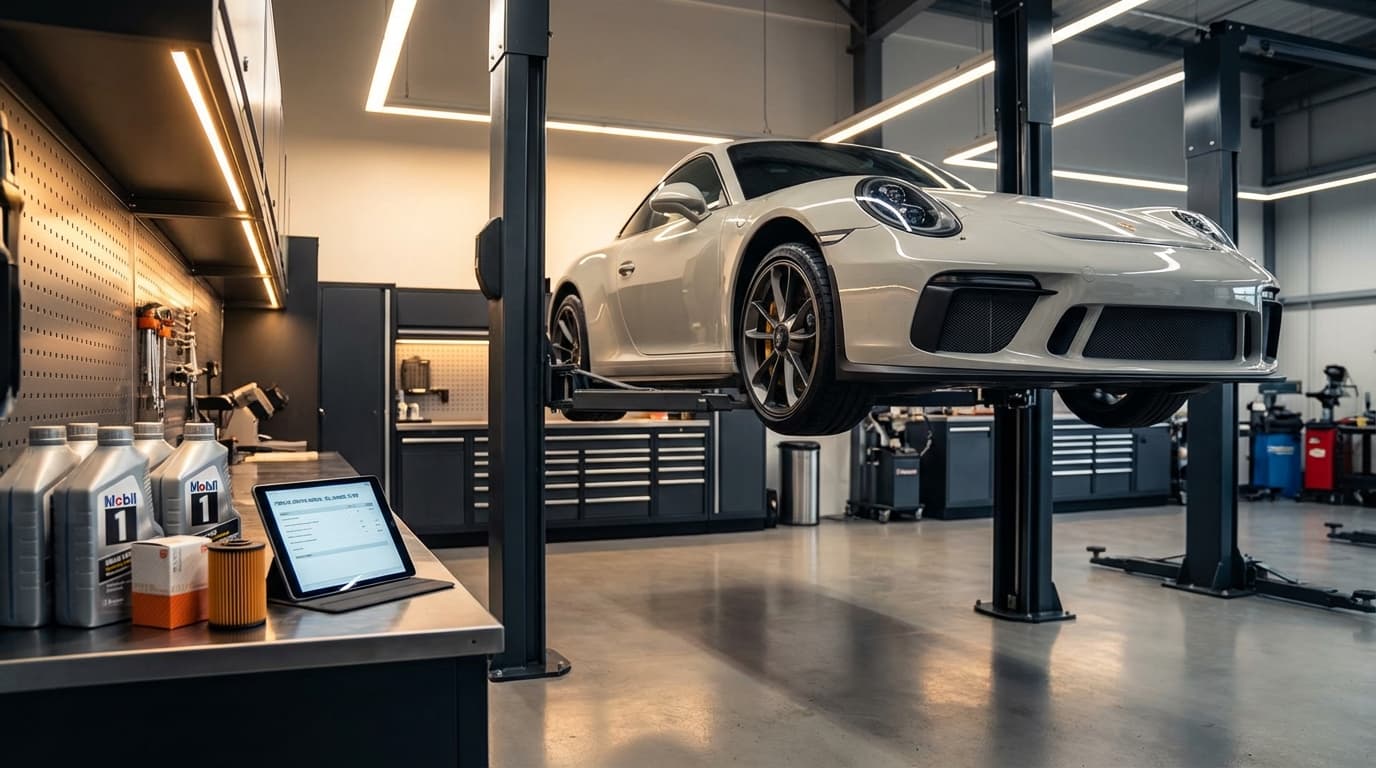
Oil and fluid service forms the baseline. GT engines hold nine to ten quarts depending on model, and the oil carries more thermal load than in standard Porsches thanks to the higher operating temperatures these engines sustain. We change oil annually or at ten thousand miles, whichever comes first, using factory-specification synthetic that maintains film strength under extreme conditions. Extended drain intervals make no sense for engines that work this hard.
Brake systems demand specific attention that varies based on equipment. Cars with Porsche Ceramic Composite Brakes need inspection for the specific wear patterns these rotors develop, along with careful pad thickness measurement—minimum four millimeters for street use, though we recommend six millimeters for cars that see track time. Steel brake-equipped cars require rotor thickness measurement, surface assessment, and the usual caliper service. All GT cars benefit from annual brake fluid replacement regardless of mileage, since moisture absorption degrades braking feel and high-temperature performance whether the car drives or sits.
Cooling systems face particular scrutiny. GT3 RS models add oil coolers beyond what standard cars carry. All GT variants use uprated radiator capacity. Annual inspection covers coolant condition, system pressure testing, radiator stone damage, hose condition, and thermostat function. Any cooling system weakness that might be tolerable in a standard 911 becomes potentially catastrophic in a GT car that spends time at sustained high speeds.
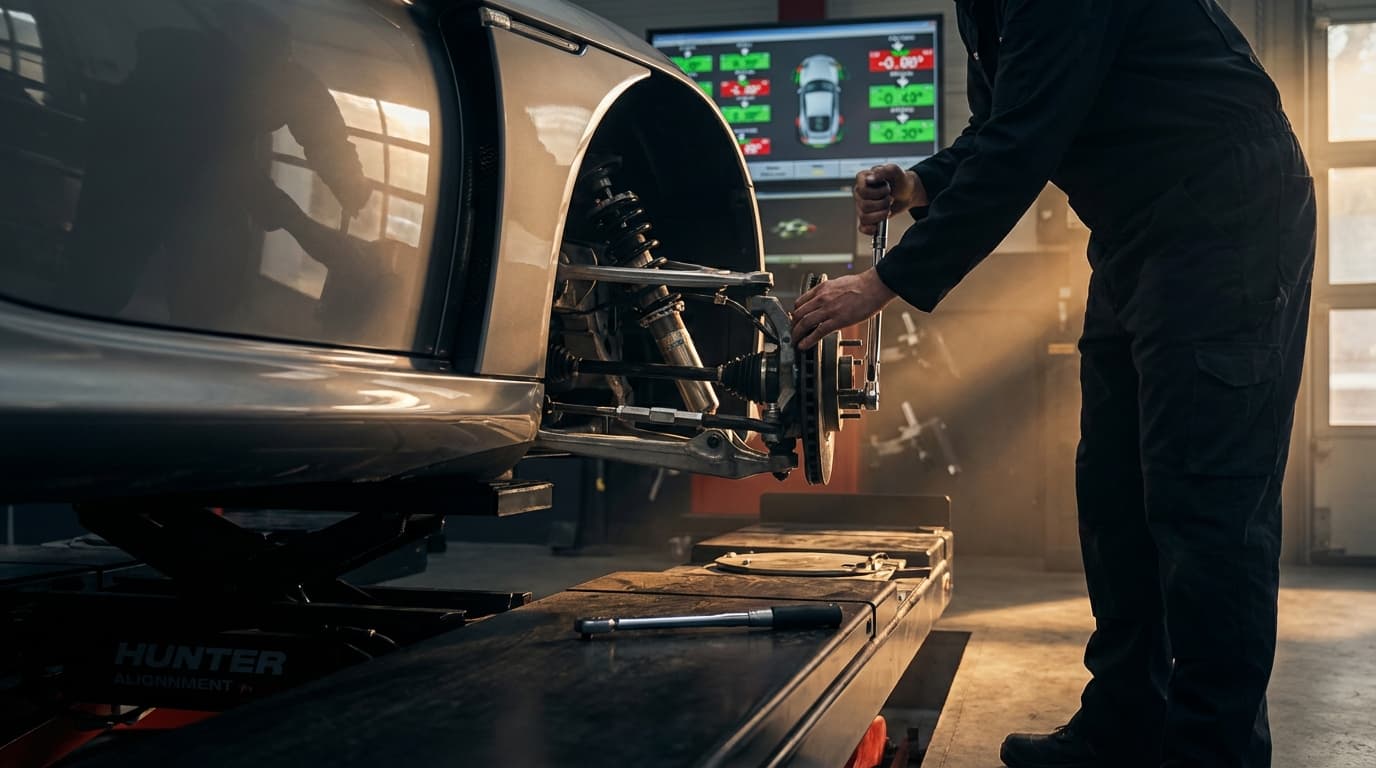
Suspension and chassis components wear faster on cars that actually get used as intended. Shock absorber seals develop issues after track use. Control arm bushings degrade faster when subjected to aggressive cornering loads. Ball joints show wear that needs monitoring. Wheel bearings can fail suddenly if neglected. Alignment drifts with use and needs periodic verification. Cars that track regularly should have these systems checked more frequently than cars that stay on the street.
Track Use Changes Everything
Many GT cars see track time—exactly what Porsche designed them for. But track driving multiplies the stress on every system exponentially compared to street use. Owners who track their cars need to adjust their maintenance thinking fundamentally.
Pre-track preparation isn't optional. Fresh brake fluid with racing specification goes in before any event. Brake pads get assessed for adequate material. Oil level gets confirmed at maximum. Tires get inspected for adequate tread and proper pressure settings appropriate for hot operation. Wheel torque gets verified. Safety equipment gets checked. The entire car gets a visual inspection looking for fluid leaks, loose fasteners, or developing damage.
Post-track service should happen within a week or two of any event. Complete visual inspection looks for damage that might not have been obvious trackside. Brake systems get assessed—pads, rotors, fluid. Oil level gets verified since high-RPM operation increases consumption. Coolant level confirms no loss during high-heat running. Suspension gets checked for curbing damage or debris impacts. Wheels and tires get examined for damage and abnormal wear patterns.
Heavily tracked cars—the ones that see more than a few weekends per season—need service adjustments that reflect their use patterns. Mid-season oil changes become appropriate beyond annual service. Brake fluid replacement every three or four track days protects against the kind of fade that degraded fluid causes. Brake pads wear faster and need more frequent replacement. Suspension bushings show accelerated wear that shortens their service life.
Generation-Specific Considerations
Not all GT cars share identical maintenance profiles. Each generation brought changes that affect how they should be cared for.
The 991.1 GT3 from 2013 to 2016 established the modern GT3 formula with its 3.8-liter engine producing 475 horsepower through an 8,250 RPM redline. PDK transmission only—no manual option. Early production cars had cam follower wear concerns that Porsche addressed, making inspection of these components important on used examples. PDK clutch wear becomes a factor on heavily tracked cars.
The 991.2 GT3 that followed brought a larger 4.0-liter engine making 500 horsepower with a 9,000 RPM redline. Most significantly, Porsche restored the manual transmission option. These cars have proven remarkably reliable, with manual transmission clutch wear varying dramatically by driver technique while PDK versions maintain more consistent longevity.
The current 992 GT3 advances the formula further with 510 horsepower and the same 9,000 RPM capability. Too new for long-term pattern recognition, but the complex front suspension design requires experienced alignment technicians who understand the geometry.
GT3 RS models add complexity everywhere. Additional oil coolers need inspection. Magnesium wheels require specific care to prevent corrosion that aluminum wheels don't develop. More aggressive camber settings accelerate inner tire wear to the point that rotation patterns and replacement intervals differ from standard GT3s. Roll cage hardware, on cars so equipped, needs periodic verification. Front lift systems require their own service attention.
The GT2 RS occupies its own category as the most powerful road-going 911. The twin-turbo engine adds turbocharger inspection for shaft play and boost leaks. Intercoolers need examination after track use. The enormous torque creates increased clutch wear on manual examples. The characteristic wastegate rattle that alarms some owners is actually normal operation and not harmful. Exhaust systems need inspection for evidence of boost leaks.
The GT4s differ from 911-based GT cars in their mid-engine architecture shared with Boxster and Cayman. The 981 GT4 used a detuned 911 Carrera S engine with minimal IMS bearing concerns but not complete elimination. The 718 GT4 and GT4 RS adopted the GT3's 4.0-liter engine, eliminating IMS bearing considerations entirely since it's a different engine family.
Budgeting Reality
GT car maintenance costs vary dramatically based on how owners use their cars. Street-only GT3 ownership might run twenty-five hundred to four thousand dollars annually for routine service. Light track use—a few weekends per season—pushes that to four to six thousand. Heavy track use—regular events throughout the season—can reach seven to twelve thousand for maintenance alone.
GT3 RS ownership runs higher due to the additional systems requiring service. GT2 RS ownership higher still, with the twin-turbo engine adding complexity and the massive brakes wearing faster under the car's greater weight and power. GT4 maintenance falls slightly below GT3 costs, reflecting the smaller engine and somewhat simpler systems.
These numbers cover routine maintenance only. Major repairs exist in their own category—engine work, transmission service, PCCB rotor replacement when that eventually becomes necessary. Consumables add further expense: tires run fifteen hundred to three thousand or more annually depending on track use, brake pads eight hundred to two thousand per set depending on compound selection, alignments three to five hundred per service.
None of this should surprise anyone who understood what they were buying. GT cars deliver extraordinary capability. That capability has costs in maintenance as well as acquisition. Owners who budget realistically maintain their cars properly. Owners who don't find themselves making uncomfortable choices between proper service and financial stress.
When Specialists Matter
Routine GT car service falls within the capability of many Porsche dealers, though specialist shops often bring deeper experience. But certain situations clearly benefit from expertise concentrated specifically in these cars.
Pre-purchase inspections on any GT car should happen at a specialist who sees enough of them to recognize problems that casual exposure would miss. Engine internal concerns require experience that generalist technicians rarely develop. Transmission problems benefit from technicians who understand the specific units in these cars. PCCB brake system issues beyond routine service demand specific knowledge that not everyone has. Suspension setup for track use and competition alignment settings require understanding that goes beyond street car geometry.
Documentation matters as well. GT cars hold their value—but only with proper records. Every service should generate documentation that includes date and mileage, services performed, parts used with part numbers, technician observations, and photographs of significant findings. This record protects resale value and demonstrates proper care to the next owner.
The Point of All This
GT cars exist to be driven hard. Porsche designed them specifically for owners who want the track capability that street cars cannot provide. Maintaining them properly preserves both the performance they deliver and the significant values they represent.
The costs are real but predictable. The effort is ongoing but manageable. The reward is ownership of one of the finest driver's cars ever produced, performing the way it should, ready whenever you are.
Ready to discuss proper GT car maintenance? Contact Repasi Motorwerks in Stratford, Connecticut. We service GT cars from across the country and understand what these special Porsches require.