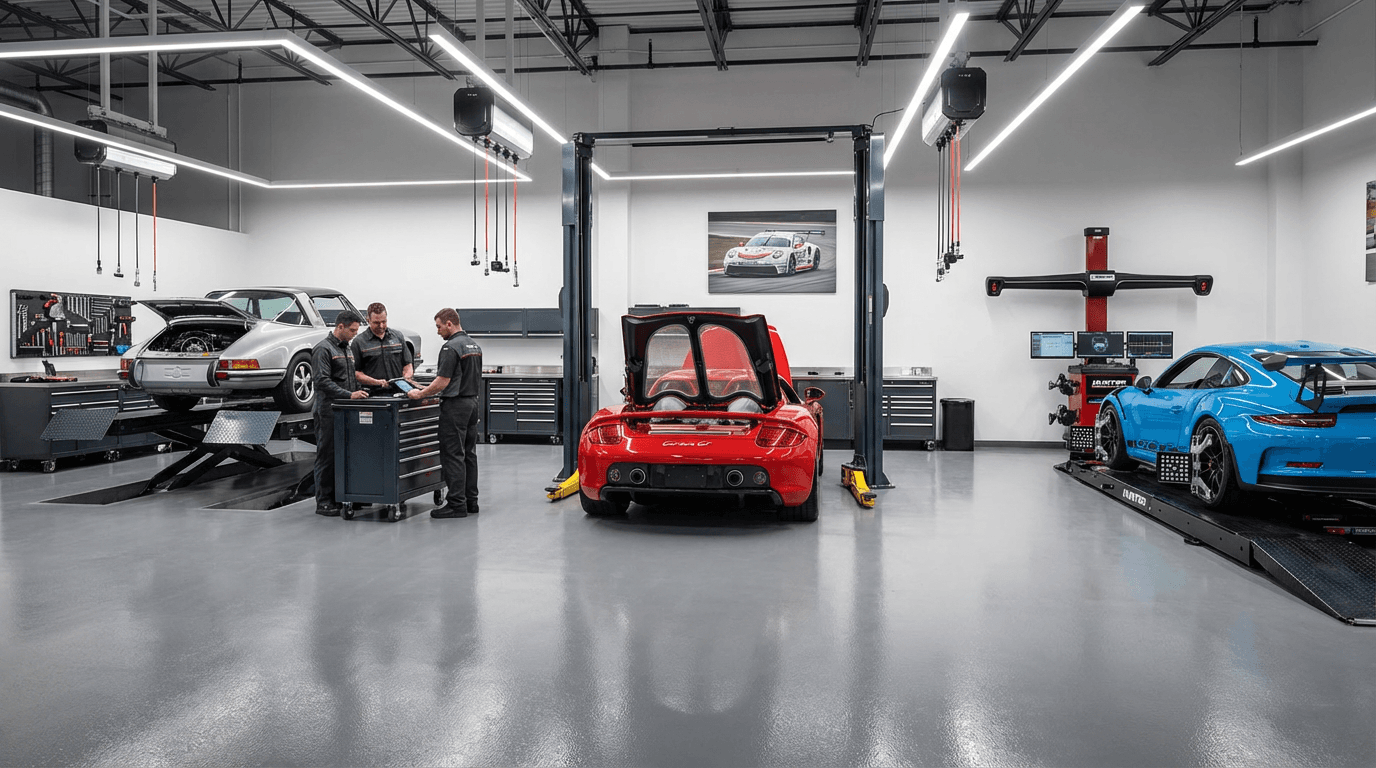
Finding the right shop for your Porsche is one of the most consequential decisions you'll make as an owner. The difference between a genuine Porsche specialist and a general European shop can mean thousands of dollars in unnecessary repairs, missed maintenance items, and—in worst cases—damage to a car that deserves better.
At Repasi Motorwerks, we've spent years building the kind of facility we'd want to trust with our own cars. But this guide isn't about us—it's about giving you the knowledge to evaluate any Porsche specialist, anywhere in the country, so you can make an informed decision.
Whether you're choosing a local shop for your daily-driven Cayenne or selecting a specialist to maintain your seven-figure Carrera GT, these evaluation criteria apply universally.
What Makes a Porsche Specialist Different
A "Porsche specialist" should mean something specific. Unfortunately, the term is unregulated—any shop can claim it. Here's what separates genuine specialists from general mechanics who happen to work on Porsches.
Depth of Knowledge
A true specialist understands not just how to perform procedures but why they matter for specific models. They know:
- The difference between a Mezger and 9A1 engine maintenance profile
- Why GT3 brake fluid specifications differ from Cayenne specifications
- That air-cooled 911 valve adjustments require different techniques by generation
- Model-specific technical service bulletins (TSBs) and their implications
- The history and evolution of systems across model years
Test question: Ask a prospective shop about a known issue with your specific model year. Their answer should be detailed and confident, not vague or requiring research.
Certification: The Gold Meister Standard
Porsche's technician certification program has multiple levels. The Gold Meister certification represents the highest achievement—hundreds of hours of factory training across all Porsche systems.
Certification levels (from entry to advanced):
- Porsche Certified Technician
- Porsche Silver Meister
- Porsche Gold Meister
What Gold Meister means: A technician who has completed comprehensive training across engine, transmission, electrical, chassis, and body systems with demonstrated competency at the highest level.
Important caveat: Certification alone doesn't guarantee quality work. An experienced independent technician with 20 years of Porsche-only experience may be more capable than a freshly certified dealership tech. Certification is one indicator, not the only one.
At Repasi Motorwerks, our technicians hold Gold Meister certification—the same credential level as the top dealership technicians. For more about what this means, see our post on Gold Meister Certification.
Diagnostic Equipment: PIWIS Access
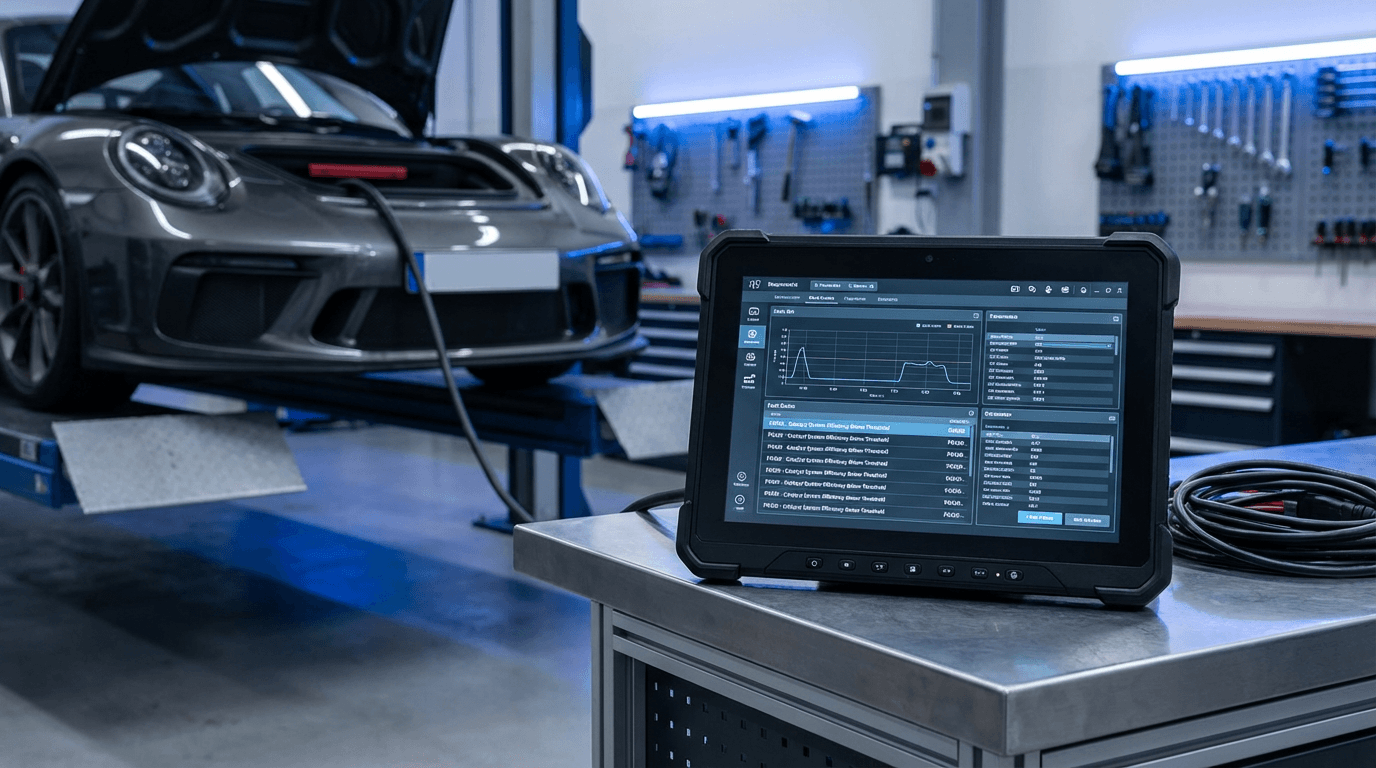
PIWIS (Porsche Integrated Workshop Information System) is Porsche's factory diagnostic platform. It's the difference between reading a book and having the author explain it to you.
What PIWIS provides that generic scanners don't:
- Complete access to all Porsche-specific control modules
- Ability to read and clear model-specific fault codes
- Programming and coding capabilities
- Service reset and adaptation procedures
- Guided fault-finding procedures
- Access to Porsche technical information and wiring diagrams
Why it matters: A generic OBD-II scanner can read basic engine and transmission codes. But modern Porsches have dozens of control modules—PASM (suspension), PDCC (dynamic chassis control), PCM (infotainment), sport chrono, and many more. Without PIWIS, a shop is diagnosing with incomplete information.
We cover this in detail in our post: PIWIS Diagnostics: Why Your Porsche Needs Specialist-Level Scanning.
Red flag: If a shop says they can "figure it out" without PIWIS, or claims their aftermarket scanner is "just as good," consider looking elsewhere for complex diagnostics.
Parts Sourcing: OEM vs Aftermarket
How a shop sources parts reveals their philosophy about quality and long-term care.
OEM (Original Equipment Manufacturer)
OEM parts are manufactured by the same suppliers who make parts for Porsche's factory. They carry the Porsche part number, meet factory specifications, and ensure proper fit and function.
Best for: Safety-critical components, engine internals, electrical components, body panels, and any part where exact fit is important.
OES (Original Equipment Supplier)
These are the same parts, made by the same manufacturer, but sold under the supplier's brand rather than the Porsche brand. Often 20-40% less expensive with identical quality.
Examples: Mahle (engine components), Bosch (electrical), Sachs (clutch), Bilstein (dampers)
Best for: Many maintenance items where the part is identical to OEM but priced more competitively.
Quality Aftermarket
Reputable aftermarket manufacturers who produce parts designed to meet or exceed OEM specifications. Some aftermarket options genuinely improve on factory parts.
Best for: Wear items (brake pads, rotors), performance upgrades, items where quality aftermarket options have proven track records.
Cheap Aftermarket
Low-cost parts of unknown origin and quality. This is where problems start.
Avoid for: Anything safety-critical, engine components, suspension parts, electrical items.
What to ask your shop: "What brand parts are you using for this repair?" A good shop will tell you exactly what they're installing and why. A shop that gets vague about parts sourcing is a red flag.
Questions to Ask Any Prospective Shop
Before Your First Visit
- "How long have you specialized in Porsche?" — Look for at least 5-10 years of dedicated Porsche experience.
- "What certifications do your technicians hold?" — Gold Meister is ideal, but extensive hands-on experience also matters.
- "Do you have PIWIS diagnostic access?" — Essential for any modern Porsche.
- "What models do you specialize in?" — Some shops focus on modern water-cooled, others on classics. Ensure they have experience with your specific car.
- "Can you provide references from owners of similar cars?" — Confident shops welcome this.
During Your Visit
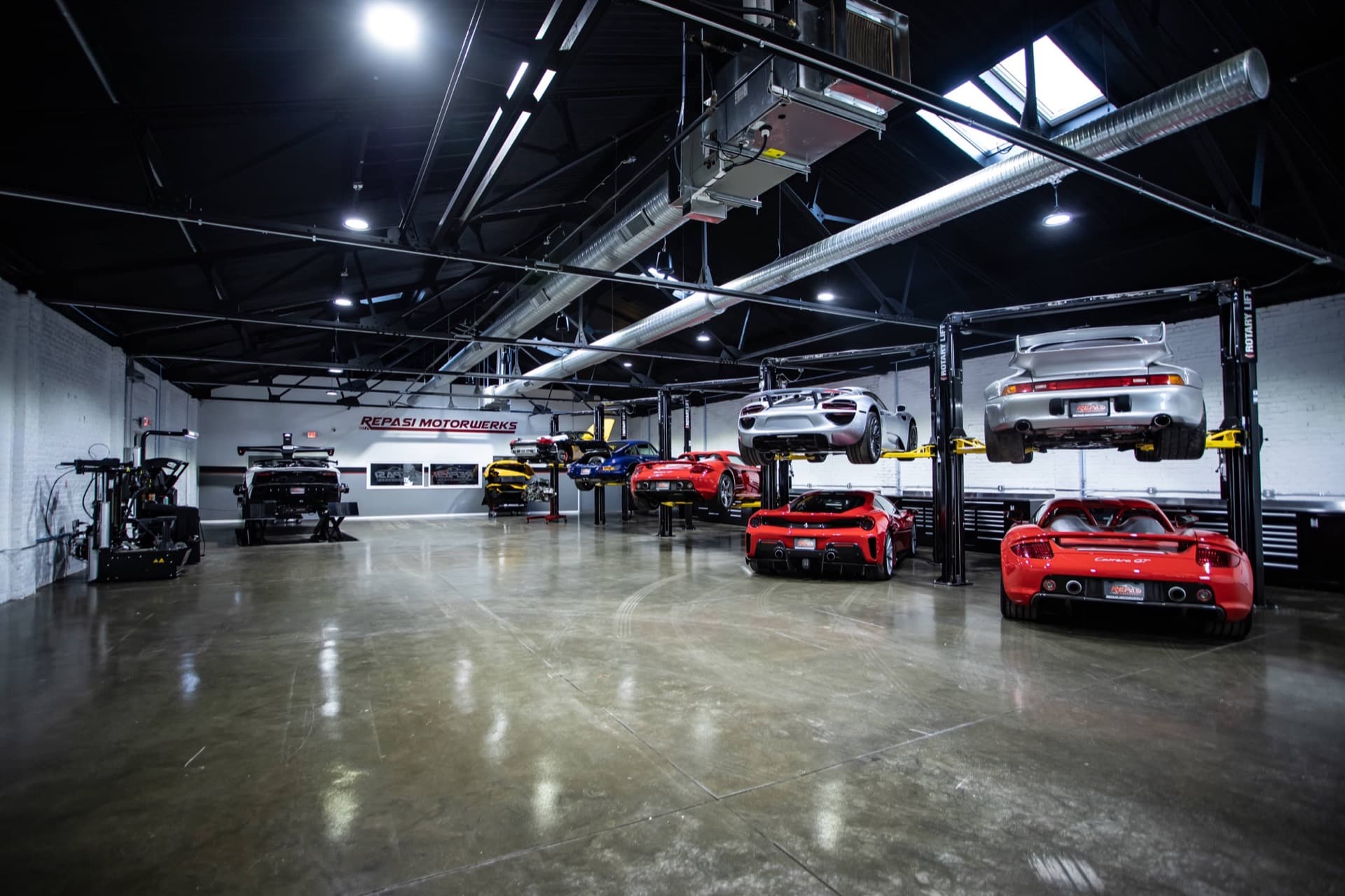
- Look at the shop floor. Clean, organized shops tend to do clean, organized work.
- Look at what's in the bays. If they claim Porsche specialization but the shop is full of BMWs and Mercedes, that's telling.
- Ask to see their PIWIS setup. A shop proud of their equipment will gladly show it.
- Ask about parts storage. Proper parts storage (organized, labeled, protected) indicates attention to detail.
After Service
- Evaluate the documentation. Did you receive a detailed invoice with specific parts, labor descriptions, and recommendations?
- Were photos provided? Many quality shops photograph worn components to show you what they found.
- Did they explain what they found and recommended, vs. what was urgent? A good shop prioritizes repairs rather than selling everything at once.
Red Flags: When to Walk Away
After years in this industry, we've identified the warning signs of shops that aren't up to the task.
Immediate Red Flags
- No PIWIS and no plan to get it — This shop isn't serious about Porsche service
- Won't provide a written estimate — Transparency isn't optional
- Discourages pre-purchase inspections — A good shop welcomes PPIs; sellers who refuse them are hiding something
- Badmouths other shops without specifics — Professionals compete on quality, not gossip
- Can't explain what they're doing in terms you understand — Either they don't know, or they don't respect your right to understand
Subtler Red Flags
- Vague about parts brands — "We use quality parts" means nothing
- No photos or documentation of findings — In 2026, this is basic professionalism
- Constantly upselling — Finding additional work during service is normal; finding thousands in "urgent" repairs every visit is suspicious
- No specialization depth — A shop that works on everything from Honda to Porsche may lack the depth your car needs
- Unrealistically low prices — Quality Porsche service costs real money. If prices seem too good to be true, the parts or labor quality is probably compromised
The Dealer vs Independent Decision
This is one of the most common questions Porsche owners face. We've written a detailed comparison: Independent vs Dealership Porsche Service.
The short version:
Choose the dealer when:
- Your car is under manufacturer warranty
- Recall work is needed
- You need CPO maintenance documentation
- Your model is brand new and specialists lack experience
Choose an independent specialist when:
- Your car is out of warranty (significant cost savings)
- You own a rare or exotic model (Carrera GT, GT3 RS, 918)
- You want a direct relationship with your technician
- You need track preparation or performance work
Nationwide Service: When the Best Shop Isn't Local
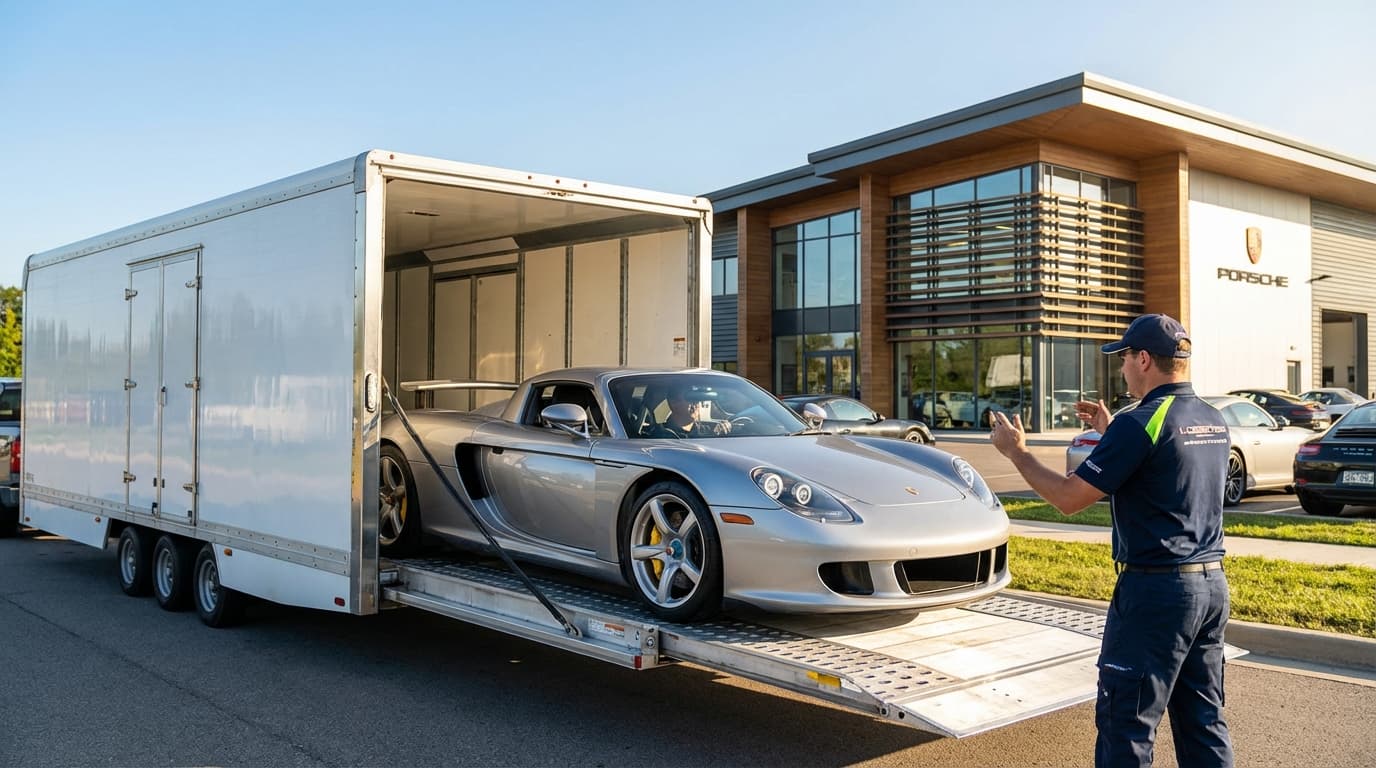
If the best specialist for your car isn't in your area, shipping is a viable option that more owners use than you might expect. We have a detailed guide: Shipping Your Porsche for Service.
At Repasi Motorwerks, approximately 30% of our clients ship their cars from out of state. For rare models like the Carrera GT or 918 Spyder, this percentage is even higher—owners want the specific expertise that comes from working on these cars regularly.
Cost Expectations by Service Level
Understanding what proper service costs prevents sticker shock and helps you evaluate quotes.
| Service Type | Independent Specialist | Porsche Dealer |
|---|---|---|
| Annual oil service | $500-$800 | $800-$1,200 |
| Major service (20K interval) | $1,500-$3,000 | $3,000-$5,000 |
| Brake service (pads + rotors) | $2,000-$5,000 | $3,500-$8,000 |
| Comprehensive inspection | $500-$1,000 | $800-$1,500 |
| Pre-purchase inspection | $500-$1,500 | $1,000-$2,000 |
For more detailed cost information, see: Porsche Service Costs: What to Expect.
Related Service Resources
- Independent vs Dealership Service
- Gold Meister Certification Explained
- PIWIS Diagnostics Guide
- Shipping Your Porsche for Service
- Porsche Service Costs: What to Expect
- Connecticut Porsche Specialist Guide
- Porsche Oil Change Cost by Model
- Nationwide Porsche Shipping Service
About Repasi Motorwerks
We're an independent Porsche specialist in Stratford, Connecticut, with Gold Meister certified technicians, full PIWIS diagnostic capability, and deep expertise across every Porsche model from air-cooled classics to the latest GT cars. We serve owners nationwide—many of whom ship their cars to us for our specialized knowledge.