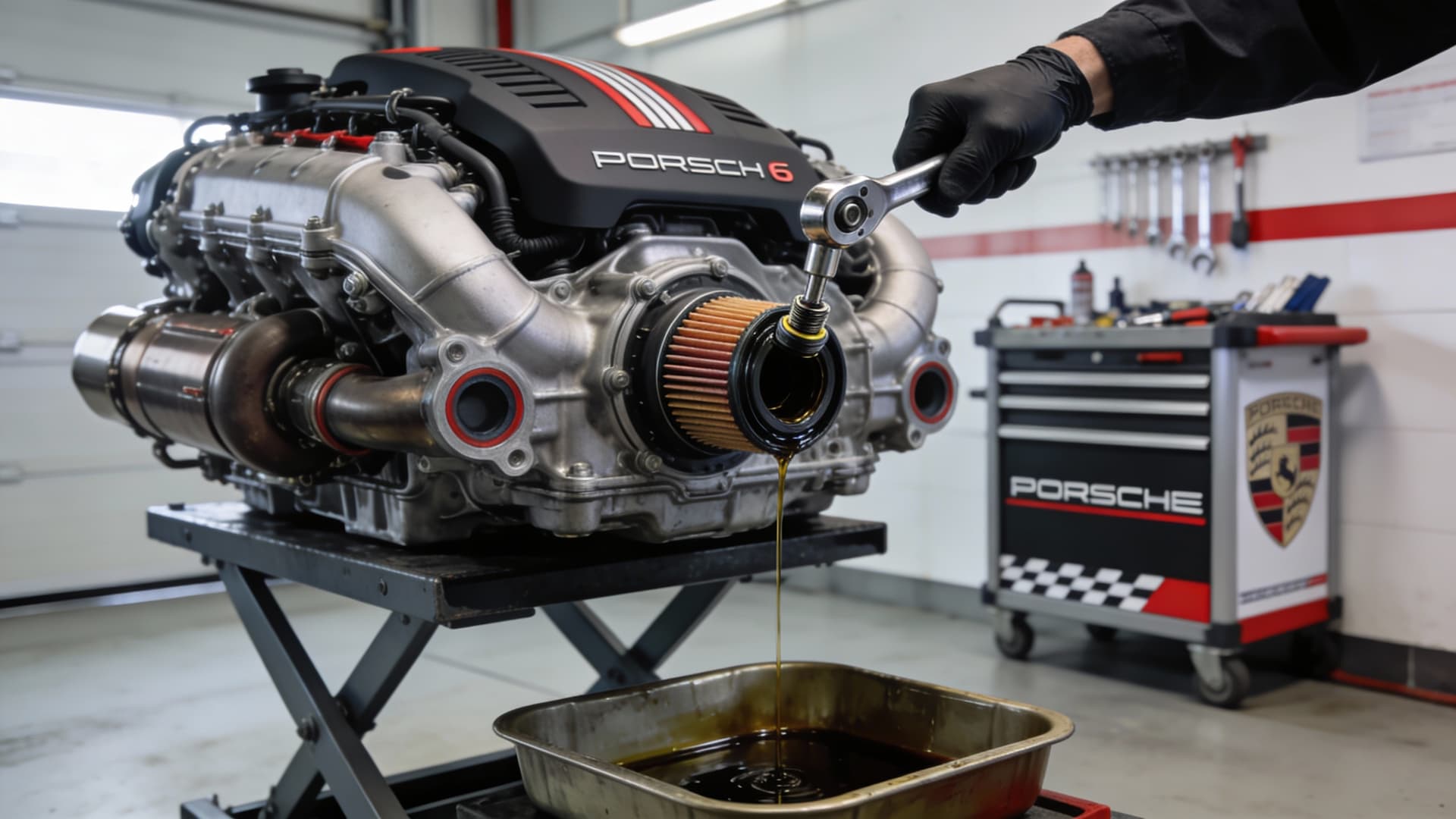
Oil changes are the most frequent maintenance any Porsche requires, and they're also the service where owners first discover what Porsche ownership actually costs. That sticker shock moment—realizing an oil change costs three or four hundred dollars rather than the fifty or sixty you paid for your previous car—introduces the economic reality of maintaining precision German engineering.
The numbers are what they are. Porsche engines hold significantly more oil than typical cars, often eight to ten quarts rather than five or six. The oil itself carries premium specifications that cost fifteen to twenty-five dollars per quart rather than the eight or ten you'd pay for conventional motor oil. Add a quality filter and the labor to properly service a sophisticated engine, and the baseline cost structure becomes clear. This isn't dealer markup—it's what proper service actually costs. Finding the right shop for your oil change starts with our guide to choosing a Porsche specialist.
But within that reality, significant variables determine what you'll actually pay. Model type matters enormously. Service provider matters even more. Understanding these differences helps you budget appropriately and choose wisely.
The Model Spectrum
The SUVs represent the most approachable end of the Porsche maintenance spectrum. Cayennes and Macans use turbocharged engines that require quality oil but don't demand the exotic specifications of the sports cars. Dealer pricing typically runs two hundred fifty to four hundred dollars. Independent specialists who know what they're doing often land between one hundred fifty and two hundred fifty. The savings at qualified independents aren't about cutting corners—they're about different overhead structures producing different math.
Standard 911s step up from there. A Carrera or Targa needs the same quality approach but often carries slightly higher capacity and the expectation that owners want more thorough service. Dealers quote three hundred to four hundred fifty. Independents typically land between two hundred and three hundred. The difference accumulates meaningfully over years of ownership.
Turbocharged 911s add another tier of complexity. The turbocharger's oil-fed bearings create additional stress on oil quality. Heat loads run higher. Track use—which many Turbo owners pursue—shortens appropriate change intervals dramatically. Dealer pricing pushes toward five hundred dollars. Qualified specialists stay in the two hundred fifty to three hundred fifty range for equivalent service.
GT3s and GT3 RSs occupy their own category. These naturally aspirated engines rev to nine thousand RPM, creating demands that push oil specifications to their limits. Many GT3 owners change oil after every track weekend because the high-revving Mezger-derived engines reward fresh lubricant, and the cost of an oil change is trivial compared to potential engine damage. Dealer pricing reaches four hundred to six hundred dollars. Specialists typically stay below four hundred while providing identical quality.
GT2 RS ownership amplifies everything. The twin-turbocharged seven hundred horsepower engine generates more heat, carries higher oil capacity, and demands premium formulations without compromise. Track use—which characterizes most GT2 RS driving—creates additional service frequency. Dealer pricing reaches four hundred fifty to six hundred fifty. Specialists who actually know these cars usually land between three hundred and four hundred fifty.
The exotics exist in their own universe. Carrera GT oil service at a dealer? Most won't accept the car. The V10 engine unique to this model requires specialist knowledge that general Porsche technicians simply don't have. Qualified specialists—and there aren't many—typically charge five hundred to eight hundred dollars for proper service. The 918 Spyder's hybrid complexity pushes pricing even higher, often a thousand dollars or more at dealers because the oil service properly includes hybrid system checks that require specific training and equipment.
What the Service Should Include
The minimum acceptable oil service involves draining old oil completely, installing a new OEM-specification filter, filling with the correct quantity of proper-specification oil, replacing the drain plug washer, verifying the oil level, and resetting the service indicator. This is the baseline—anything less is incomplete.
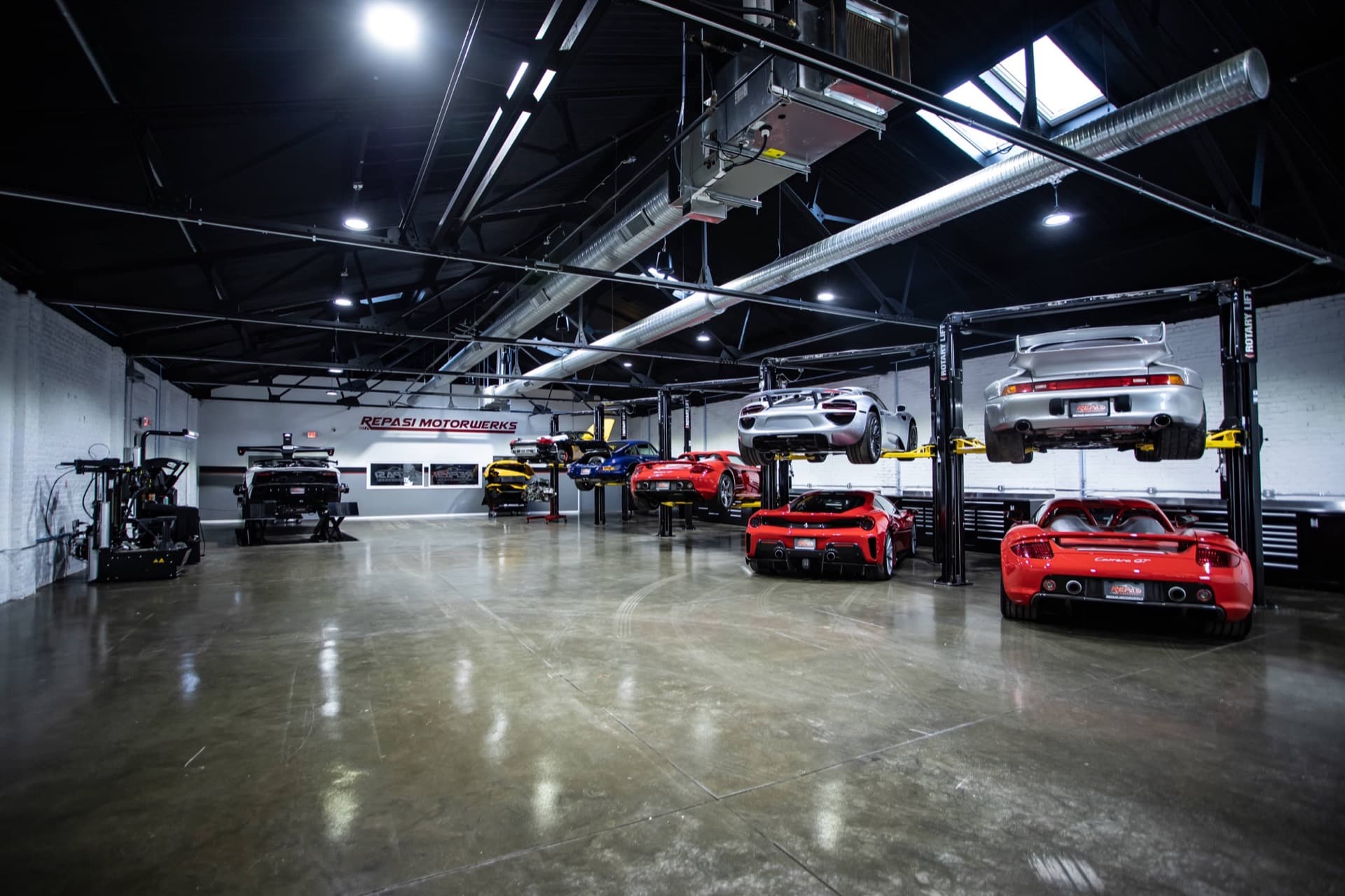
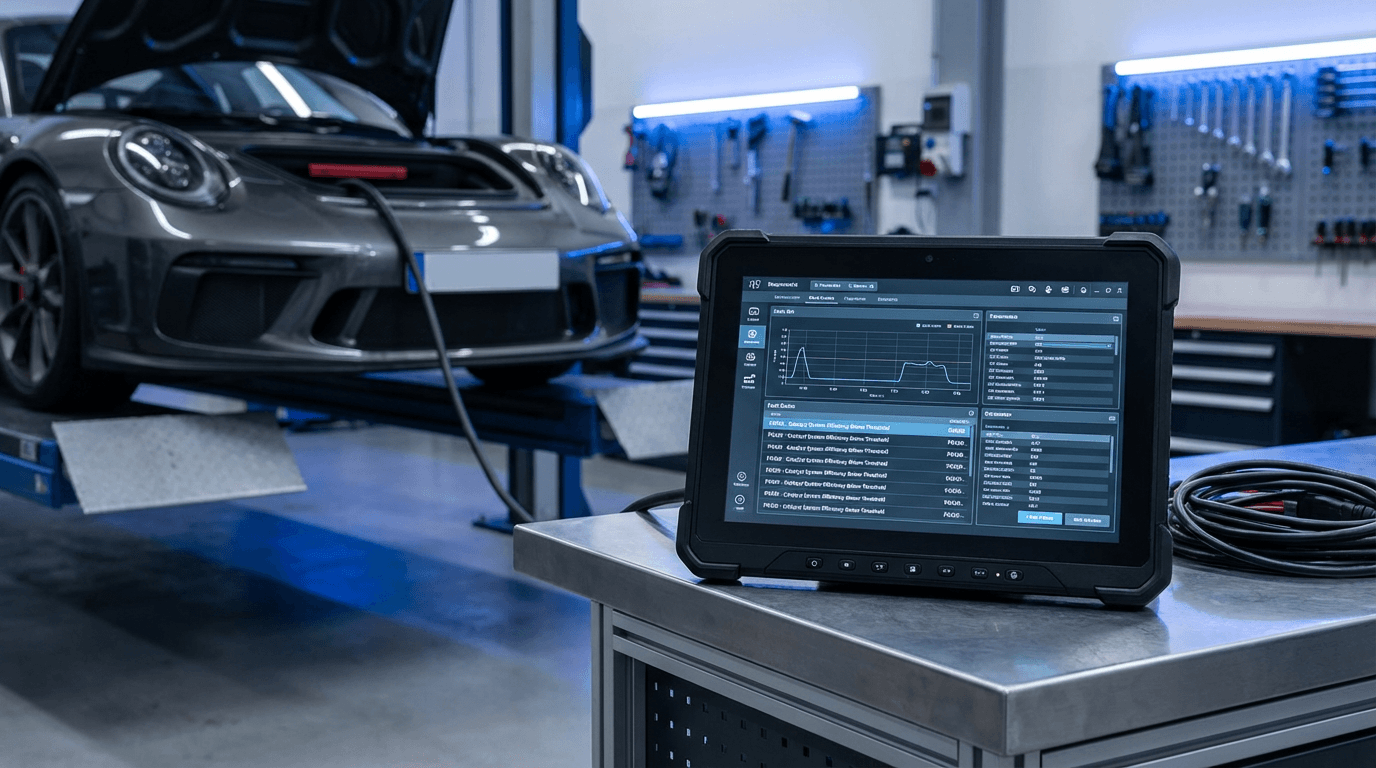
Better shops use the oil service as an opportunity for comprehensive inspection. Every car on our lifts gets a multi-point visual examination regardless of what specific service brought it in. Tire pressures get checked and adjusted. Brake components get visual inspection. All fluid levels get verified. Lights get tested. We run a quick diagnostic scan to check for stored fault codes that might indicate developing problems.
This comprehensive approach costs us time but catches issues early when they're inexpensive to address. The brake wear that looks fine now but will need attention in three months becomes something the owner can plan for rather than a surprise. The minor fluid seep that might become a major leak gets noted before it causes damage. The stored fault code that indicates an intermittent problem gets investigated before it becomes a failure.
The Specification Question
Using correct oil matters more than many owners realize. Porsche specifies particular formulations for particular engines, and those specifications exist for engineering reasons rather than marketing ones.
Standard models—most Cayennes, Macans, and base 911s—call for oil meeting Porsche A40 specification, typically 0W-40 viscosity full synthetic from approved brands like Mobil 1, Shell Helix, or Pennzoil Platinum. High-performance models often use either A40 or C30 specification, with viscosity choices that depend on intended use. Street driving favors 0W-40. Track use often benefits from 10W-60 for its better high-temperature protection.
Air-cooled classics present different considerations entirely. These engines predate modern synthetic oil technology and often perform better with conventional or synthetic-blend formulations in 10W-40 or 20W-50 viscosity. The chemistry differs significantly from modern engine requirements.
Wrong specifications can cause problems ranging from excessive wear to actual damage. The cost difference between correct and incorrect oil is trivial compared to the potential consequences of getting it wrong.
Service Intervals and Track Use
Factory-recommended intervals typically suggest ten thousand miles or one year for most modern Porsches. These intervals assume normal street driving with occasional spirited use. They do not account for track time.
Track driving changes the calculus entirely. High-speed operation for sustained periods generates heat and stress that street driving never approaches. Many serious track drivers change oil before every event to ensure fresh lubricant for high-stress conditions, then consider another change after intensive weekends. The cost of these extra oil changes is trivial insurance against the kind of engine problems that result from degraded lubricant under extreme conditions.
Even without track use, certain conditions warrant shorter intervals. Stop-and-go traffic that prevents full warm-up. Extreme ambient temperatures. Aggressive driving patterns. Short trips that don't allow complete moisture evaporation from the crankcase. Any of these factors might suggest reducing intervals from the factory recommendations.
The Dealer-Independent Decision
This decision comes down to what you're actually paying for and what you actually need.
Dealer advantages are real for specific situations. Warranty coverage sometimes requires dealer service to remain valid. The factory service history that appears in Porsche's official systems matters to some buyers at resale time. Factory-trained technicians and guaranteed OEM parts provide certainty.
Independent advantages are equally real. Cost savings of thirty to fifty percent allow either more frequent service or simply reduced ownership expense. Specialists who focus on Porsches often have deeper experience with specific models than generalist dealer technicians. Personal attention and flexible scheduling make the service experience more pleasant.
The quality question gets asked frequently: does independent service sacrifice quality compared to dealers? The honest answer is that it depends entirely on the shop. At qualified specialists, the same oil, the same filters, and the same procedures produce identical results at lower cost. The difference is overhead structure, not service quality. At less qualified shops, the savings might come with genuine compromises.
The choice isn't binary. Some owners use dealers for warranty-related service and independents for out-of-warranty maintenance. Some bring new purchases to dealers initially, then transition to independents once they've developed confidence in a specific shop. The right approach depends on your specific situation, car, and priorities.
What Good Service Looks Like
Every oil service on our lifts follows the same protocol regardless of whether the car is a Macan or a Carrera GT. Complete oil drain. Proper new filter. Correct specification oil in correct quantity. Drain plug washer replacement. Level verification. Service indicator reset. Then the comprehensive inspection that catches developing problems before they become expensive failures.
Documentation accompanies every service. Photographs record what we found. Written notes explain what we did and what we recommend for the future. This record becomes part of your car's provenance, supporting its value and providing continuity for whoever owns it next.
The oil change is simple compared to major Porsche services. But it's also the service you'll do most frequently, and the one where you'll first experience the difference between shops that do things properly and ones that cut corners. Getting it right matters.
Ready to experience proper Porsche oil service? Contact Repasi Motorwerks in Stratford, Connecticut. We'll treat your car the way it deserves—whether it's a daily-driven Cayenne or a weekend GT3.