You found it. The 997 GT3 RS in the right color with a full service history, or the clean 996 C4S you've been hunting for two years. The seller sounds reasonable. The CarFax looks fine. Now what?
Now you get a pre-purchase inspection. Not an oil check and a test drive — a real PPI from a shop that knows Porsches. The kind that catches the things CarFax will never show you and the seller may not even know about.
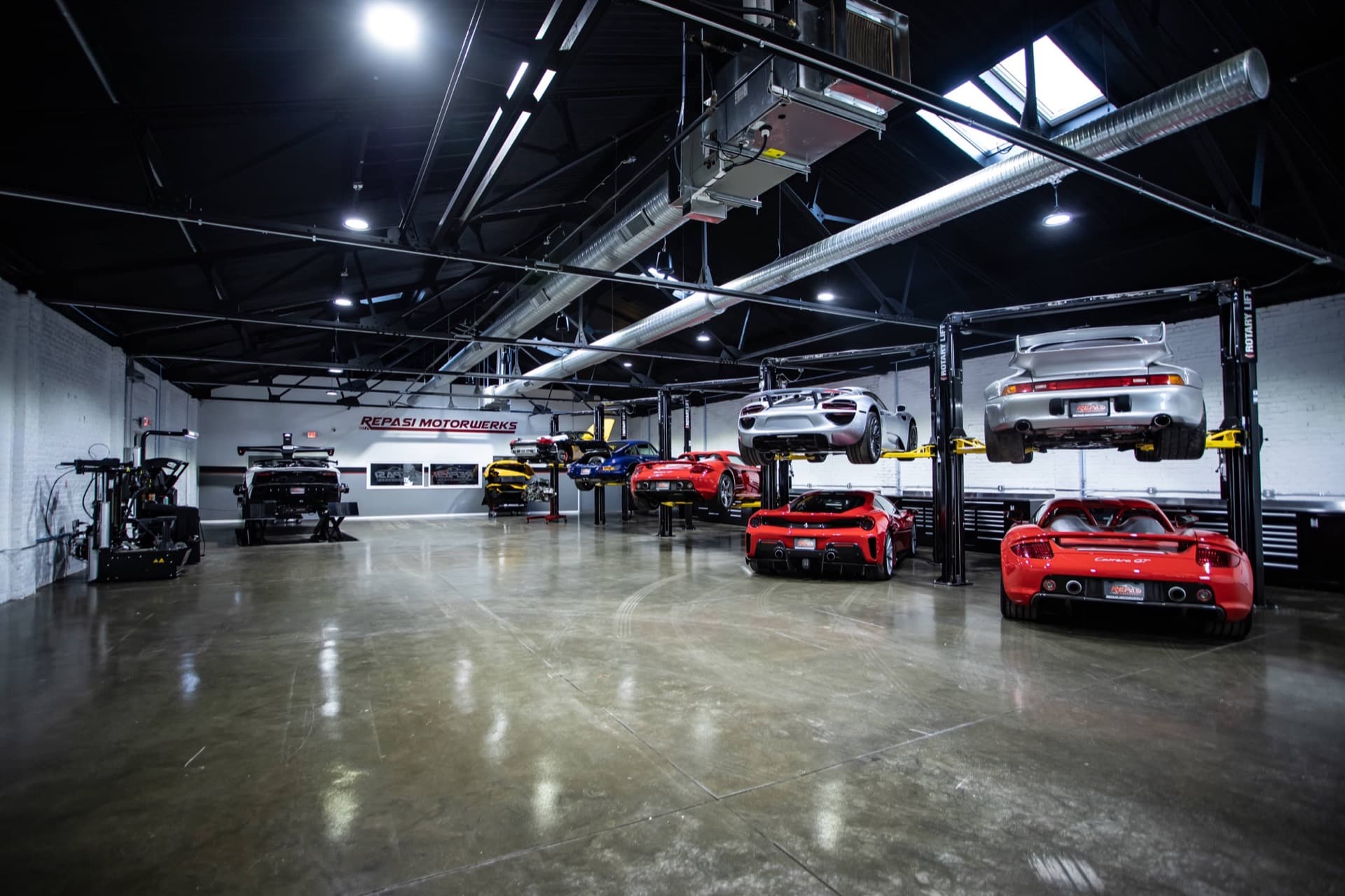
At Repasi Motorwerks in Stratford, Connecticut, we conduct PPIs on Porsches traveling from across the Northeast and beyond. What we find — and what owners decide to do with that information — shapes outcomes worth tens of thousands of dollars. This guide walks you through exactly what a proper Porsche PPI involves, what we typically uncover, and how to use the report to negotiate or walk away with confidence. Learn more about our Porsche PPI service.
Why a PPI Matters More for Porsches Than Almost Any Other Car
Porsches are enthusiast vehicles. They get tracked, pushed hard, modified, and in some cases, poorly maintained between owners. The depreciation curves on many models attract buyers who stretch their budgets, which can mean deferred maintenance becomes someone else's problem at the sale.
The mechanical complexity adds to the stakes. A water-cooled 911 with an IMS bearing issue or a failing RMS doesn't announce itself on a test drive. A PDK with worn clutch packs shifts fine in normal traffic but will slip under hard acceleration. A Carrera GT with a compromised carbon-ceramic clutch can feel perfectly drivable until it doesn't.
A factory-certified dealership inspection sounds reassuring but often means a technician spending 45 minutes checking fluids and scanning for codes. That is not a PPI. It is a liability check.
A proper PPI from a Porsche specialist involves hours of time, specialized equipment, and experience with exactly the failure modes these cars develop. The cost of the inspection — typically a few hundred dollars — is trivial against what it can save or reveal.
What Repasi's PPI Covers
Our PPI is comprehensive by design. We are not trying to find a reason to do work. We are trying to give the buyer a complete picture so they can make an informed decision.
Borescope inspection. We insert a borescope camera through the spark plug holes to examine cylinder walls, pistons, and combustion chambers directly. This is how we catch scoring, excessive carbon buildup, or signs of previous coolant intrusion — conditions that may not show up in a compression test alone.
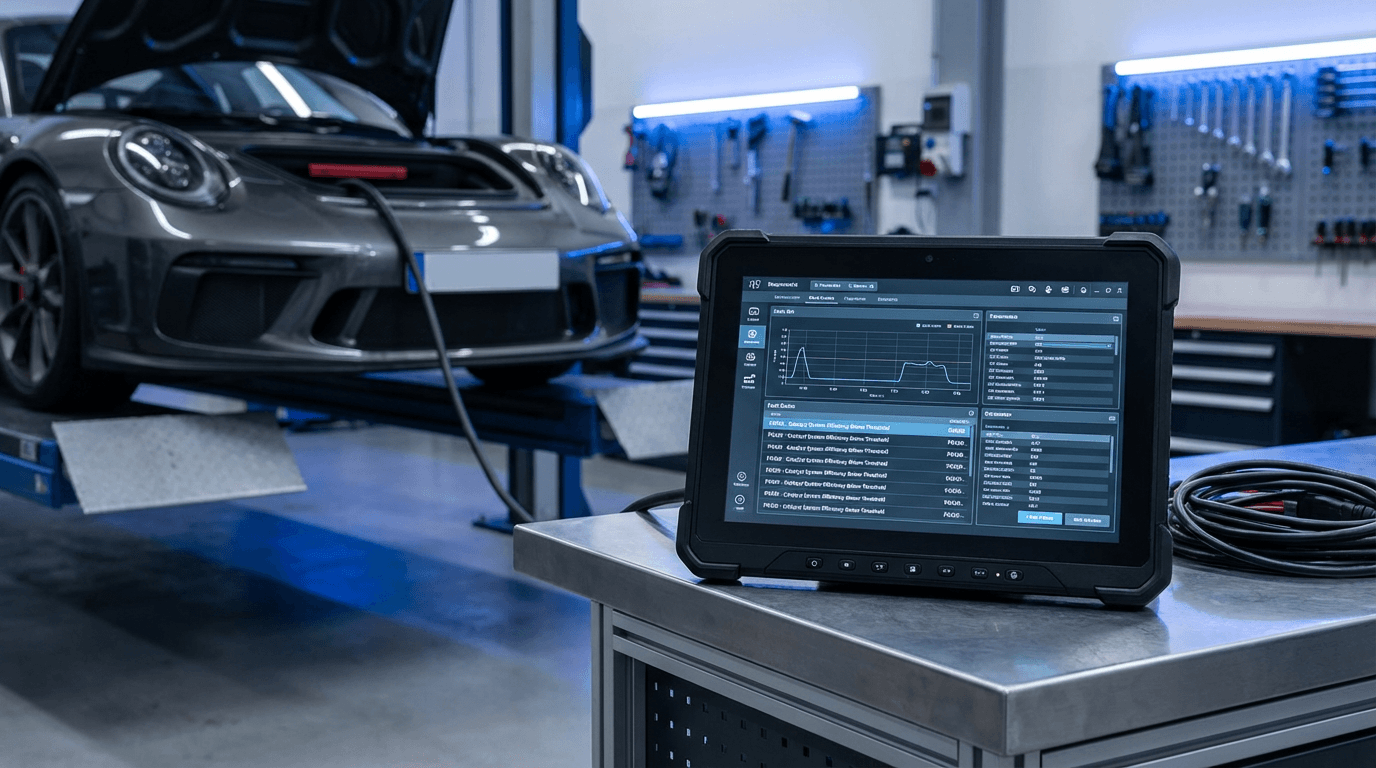
PIWIS factory diagnostics. We connect Porsche's factory PIWIS diagnostic system to read every module in the car. Fault codes, adaptation values, live sensor data. PIWIS reads things generic OBD-II scanners miss entirely, and it lets us see whether codes have been cleared recently to hide problems before the sale.
Compression and leak-down testing. We test compression across all cylinders and perform leak-down tests to assess ring seal and valve condition. An engine can make good power on a test drive and still show 20% leak-down on a cylinder that is on its way out.
Paint depth measurement. We use an electronic paint depth gauge on every panel. Factory paint runs between 90 and 140 microns depending on the panel. Readings significantly above that indicate repaint — meaning bodywork from an accident or corrosion that the seller may not have disclosed. Readings below that suggest aggressive polishing that has removed clear coat.
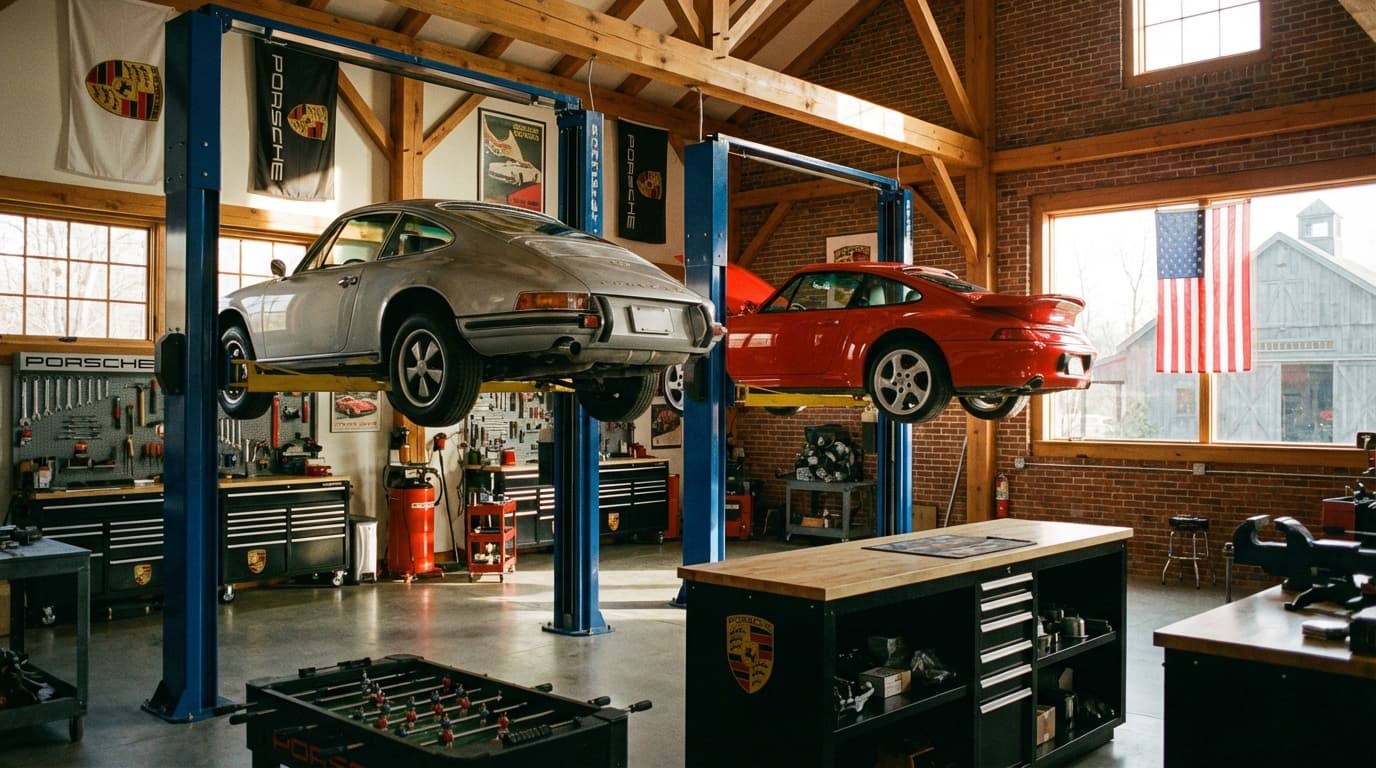
Underbody and subframe inspection. We put the car on a lift and examine the subframe mounting points, suspension components, floor pans, and exhaust system. Porsches involved in accidents often show evidence in the subframe. Track cars show wear patterns on suspension components that road cars do not.
Fluid condition and leaks. Engine oil, coolant, brake fluid, PDK or manual transmission fluid, differential fluid, power steering fluid where applicable. We check condition, levels, and look for active leaks at gaskets, seals, and cooler lines.
Brake system. Rotor thickness, pad depth, caliper condition, brake lines, and a close look at ceramic rotors if equipped. Carbon-ceramic brakes on a Carrera GT or GT3 RS represent significant replacement costs if they are worn or cracked.
400+ photographs. Every significant finding gets documented. You receive a complete photo record that serves as the inspection baseline and supports any negotiation conversation.
Common Issues Found on Specific Models
Our experience with Porsche's various generations tells us where to look hardest.
Carrera GT: The V10 is robust but not maintenance-free. We check for oil consumption beyond normal spec, inspect the carbon-ceramic clutch carefully (these wear quickly with improper use and are very expensive to replace), and examine the suspension for track wear. The monocoque structure means any chassis damage is serious.
GT3 and GT3 RS (996/997): These are frequently tracked. We look for overheated brakes that have compromised rotors, worn wheel bearings from track stress, evidence of hard launches damaging the transmission, and verify the engine was not run lean or hot. The 996 GT3 also has the IMS bearing consideration that all water-cooled 996 buyers should understand.
997 and 991 generation 911: Bore scoring on the 9A1 (991.1) engine is a known concern. A borescope inspection of cylinders 4-8 is essential on high-mileage examples. We also check for coolant leaks at the heat exchanger and inspect RMS condition on the 997.
Water-cooled 996: The intermediate shaft bearing is the headline concern, but the coolant pipes, heat exchanger, and RMS are equally important. We inspect all of it.
Boxster and Cayman: IMS bearing on M96/M97 engines, rear main seal, and coolant pipe integrity. These are generally more straightforward than the 911, but the same water-cooled concerns apply.
How to Use the PPI Report to Negotiate or Walk Away
A PPI report is leverage. Here is how to use it.
Quantify everything. Before you enter a negotiation conversation, get actual repair estimates for what the PPI found. "The car needs work" is not a negotiating position. "The car needs a rear main seal, valve cover gaskets, and new rear tires, which comes to $3,200 in parts and labor" is a negotiating position.
Know the difference between deferred maintenance and damage. Worn brake pads are normal consumables. A scored cylinder is a different conversation. Present findings in the right category.
Use photos directly. Share specific photos from the inspection when discussing findings with the seller. It converts the conversation from "the inspector said" to "here is what we photographed."
Price in the work or walk. Two outcomes make sense: the seller adjusts price to reflect the findings, or you buy the car understanding exactly what it needs and budget accordingly. What does not make sense is buying a car with known significant issues at a price that does not reflect them.
What If the Seller Refuses a PPI?
This happens. Some sellers believe a PPI invitation invites problems, or they have had bad experiences with buyers who use inspections as an excuse to renegotiate endlessly. There are also sellers who know exactly why they would prefer you not look closely.
A seller who genuinely has a good car should want you to inspect it. The PPI reduces buyer hesitation and supports the asking price when the car comes back clean.
If a seller refuses a PPI entirely on a high-value Porsche, treat that refusal as a finding in itself. There may be legitimate reasons — logistics, insurance, concern about liability during transport. Ask for those reasons specifically. If the only reason is "just trust me," that is information.
Some buyers accept a PPI at a dealer of the seller's choosing as a compromise. That can work, but understand its limitations. An independent Porsche specialist who works on these cars daily will notice things a dealer service department may not prioritize.
Schedule a PPI with Repasi
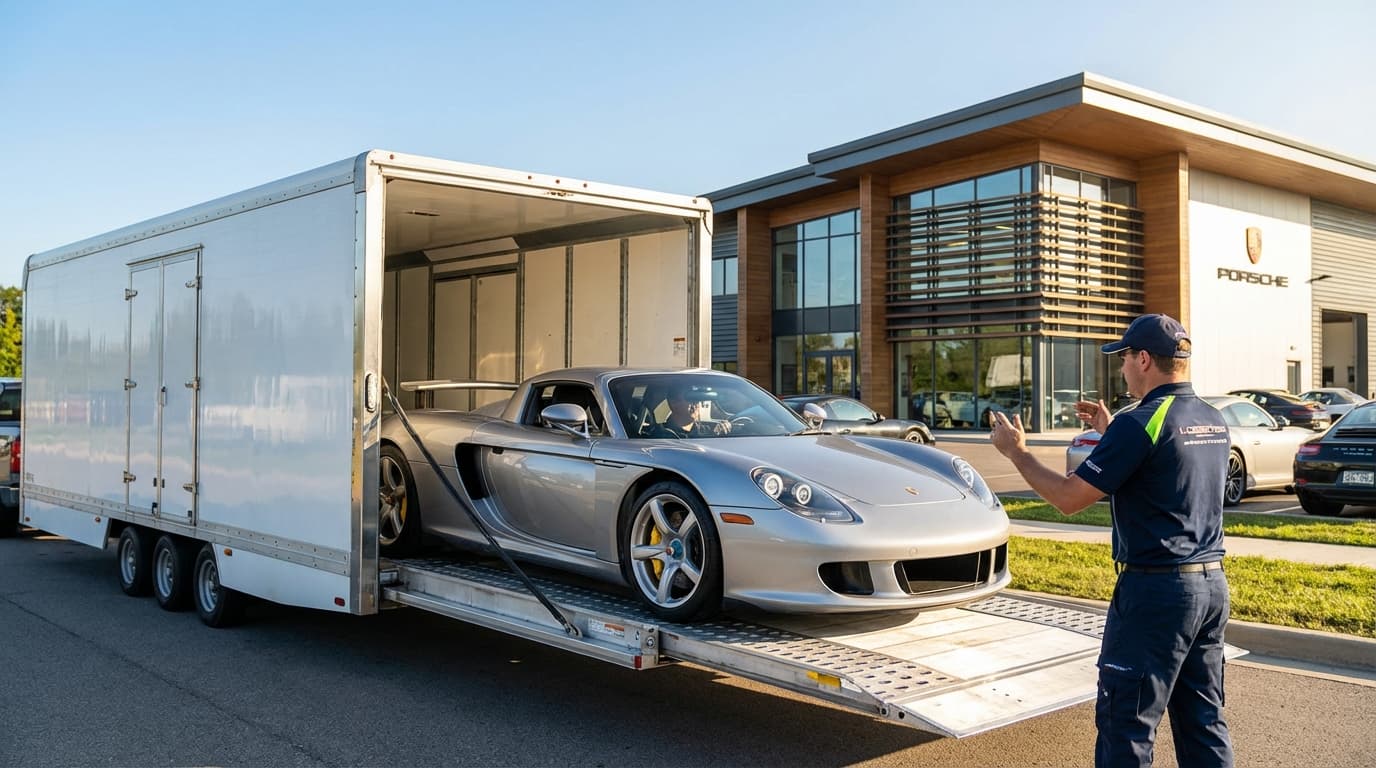
We inspect Porsches from across Connecticut, New York, New Jersey, and for cars being purchased remotely, we coordinate directly with the selling party. Our report gives you what you need to buy with confidence or walk away without regret.
Schedule your PPI before you commit. A few hours of thorough inspection is the best money you will spend in any Porsche purchase.