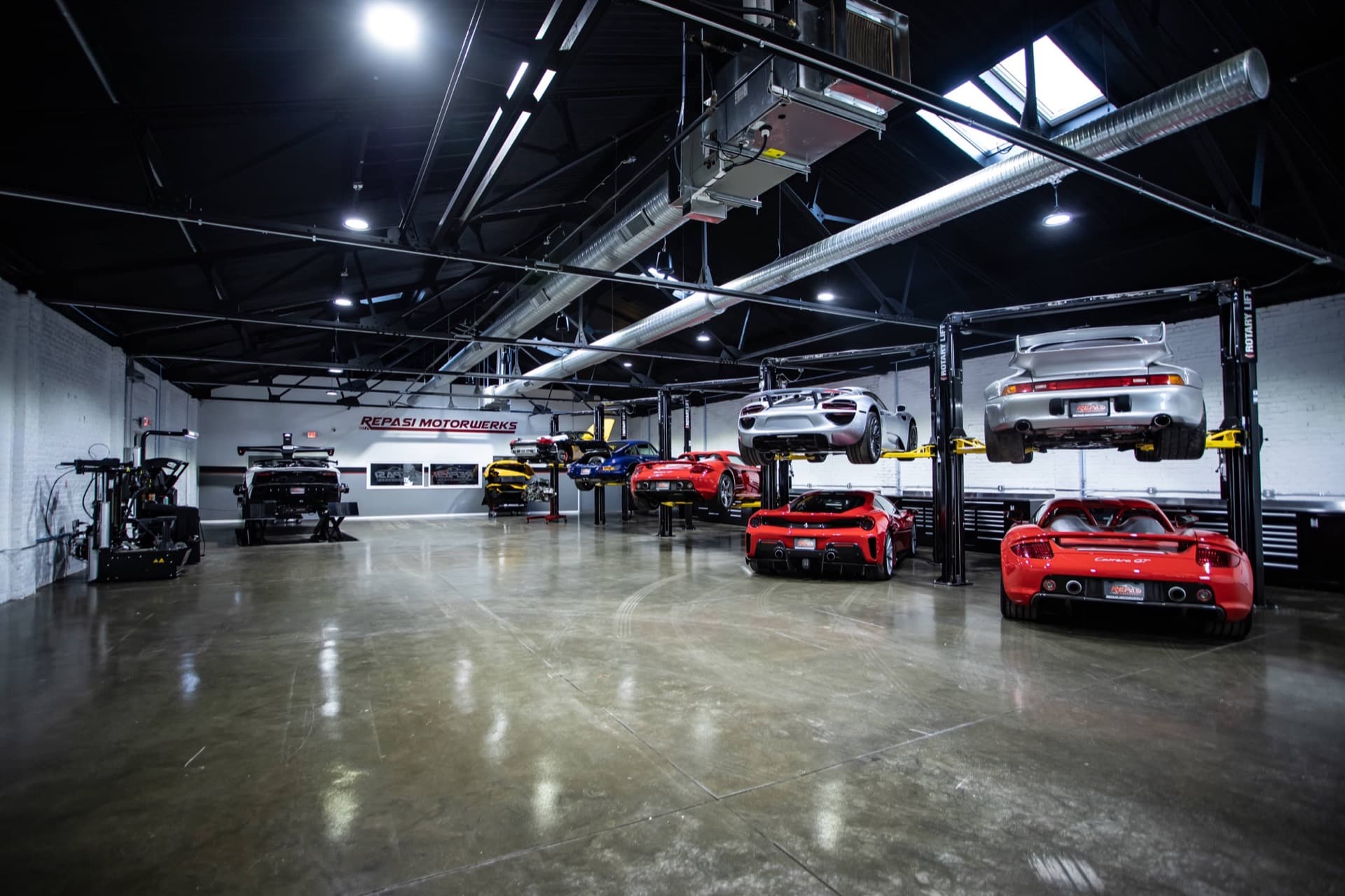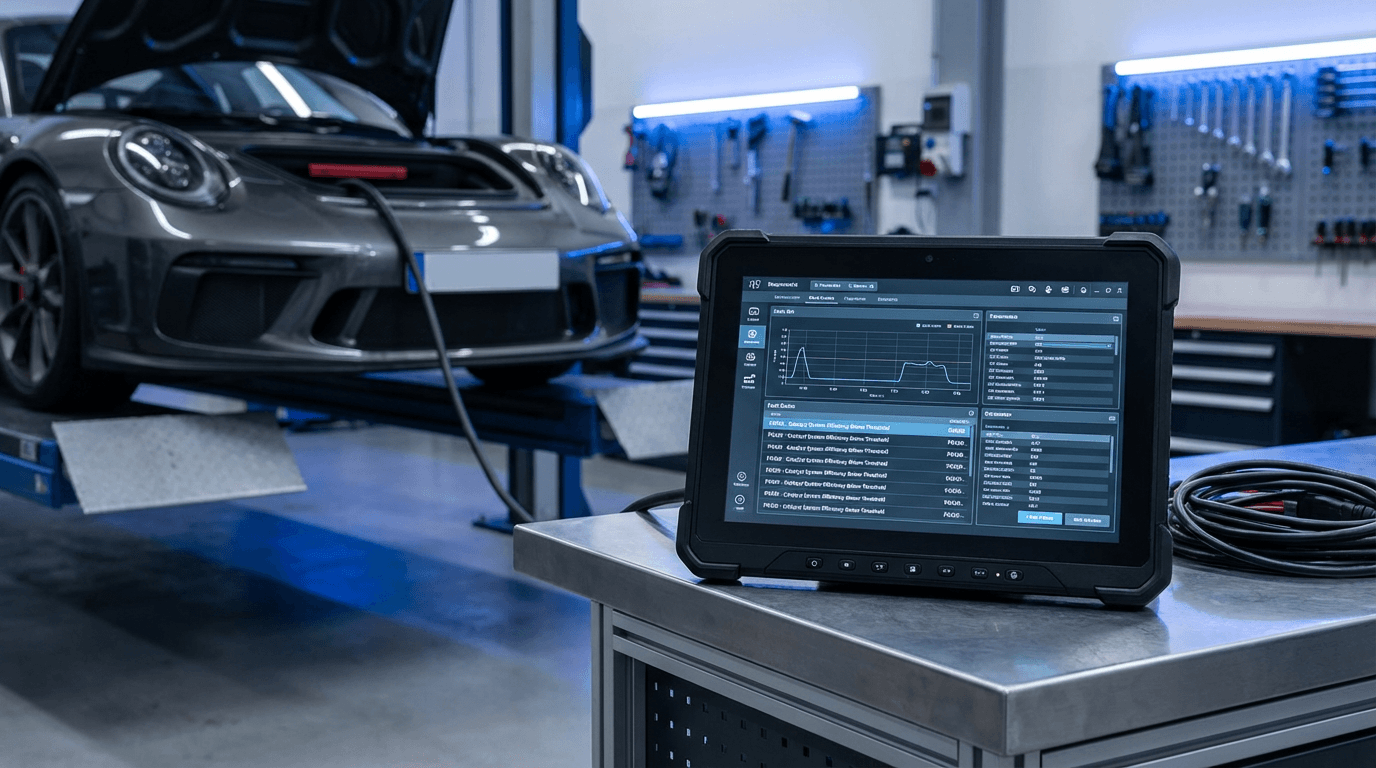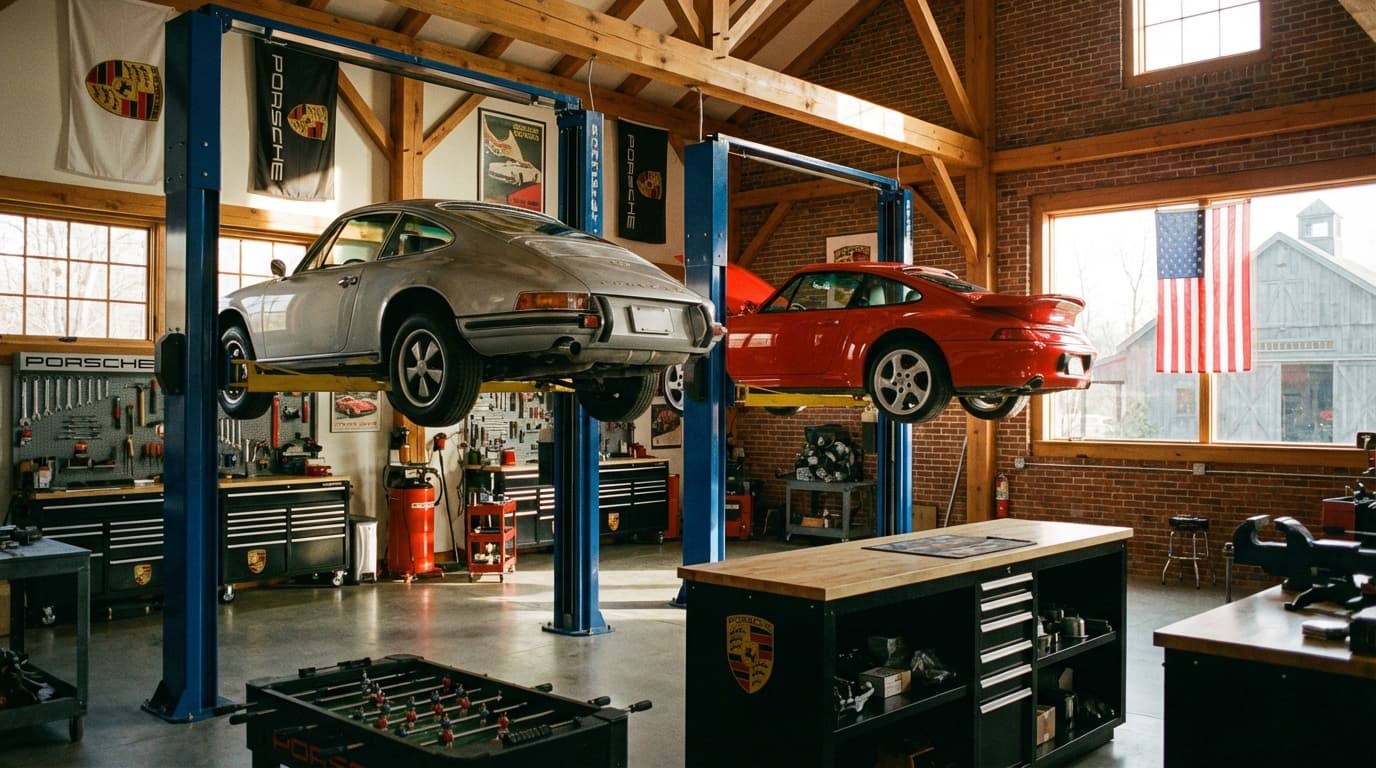
If the best specialist for your Porsche isn't local, shipping is a practical and increasingly common solution. At Repasi Motorwerks, approximately 30% of our clients ship their cars from out of state. For rare models like the Carrera GT, 918 Spyder, and air-cooled classics, that percentage is even higher.
Shipping a high-value car requires more attention than standard vehicle transport. This guide covers everything you need to know about getting your Porsche to a specialist safely and efficiently.
For guidance on selecting the right specialist in the first place, see our How to Choose a Porsche Specialist guide.
Enclosed vs Open Transport
Open Transport
Open carriers are the standard auto transport trucks you see on highways — multi-level trailers carrying 6-10 vehicles exposed to the elements.
Pros:
- Significantly cheaper ($800-$1,500 cross-country)
- More available, shorter booking windows
Cons:
- Exposure to weather, road debris, and dirt
- Higher risk of minor cosmetic damage
- Visible to other drivers (security concern for high-value cars)
- Not appropriate for cars valued over $100,000
Recommendation: Not recommended for GT cars, classics, or any car you consider irreplaceable.
Enclosed Transport
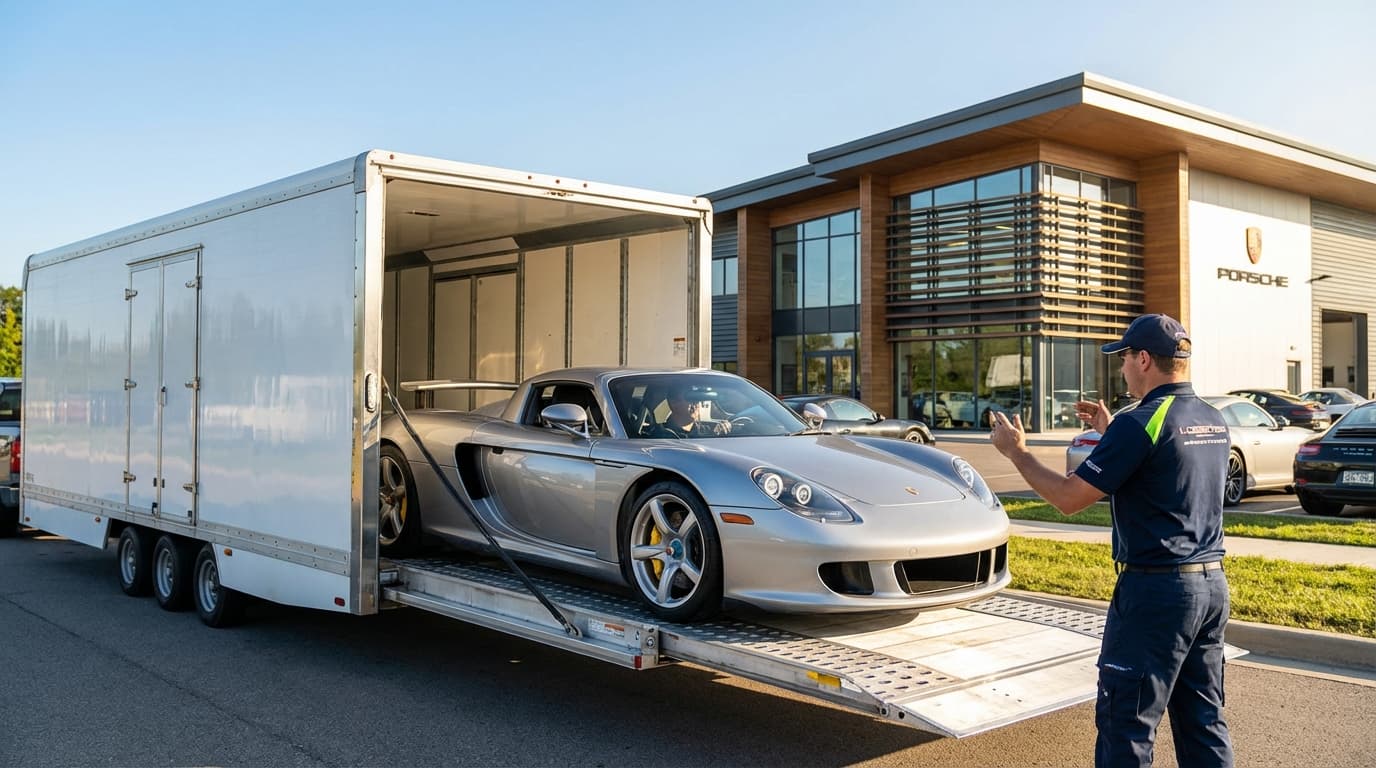
Enclosed carriers use hard-sided or soft-sided trailers that fully protect vehicles from weather and road debris. Most carry 2-6 vehicles.
Pros:
- Complete protection from weather and road debris
- Significantly lower risk of cosmetic damage
- Often includes liftgate loading (essential for low-clearance cars)
- Higher insurance coverage as standard
- Professional drivers experienced with high-value vehicles
Cons:
- Higher cost ($1,500-$4,000+ cross-country)
- Less availability, longer booking windows
- May require flexible pickup/delivery dates
Recommendation: Enclosed transport is the only appropriate choice for GT cars, 918 Spyders, air-cooled classics, and any car valued above approximately $100,000.
Insurance Requirements
Carrier Insurance
All licensed carriers carry cargo insurance, but the coverage levels vary:
- Open carriers: Typically $100,000-$250,000 per vehicle
- Enclosed carriers: Typically $500,000-$1,000,000+ per vehicle
What to verify:
- Carrier's insurance certificate (request a copy before booking)
- Coverage amount per vehicle (must exceed your car's value)
- Deductible amount (some policies have $500-$1,000 deductibles)
- Exclusions (some policies exclude pre-existing damage, mechanical issues, or custom modifications)
Your Own Insurance
Check with your own auto insurance provider:
- Most comprehensive policies cover damage during transport
- Verify there are no transport exclusions in your policy
- Some specialty policies (Hagerty, Grundy) include transport coverage explicitly
- Document your car's condition thoroughly before shipping (photographs are essential)
Carrier Vetting: How to Choose
Essential Checks
- USDOT number and MC authority — verify at safer.fmcsa.dot.gov
- Insurance certificate — request current proof of insurance
- Reviews and references — check Google, Yelp, and transport-specific platforms
- Experience with high-value vehicles — ask specifically about their experience with exotic and collector cars
- Equipment — liftgate capability (essential for low cars like the CGT and 918)
Questions to Ask
- "What is your per-vehicle insurance coverage?"
- "Do you have liftgate/ramp loading capability?"
- "How many other vehicles will share the load?"
- "Can you accommodate special requirements (no stacking, first on/last off)?"
- "What is your damage claim process?"
- "Can you provide references from owners of similar vehicles?"
Red Flags
- Unable or unwilling to provide insurance documentation
- No USDOT number or MC authority
- Extremely low pricing (may indicate inadequate insurance or inexperience)
- No experience with high-value vehicles
- Broker-only operations with no direct carrier relationship
Cost Ranges by Distance
| Distance | Open Transport | Enclosed Transport |
|---|---|---|
| Under 500 miles | $600-$1,000 | $1,200-$2,000 |
| 500-1,000 miles | $800-$1,200 | $1,500-$2,500 |
| 1,000-2,000 miles | $1,000-$1,500 | $2,000-$3,500 |
| Cross-country (2,000+) | $1,200-$1,800 | $2,500-$4,500 |
Factors affecting cost:
- Vehicle size and weight
- Route popularity (common routes cost less)
- Season (snowbird season increases prices)
- Urgency (expedited pickup adds cost)
- Special requirements (first on/last off, single-car transport)
Preparing Your Car for Transport
Before Pickup
- Document condition thoroughly — photograph all four sides, roof, underbody, interior, and odometer
- Note pre-existing damage — chips, scratches, dents — document everything
- Fuel level — keep at approximately 1/4 tank (lighter = safer)
- Remove personal items — carrier insurance doesn't cover contents
- Disable alarm — or provide instructions to the driver
- Check tire pressures — proper inflation for loading/unloading
- Wash the car — makes condition documentation clearer and shows you care about the car's condition
- Note any operational quirks — low ground clearance warnings, special key procedures, etc.
At Pickup
- Be present for the condition inspection
- Walk around the car with the driver, noting any existing damage on the Bill of Lading
- Take your own photos in addition to the driver's inspection
- Get the driver's direct contact number
- Confirm estimated delivery date and any delivery requirements
How Repasi Handles Receiving
When a car arrives at our facility:
- Documented reception — we photograph the car upon arrival and complete our own condition assessment
- Condition report — we compare against the client's pre-ship documentation
- Immediate notification — we contact the client confirming safe arrival and initial condition assessment
- Secure storage — the car is immediately moved into our climate-controlled facility
- Service scheduling — work begins according to the agreed schedule
If damage is discovered during transport:
- We document it immediately with photographs
- Client is notified before any other work begins
- We can assist with carrier insurance claim documentation
- Damage repair can be coordinated as part of the overall service plan
Coordinating Return Transport
After service is complete:
- We perform a final quality inspection and condition documentation
- Car is cleaned and prepared for transport
- We coordinate with the carrier on loading time and procedure
- Low-clearance vehicles are loaded using liftgate under our supervision
- Post-loading condition photos provided to client
Related Resources
- How to Choose a Porsche Specialist
- Nationwide Porsche Shipping Service
- Porsche Service Costs: What to Expect
- Porsche Pre-Purchase Inspection Checklist
Ship Your Porsche to Repasi Motorwerks
We work with owners across the country, and we're experienced in coordinating enclosed transport for every type of Porsche — from air-cooled classics to modern hypercars. Contact us to discuss your service needs and we'll help arrange transport.