
The call came from California, which isn't unusual anymore. The owner had a Carrera GT that needed its clutch replaced, and after calling every shop within reasonable driving distance, he'd hit the same wall repeatedly. Most dealers declined outright. The few independents who showed interest clearly had never done the work before. The quotes ranged from unrealistic to alarming, and the confidence in those quotes seemed inversely proportional to actual experience.
He found us through the Carrera GT community, where our name comes up often enough that shipping a car three thousand miles starts to seem not just reasonable but obvious. When the only shops that truly know your car are across the country, the distance becomes irrelevant. The shipping cost becomes just another line item in the math of doing things right. Choosing to ship your Porsche means choosing the right specialist — see our guide to choosing a Porsche specialist.
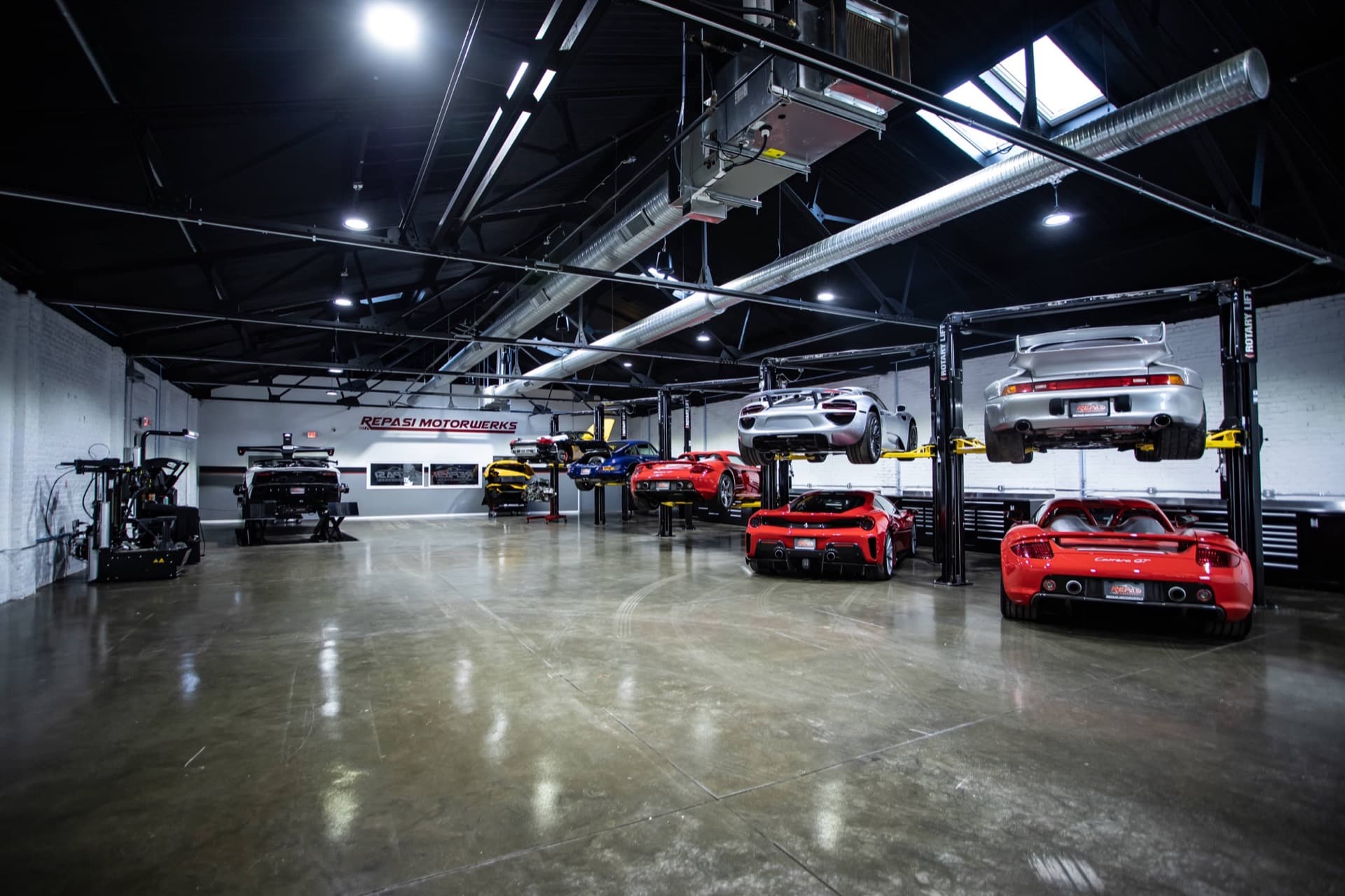
This pattern repeats weekly at our facility. Cars arrive on enclosed trailers from Texas, Florida, Washington, and everywhere between. The owners have made the calculation that local convenience means nothing when local expertise doesn't exist.
When Shipping Makes Sense
Not every Porsche needs to travel for service. A Cayenne in Phoenix can find competent local care. A 911 Carrera in most major cities has reasonable options. But certain cars create geographic problems that distance solves.
The Carrera GT sits at the top of this list. With only 1,270 examples built, most shops will never see one. The ones who do may never see a second. Expertise develops through repetition, and repetition requires volume that the local market simply cannot provide. Owners who care about their cars eventually find their way to the handful of shops worldwide that do this work regularly.
The 918 Spyder presents different challenges. High-voltage hybrid systems require specific certifications that not all dealers maintain. The combination of exotic combustion engineering and complex electrical architecture limits the field of qualified technicians dramatically. Owners often discover that their local dealer has the certification in name but hasn't touched a 918 in years.
Even GT3 RS and GT2 RS owners sometimes ship for service. These cars benefit from technicians who understand track use, who know the specific failure modes of high-strung engines, who have experience with the suspension setups and brake systems that serious drivers demand. General Porsche expertise doesn't automatically translate to motorsport-derived platforms.
Air-cooled classics present yet another version of the problem. As the collector market has matured, the number of technicians who actually understand mechanical fuel injection, carbureted engines, and pre-computer systems has dwindled. Restoration-quality work requires specialists whose skills were relevant decades ago and remain valuable precisely because so few have maintained them.
The Logistics of Cross-Country Service
Shipping a car three thousand miles sounds complicated until you've done it. The process has matured to the point where quality carriers handle everything with professional precision. Your primary job is choosing the right carrier and preparing your car properly.
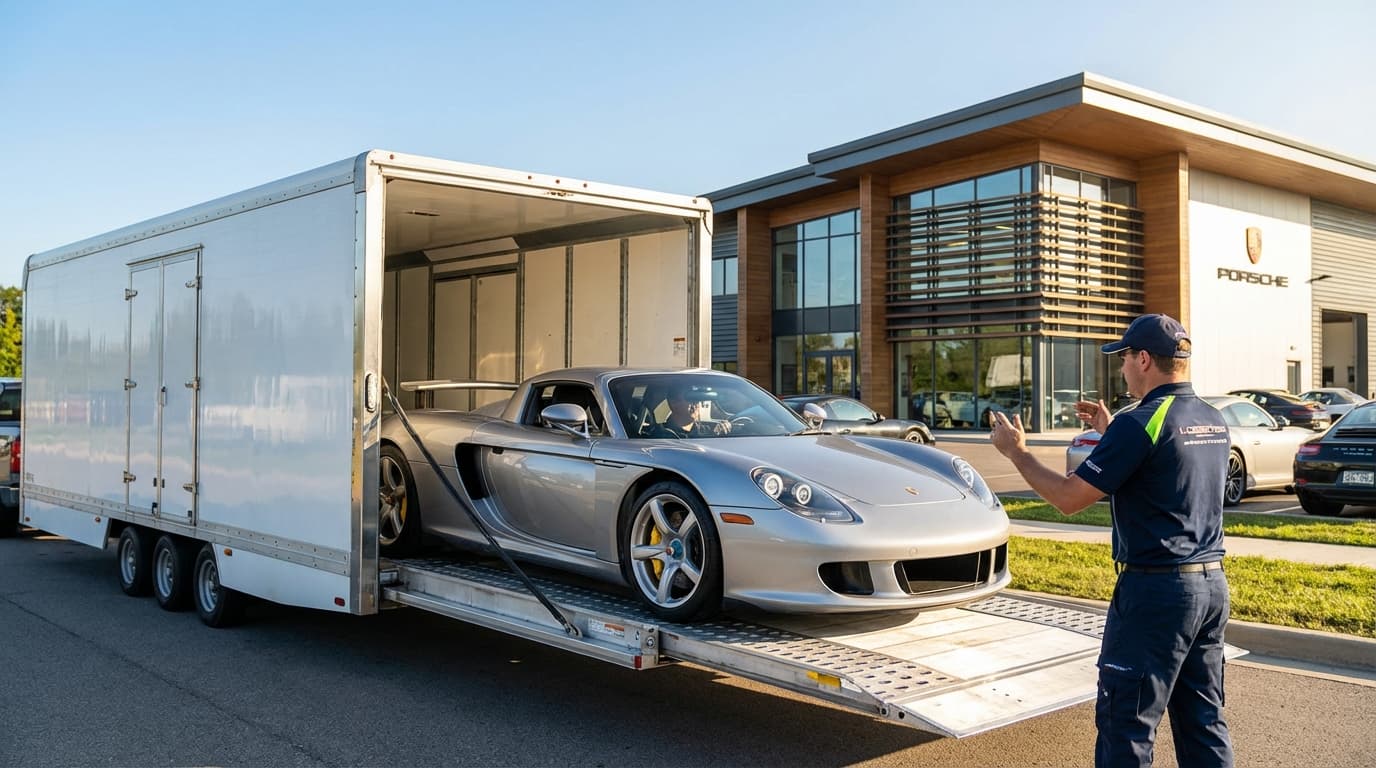
Enclosed transport is the only reasonable choice for any Porsche worth serious money. The cost premium over open transport buys complete protection from weather, road debris, and the general hazards of highway travel. More importantly, carriers who operate enclosed trailers understand the value of what they're moving. They handle cars differently than commodity transport operators.
Cross-country shipping typically runs between twenty-five hundred and thirty-five hundred dollars depending on origin point. Regional moves cost less—Chicago to Connecticut might run twelve to sixteen hundred, Atlanta perhaps thirteen to seventeen hundred. These are not trivial amounts, but they're predictable expenses that factor into the overall service calculation.
Transit times vary by distance and carrier scheduling. Coast-to-coast generally takes seven to twelve days. Regional moves complete in three to seven days. Planning ahead allows coordination with shop scheduling so your car arrives when we're ready to receive it.
Choosing a Carrier
The transport industry has its share of operators you'd rather not trust with an ordinary sedan, let alone a Carrera GT. Selecting the right carrier matters enormously.
Insurance coverage forms the baseline qualification. Standard cargo insurance runs around five hundred thousand dollars, which covers most vehicles adequately. For cars whose value exceeds that threshold, verify the carrier can provide appropriate coverage or obtain supplemental insurance through your personal carrier.
Experience with exotic cars separates adequate carriers from excellent ones. Companies that regularly move high-value vehicles understand the care required in ways that occasional operators do not. Ask about their hypercar experience specifically. The drivers who load and unload Ferraris, Lamborghinis, and McLarens weekly develop habits that protect your car automatically.
We've received cars from dozens of different carriers over the years. The ones we recommend consistently—Reliable Carriers, Passport Transport, Intercity Lines, Plycar—have earned that recommendation through repeated performance. We can share specific experiences when you're making the decision.
Preparing Your Car
Before the carrier arrives, photograph your car thoroughly. Document every panel from multiple angles, every wheel, the interior condition, and any existing damage. Take close-ups of anything that might be questioned later. Record the odometer reading. This documentation protects you if anything happens in transit and provides peace of mind that you'll notice any changes.
Keep fuel level around a quarter tank. The car needs enough to drive on and off the trailer but doesn't need extra weight from a full tank. Remove personal items entirely—transport insurance typically excludes them anyway.
If your car has an aftermarket alarm system, consider disabling it. A triggered alarm during transport creates unnecessary complications. Make sure the battery holds adequate charge for the loading and unloading process.
Be present at pickup if possible. Review the bill of lading carefully when the driver completes it, noting any damage that's already present and adding anything the driver missed. Keep your copy. Get the driver's contact information and expected delivery date.
When Your Car Arrives
At our end, we photograph cars still on the trailer before unloading. We inspect for any transit damage and compare condition to the bill of lading documentation. You receive notification of safe arrival along with our initial photographs.
Transit damage is rare with quality carriers, but if it occurs, documentation starts immediately. We photograph everything, note discrepancies on the shipping paperwork, and help you file claims with the carrier. The professional carriers we recommend maintain appropriate coverage and process claims efficiently when needed.
The Math That Makes This Work
Consider that California Carrera GT owner who needed a clutch. His local options, to the extent they existed, quoted numbers that reflected their uncertainty—premium pricing to compensate for the learning curve he'd be funding. Risk of improper work was significant because experience was minimal.
Shipping round-trip to Connecticut cost about fifty-five hundred dollars. The clutch replacement itself, performed by technicians who have done the job many times, cost roughly twenty-two thousand. Total investment around twenty-seven thousand five hundred for work done correctly by people who know what they're doing.
The alternative was gambling on a local shop's first attempt, probably at higher cost, with unknown risk of problems that might not surface for months. When the math includes risk adjustment, shipping to specialists often costs less than local experiments.
How We Coordinate
Contact us before arranging transport. We'll discuss your service needs, provide a realistic time estimate for the work, and help coordinate delivery timing so your car doesn't sit waiting or arrive when we're not prepared to receive it.
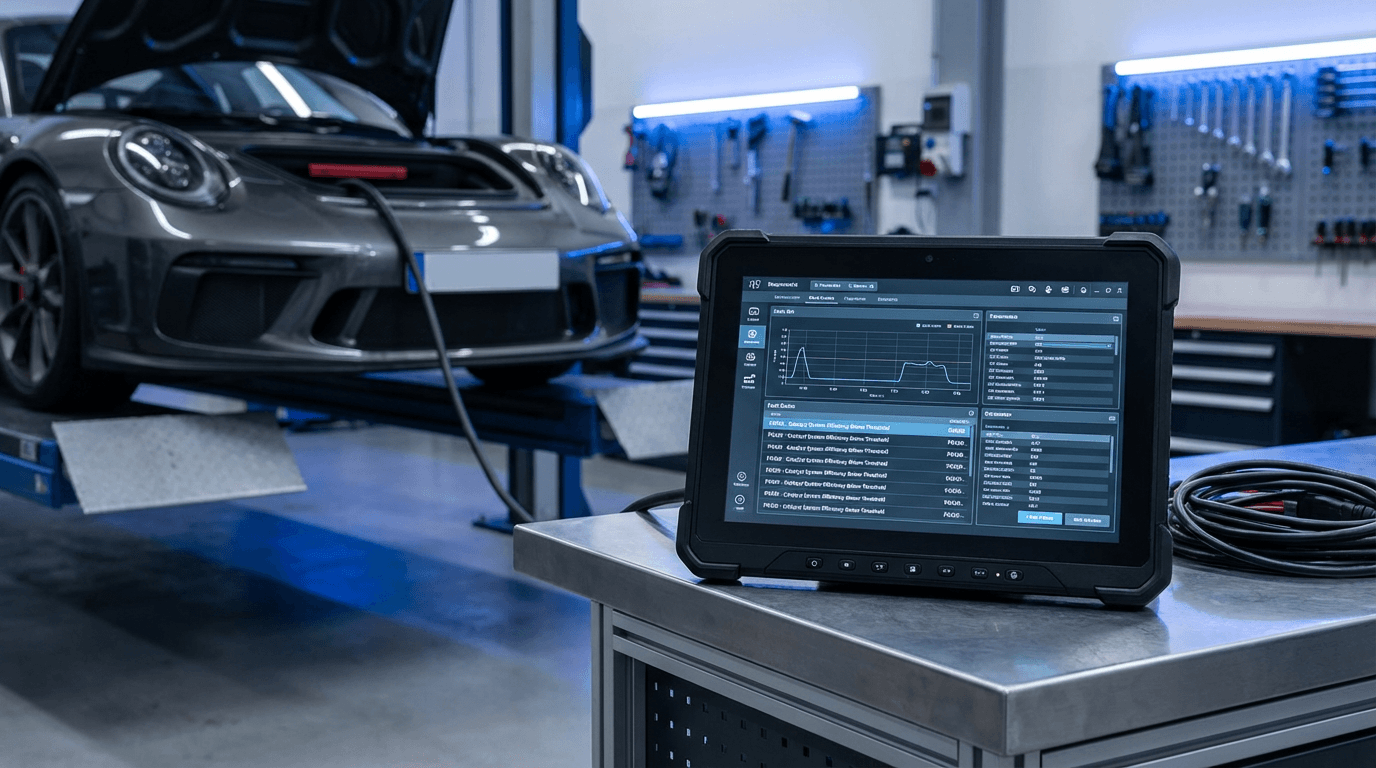
During service, we maintain regular communication. You'll receive photographic documentation of findings, clear explanations of what we're seeing and doing, and transparent pricing that matches our initial estimates unless we find unexpected issues worth discussing.
When service completes, we prepare the car for return shipping and coordinate with your chosen carrier for pickup. We document completion condition so you'll know exactly what's coming back to you. The car arrives home having received the kind of attention that probably wasn't available locally.
Why This Works
The owners who ship their cars to us have already discovered the frustrating truth about specialist services: they're not evenly distributed. A Carrera GT in San Francisco faces the same geographic challenge as one in rural Texas—the nearest qualified shop might be thousands of miles away.
What seemed impractical a generation ago has become routine. Enclosed transport has matured into a reliable service industry. Communication technology keeps owners informed throughout the process. The shops that have developed genuine expertise have earned reputations that travel through ownership communities.
If your car needs service that your local market cannot provide, distance stops being an obstacle and becomes simply a logistics question. We've built our practice partly around solving that question, receiving cars from across the country and returning them properly serviced.
Need to ship your Porsche for specialist service? Contact Repasi Motorwerks in Stratford, Connecticut. We'll discuss what your car needs, help coordinate transport logistics, and ensure your investment receives the expertise it deserves—regardless of where you're located.