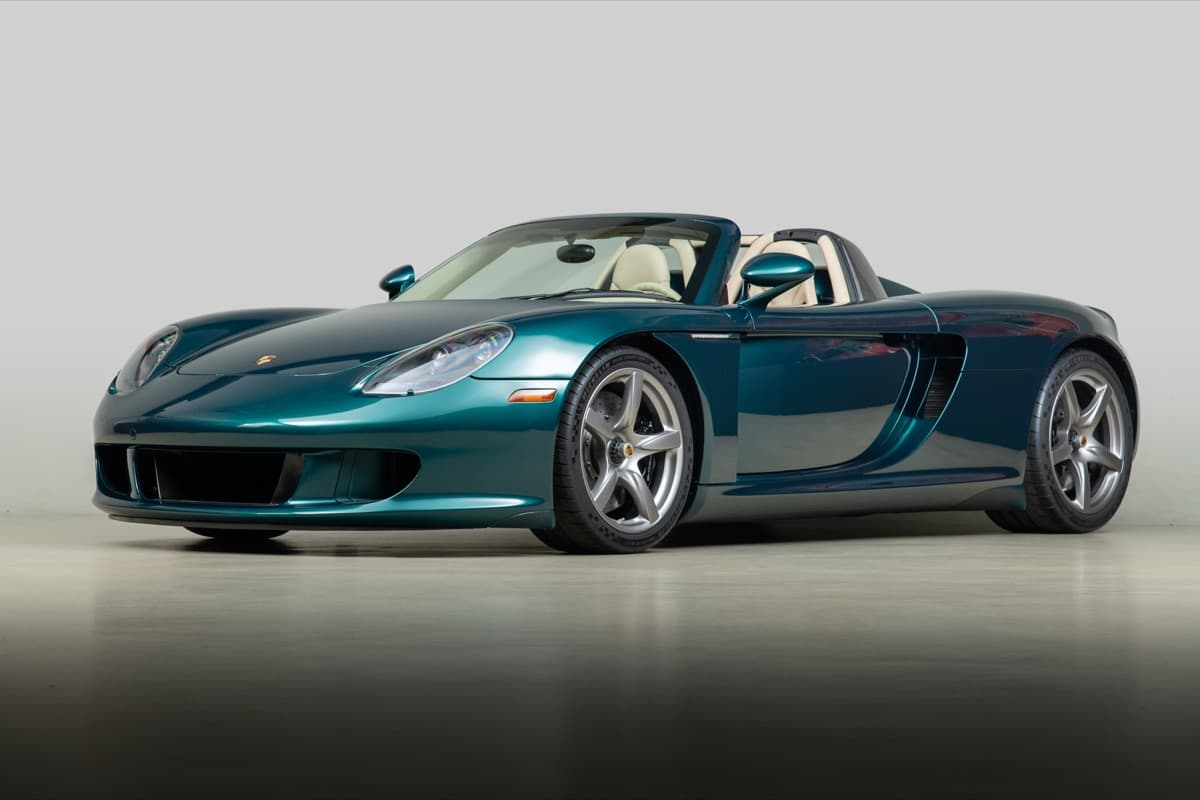
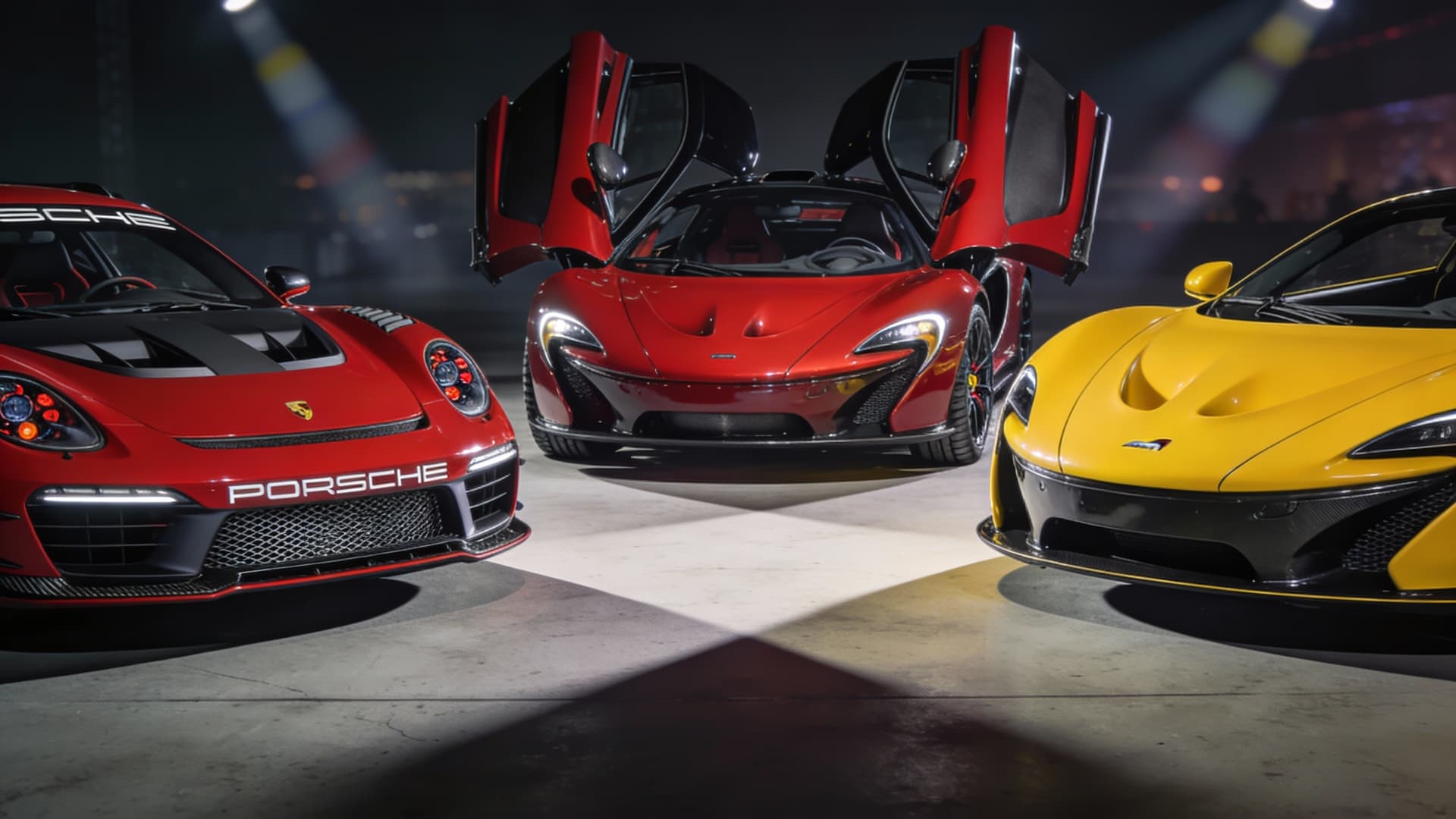
They arrived within months of each other, three cars from three manufacturers who almost never compete directly, each proving that hybrid technology belonged in the most extreme performance machines money could buy. The Porsche 918 Spyder, Ferrari LaFerrari, and McLaren P1—collectively known as the Holy Trinity—redefined what hypercars could accomplish.
A decade later, all three have proven their worth. Values have stabilized, service records have accumulated, and owners have logged enough miles to reveal each car's true character. Having serviced 918 Spyders extensively at Repasi Motorwerks, I can offer perspective on how these legendary machines compare from an ownership and maintenance standpoint. For 918-specific ownership guidance, see our 918 Spyder Complete Ownership Guide.
The question everyone asks—which is best?—has no single answer. Each car embodies different priorities, and understanding those priorities helps prospective buyers choose the Trinity member that suits them.
Three Philosophies, One Goal
Despite similar performance numbers, each manufacturer took fundamentally different approaches to achieving them.
Porsche built the 918 Spyder around versatility and technology. The 4.6-liter V8 derived from their RS Spyder racing program produces 608 horsepower, augmented by two electric motors adding another 285 horsepower for a combined 887. What makes the 918 unique among the Trinity is its emphasis on usability. Twelve miles of pure-electric range, plug-in charging capability, and five driving modes ranging from silent electric cruising to full-attack Hot Lap mode. The 918 can play commuter car on Monday and set lap records on Saturday.
Ferrari kept the LaFerrari focused on emotion. Their 6.3-liter naturally aspirated V12 produces 789 horsepower—the most powerful Ferrari road car engine ever built—with a single electric motor adding 161 horsepower for 949 combined. The hybrid system exists purely to enhance performance; there's no plug-in capability, no electric-only driving, no compromise of the V12 experience that defines Ferrari's soul. The battery charges only through regeneration, and the electric motor fills gaps in the V12's powerband rather than replacing it.
McLaren approached the P1 as a track car that happens to be street legal. Their 3.8-liter twin-turbocharged V8 produces 727 horsepower, with an electric motor contributing 176 horsepower for 903 combined. Active aerodynamics borrowed from their Formula 1 program, a carbon fiber monocoque that makes the car weigh just over 3,300 pounds, and a Race mode that lowers the car, stiffens the suspension, and deploys maximum downforce. The P1 is less usable than either rival but potentially faster on track.
The Numbers That Matter
On paper, the LaFerrari leads with 949 total horsepower compared to the 918's 887 and the P1's 903. Zero to sixty times cluster within tenths of a second: 2.4 for the Ferrari, 2.5 for the Porsche, 2.6 for the McLaren. Top speeds range from 214 to 217 miles per hour. These differences matter to magazine testers but vanish in real-world driving.
Production numbers tell a different story. McLaren built just 375 P1s, making it the rarest. Ferrari produced 499 LaFerraris—their traditional limited production number. Porsche built 918 examples, the most of the three but still vanishingly rare.
Original pricing reflected each manufacturer's positioning. The 918 started at ,000—the least expensive of the three, remarkably enough. The P1 commanded .35 million. The LaFerrari, with Ferrari's tradition of extracting maximum value from their best clients, asked .4 million.
What Ownership Actually Costs
This is where the cars diverge more than their specifications suggest.
The 918 Spyder typically has the lowest operating costs among the three. Annual service runs three to six thousand dollars. Major service every four years costs fifteen to twenty-five thousand. Tires might add three to five thousand annually depending on use. Insurance varies dramatically by location and driver, but twenty to forty thousand annually is representative.
The LaFerrari costs more to maintain, partly because that V12 consumes oil and fuel prodigiously, partly because Ferrari's parts and service infrastructure commands premium pricing. Annual service runs five to ten thousand dollars. Major service reaches twenty to forty thousand. Tires cost more—four to seven thousand annually—because the LaFerrari is harder on rubber. Insurance can exceed sixty thousand annually for comprehensive coverage at agreed value.
The McLaren P1 falls between them. Annual service runs four to eight thousand. Major service costs eighteen to thirty-five thousand. Tires are comparable to the LaFerrari at four to six thousand. Insurance ranges from twenty-five to fifty thousand.
The 918 benefits from Porsche's more accessible parts network and service infrastructure. McLaren has improved dramatically since the P1's launch but still operates with a smaller dealer and service network than Porsche. Ferrari provides excellent service for their best clients but limits access to those outside their circle.
The Battery Reality
Each hybrid system handles battery maintenance differently.
The 918's 6.8 kWh battery is the largest, enabling that twelve-mile electric range. It also sees the most cycling as owners use the plug-in capability and electric modes. Replacement, if ever needed, runs eighty to a hundred fifty thousand dollars. The good news: with proper care, these batteries have proven durable. Degradation has been slower than feared, and conditioning services can extend useful life.
The LaFerrari's 2.3 kWh battery is smallest because it never powers the car alone—it only assists the V12. Without plug-in charging, the battery cycles less than either rival. Replacement costs sixty to a hundred thousand, but the limited cycling may give it the longest absolute lifespan. Ferrari has offered limited conditioning services for these batteries.
The McLaren P1's 4.7 kWh battery sits between them in size and use case. Six miles of electric range means some electric-only operation, but the primary function remains performance augmentation. Replacement runs seventy to a hundred twenty thousand. McLaren has been proactive about battery support as these cars age.
How They Actually Drive
Numbers fade; driving experiences don't.
The 918 Spyder feels like the thinking person's hypercar. It's extraordinarily refined for daily driving when you want it to be, capable of running silent through your neighborhood and embarrassing supercars at the track the same day. In mixed conditions—wet roads, traffic, real-world driving—the 918's all-wheel drive and torque vectoring provide confidence that neither rear-drive rival can match. The V8's high-revving character and the seamless integration of electric power create acceleration that feels impossibly linear. What it lacks is the emotional rawness that some buyers prioritize above all else.
The LaFerrari delivers pure automotive passion. That naturally aspirated V12, revving past 9,000 RPM with a sound that builds from rumble to scream, creates experiences that stay with you. The car demands respect in all conditions—it's rear-wheel drive with enormous power and will bite if you exceed its limits. But within those limits, or just beyond them for drivers with skill, it rewards in ways that more composed cars cannot. The hybrid system is invisible; you'd never know it was there except for the impossible mid-range punch it enables.
The McLaren P1 is a race car that happens to be street legal. The active aerodynamics genuinely transform the car, creating grip levels that feel impossible. The twin-turbo V8 lacks the LaFerrari's naturally aspirated character but delivers thrust with equal aggression. On track, the P1 may be the fastest of the three, its lower weight and aerodynamic sophistication overcoming the power deficit. On the street, it's the least comfortable, the most demanding, and for some buyers, exactly what they want.
What They're Worth Now
Market values have settled into patterns that reflect each car's character.
The LaFerrari commands the highest prices, ranging from roughly .5 million for excellent examples to well over million for collector-quality cars with special provenance. Lower production numbers, Ferrari brand cachet, and that V12's irreplaceable character drive premiums that exceed the other Trinity members.
The 918 Spyder offers remarkable value by comparison. Excellent examples trade between .6 million and million, with collector-quality Weissach cars reaching .5 million or beyond. Relative to its capability and usability, the 918 is arguably the Trinity bargain—though that term strains credibility for any car in this price range.
The McLaren P1 sits between them, trading from roughly .4 million for driver-quality cars to .5 million for exceptional examples. The P1's relative affordability may reflect McLaren's smaller brand halo compared to Ferrari and Porsche, though values have proven stable.
Choosing Your Trinity Member
The decision comes down to priorities that only you can weigh.
Choose the 918 Spyder if daily usability matters to you. If you want electric capability—the ability to cruise silently through your neighborhood or into a car show. If budget consciousness is a factor, even at these levels. If service accessibility and parts availability concern you. If you want a car that masters both track and street.
Choose the LaFerrari if emotional experience trumps everything else. If V12 sound is essential to your definition of a supercar. If investment potential matters—Ferrari's limited production models have historically appreciated most aggressively. If Ferrari passion runs deep in your automotive soul. If budget is genuinely not a limiting factor.
Choose the McLaren P1 if track focus is your primary use case. If you appreciate engineering innovation and active aerodynamics. If you want the most race-car-like experience. If unique ownership experience matters—the P1 is the rarest Trinity member most likely to encounter in the wild.
Why We Focus on the 918
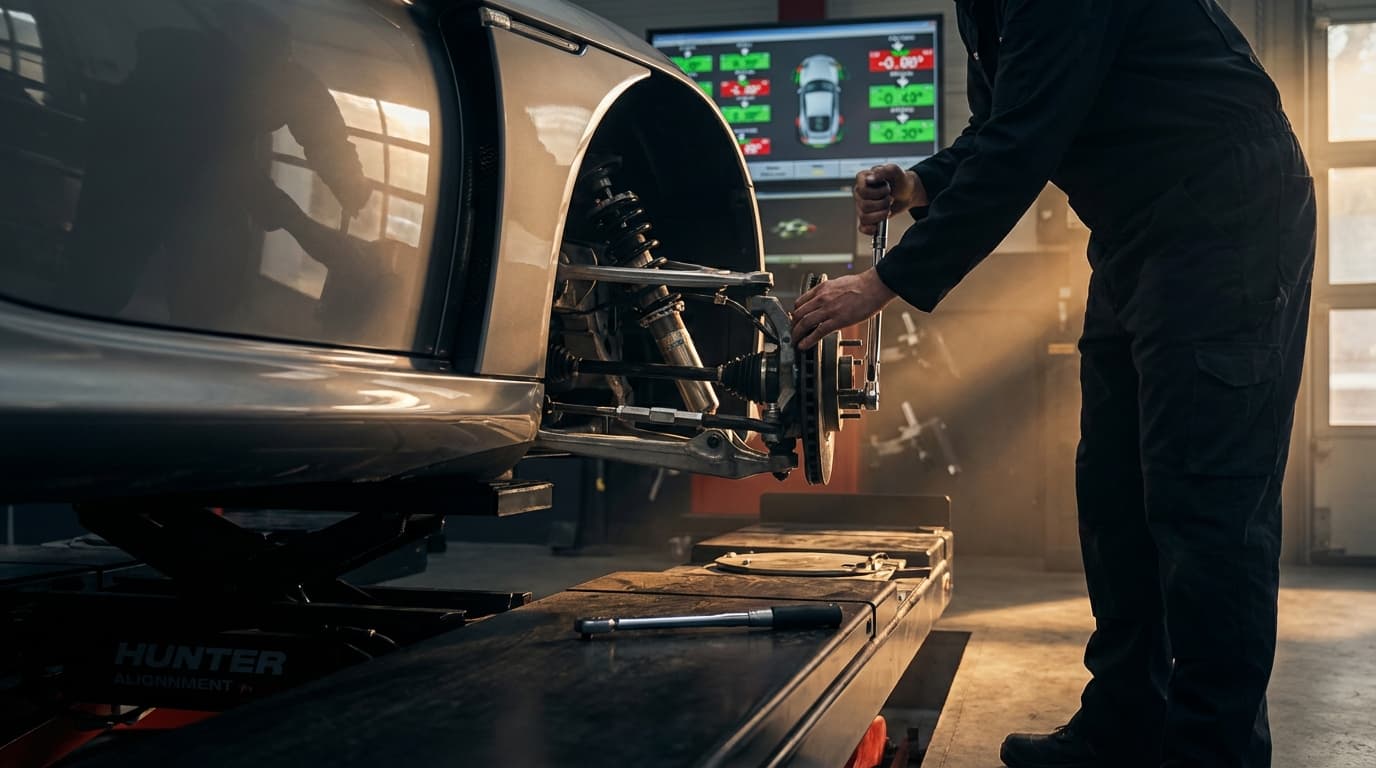
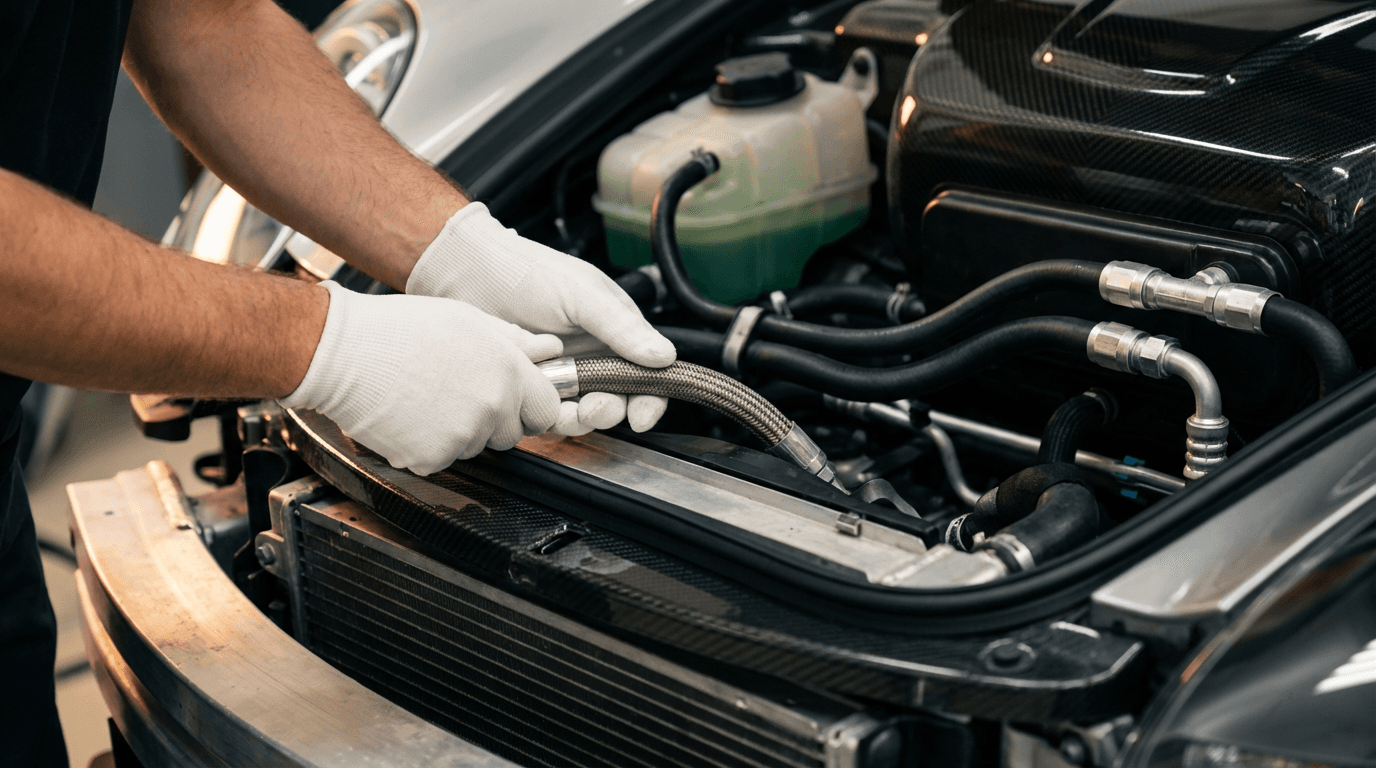
At Repasi Motorwerks, we provide comprehensive 918 Spyder service because these are the cars our expertise and equipment support best. We understand the hybrid system's requirements, the V8's needs, and the integration that makes the 918 greater than the sum of its parts.
For owners of any Holy Trinity car, the common thread is proper maintenance. These are complex machines that reward attention and punish neglect. The difference between well-maintained examples and those that have languished extends beyond reliability into actual performance and long-term value.
Considering a 918 Spyder? Contact Repasi Motorwerks in Stratford, Connecticut. We provide the specialized service these remarkable hybrids require—from pre-purchase inspections through ongoing maintenance that preserves their capability and value.