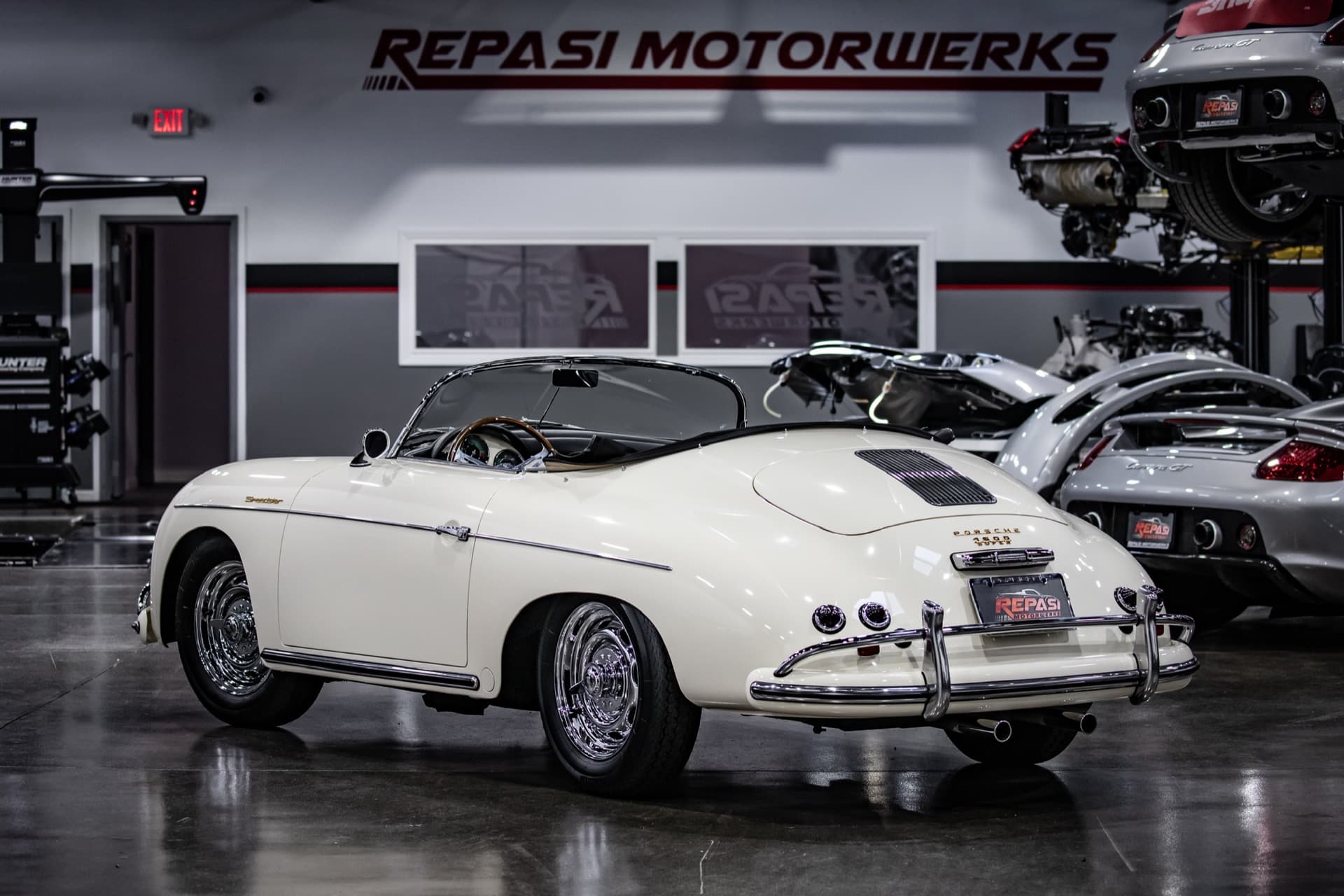
Oil selection for air-cooled Porsche engines is a topic that generates more debate in online forums than almost any other maintenance subject. Everyone has an opinion, and many of those opinions are based on outdated information, marketing claims, or what worked on a completely different engine.
I change oil on air-cooled Porsches multiple times a week. I have seen the inside of enough of these engines to know what works and what does not. Here is a practical guide based on actual experience, not internet speculation.
Why Air-Cooled Engines Need Different Oil
Air-cooled Porsche flat-six engines operate under conditions that are fundamentally different from modern water-cooled engines:
Higher Operating Temperatures
Without a water cooling system to regulate engine temperature, air-cooled engines run significantly hotter. Oil temperatures of 220-260 degrees Fahrenheit are normal during spirited driving. On hot days or in traffic, temperatures can exceed 280 degrees. The oil must maintain its protective film strength at these elevated temperatures.
Flat Tappet Camshafts
This is the most important factor in oil selection for air-cooled Porsches. The 964 and earlier engines (including the 930 Turbo) use flat tappet camshafts — the cam lobes press directly against flat-faced lifter surfaces. This creates extremely high contact pressures at the cam lobe-to-lifter interface.
Modern oils have reduced their levels of ZDDP (zinc dialkyldithiophosphate), the primary anti-wear additive that protects flat tappet cam lobes. The reduction was driven by catalytic converter compatibility requirements on modern cars — zinc poisons catalytic converters over time.
But air-cooled Porsches need that zinc. Without adequate ZDDP, the cam lobes and lifters experience accelerated wear that leads to flat lobes, reduced valve lift, and eventually valve train failure.
Target ZDDP levels: 1,200-1,500 ppm of zinc and phosphorus combined. Most modern passenger car oils contain 800-1,000 ppm — not enough for flat tappet engines.
The 993 uses hydraulic lifters with a different cam-to-lifter interface that is somewhat less demanding of ZDDP levels, but I still recommend high-zinc oil for 993 engines because the overall engine design benefits from the additional anti-wear protection.
Oil as Coolant
In an air-cooled engine, oil does double duty — it lubricates and it cools. The oil carries heat away from the cylinders, bearings, and valve train and transfers it to the oil cooler. This means the oil degrades faster than in a water-cooled engine because it is managing a thermal load that would otherwise be handled by coolant.
Viscosity: The 20W-50 vs 15W-50 Debate
20W-50 Conventional
The traditional recommendation for air-cooled Porsches. A 20W-50 provides thick film protection at high operating temperatures and was the standard factory fill for decades.
When I recommend 20W-50:
- Engines with higher miles (over 100,000) and increased bearing clearances
- Hot climate operation
- Track use where oil temperatures regularly exceed 250 degrees
- Engines that are known oil consumers (the thicker oil reduces consumption slightly)
15W-50 Synthetic
A modern alternative that provides better cold-start protection (the 15W flows faster when cold than 20W) while maintaining adequate high-temperature viscosity.
When I recommend 15W-50:
- Lower-mileage engines with tight clearances
- Street-driven cars in moderate climates
- Owners who want improved cold-start protection
- Engines that are in known good condition
The Conventional vs Synthetic Debate
This is where the discussion gets heated. Here is my position:
Full synthetic (like Mobil 1 15W-50) provides superior film strength, better cold-flow properties, and longer molecular stability. However, some high-mileage engines with worn seals may experience increased oil consumption when switching from conventional to synthetic — the thinner cold-flow characteristic of synthetic oil finds its way past seals that conventional oil does not.
Conventional or semi-synthetic (like Brad Penn 20W-50) provides adequate protection and is less likely to increase consumption on high-mileage engines. Some owners prefer it for the traditional characteristics and the typically higher ZDDP content.
My recommendation: For a healthy engine with no seal issues, 15W-50 synthetic is the better oil. For a higher-mileage engine or one with known seal weepage, 20W-50 conventional or semi-synthetic is the safer choice.
Specific Oil Recommendations
Here are the products I have used extensively and trust:
Porsche Classic Motor Oil (20W-50)
Porsche developed this oil specifically for their air-cooled engines. It has the correct ZDDP level, appropriate viscosity, and was formulated with input from the engineers who designed these engines.
Pros: Purpose-built, correct ZDDP, backed by Porsche engineering.
Cons: More expensive than alternatives, not always easy to find.
My take: An excellent choice if you want to follow the factory recommendation precisely.
Motul 300V (15W-50)
A high-end full synthetic with strong film strength and good ZDDP content. Widely used in racing applications.
Pros: Excellent high-temperature performance, strong film strength, well-proven in motorsport.
Cons: Premium pricing, may be overkill for purely street-driven cars.
My take: My preferred oil for 993 engines and well-maintained 964 engines that see spirited driving.
Brad Penn (Penn Grade 1) 20W-50
A Pennsylvania-grade conventional oil with high natural ZDDP content and a strong following in the air-cooled community.
Pros: High ZDDP, good value, excellent for flat tappet engines, readily available.
Cons: Conventional base stock means shorter effective life than full synthetic.
My take: The go-to recommendation for 930 Turbo and pre-964 engines, especially those with higher mileage.
Driven Racing Oil GP-1 (20W-50)
Formulated specifically for flat tappet engines with ZDDP levels that exceed most other options.
Pros: Very high ZDDP, specifically designed for older engine designs.
Cons: Less widely available than mainstream brands.
My take: An excellent choice for engines that need maximum anti-wear protection — race engines, freshly rebuilt engines during break-in, and high-mileage engines.
Joe Gibbs Driven BR Break-In Oil
Not a daily-use oil, but worth mentioning. This is the break-in oil I use on freshly rebuilt air-cooled engines. It has extremely high ZDDP content specifically formulated to properly seat new rings and protect fresh cam lobes during the critical first 500 miles.
Oil Change Intervals
Oil change intervals for air-cooled Porsches should be shorter than what you might be accustomed to with modern cars:
| Usage | Recommended Interval |
|---|---|
| Normal street driving | Every 3,000-5,000 miles or annually |
| Spirited driving / weekend car | Every 3,000 miles or every 6 months |
| Track use | After every track weekend |
| Storage / low mileage | At least once per year regardless of miles |
I lean toward the shorter end of these intervals. The oil in an air-cooled engine works harder and degrades faster than in a water-cooled engine. The cost of an extra oil change per year is negligible compared to the engine wear that degraded oil allows.
Filter Selection
The oil filter matters more than most owners realize. On air-cooled Porsches:
Mahle (OEM): The factory-specified filter. Correct filtration rating, proper bypass valve pressure, guaranteed fitment. This is what I use unless there is a specific reason to do otherwise.
Mann: OEM-equivalent quality, manufactured to the same specifications as Mahle in many cases.
Avoid: Generic or low-cost filters. The filtration media, bypass valve calibration, and anti-drainback valve quality on cheap filters are not up to the standard these engines require. An undersized or improperly calibrated bypass valve can allow unfiltered oil to circulate, defeating the purpose of the filter entirely.
What Repasi Uses and Why
At Repasi Motorwerks, our standard oil fills are:
- 993 engines: Motul 300V 15W-50 or Porsche Classic 20W-50
- 964 engines: Brad Penn 20W-50 or Motul 300V 15W-50 (depending on engine condition and owner preference)
- 930 Turbo: Brad Penn 20W-50
- Pre-964 911: Brad Penn 20W-50
- Engine break-in: Driven BR 30W break-in oil for the first 500 miles, then switch to operating oil
We always use Mahle or Mann filters and include the correct drain plug crush washer with every oil change.
Common Oil Myths
Myth: Synthetic oil will cause leaks on older engines.
Reality: Synthetic oil does not cause leaks. It can reveal existing leaks that conventional oil was masking due to its thicker cold-flow characteristics. If switching to synthetic increases visible oil leaks, the seals were already compromised.
Myth: You should never switch oil brands or types.
Reality: You can switch between compatible oils at any oil change. The key is to use the correct viscosity and ensure adequate ZDDP content. There is no need to flush or take special precautions when switching brands.
Myth: More expensive oil is always better.
Reality: Above a certain quality threshold, the returns diminish. A quality 20W-50 with proper ZDDP content at $8/quart protects the engine as well as a premium product at $15/quart for normal street driving. The premium products show their advantage under racing conditions and extreme temperatures.
For oil change service on your air-cooled Porsche, or if you have questions about oil selection for your specific engine, contact us. We will recommend the right product for your engine condition, driving style, and budget.