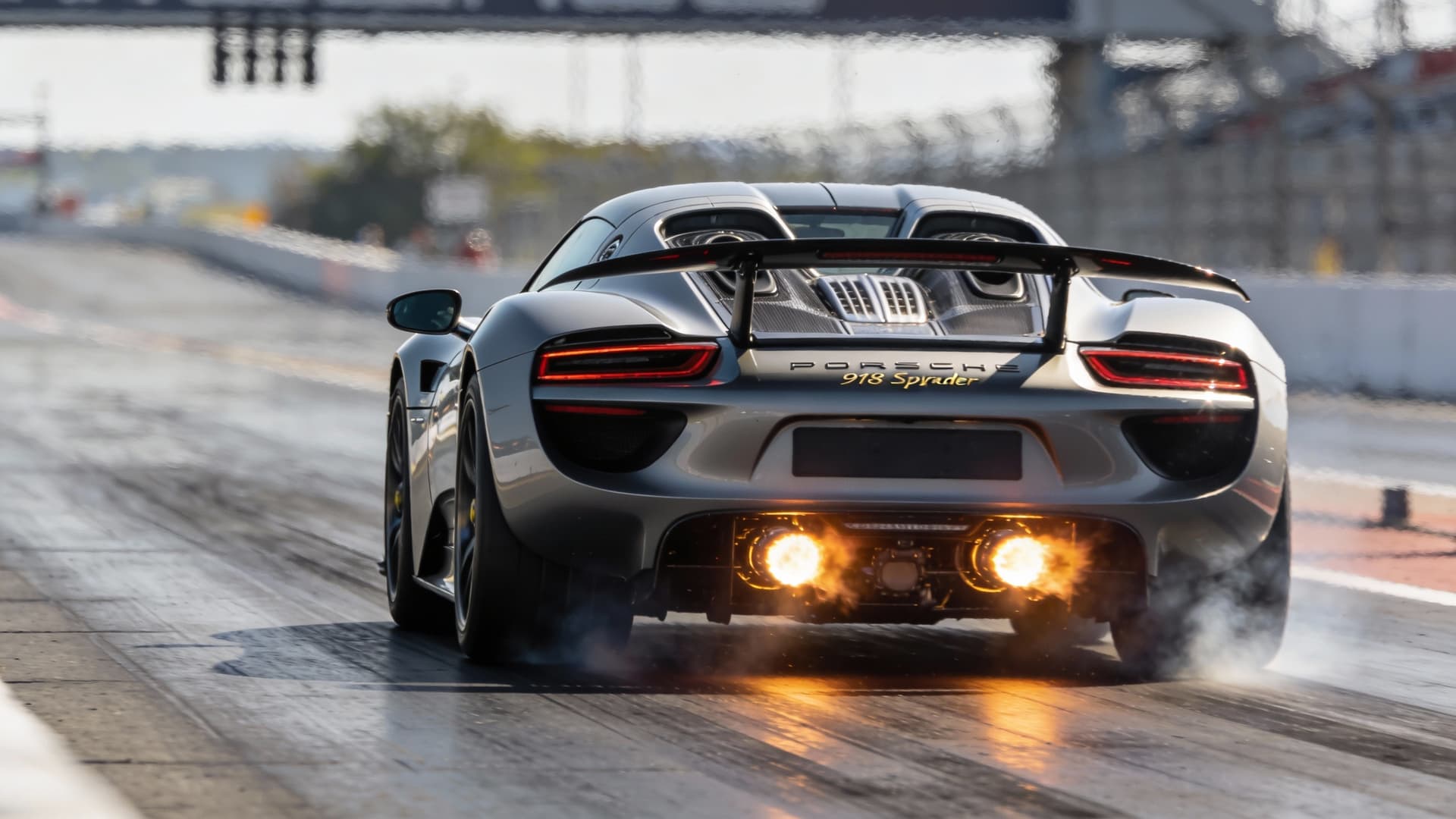
When Porsche announced the 918 Spyder would use hybrid technology, skeptics wondered if Stuttgart had lost its way. Electric motors in a hypercar? Batteries where a simpler, lighter fuel cell could go? The automotive world prepared to watch Porsche compromise everything that made their cars special for the sake of environmental marketing.
Then they drove it. And suddenly the conversation changed entirely. Our 918 Spyder Complete Ownership Guide covers everything from performance to long-term care.
The 918 didn't sacrifice performance for hybridization. It used hybrid technology to create performance impossible through combustion alone. This isn't a Prius with a Porsche badge—it's a racing engine with electric motors filling gaps that internal combustion engines inherently leave empty.
Understanding what the 918 actually does, and how it does it, helps owners appreciate the engineering miracle sitting in their garages. And for those considering the car, the numbers tell a story more compelling than any marketing brochure could manufacture.
How 887 Horsepower Happens
The 918's performance comes from integrating three power sources more seamlessly than any hybrid before or since.
At the heart sits a 4.6-liter V8 derived from Porsche's RS Spyder LMP2 racing engine. This isn't a modified production engine—it's racing technology adapted for road use. The V8 produces 608 horsepower at 8,700 RPM, with a redline at 9,150 and fuel cutoff beyond 9,400. Those numbers put it among the highest-revving production car engines ever built. The naturally aspirated intake and racing-derived architecture create throttle response that turbocharged engines can only approximate.
Integrated with the seven-speed PDK transmission sits a rear electric motor producing 156 horsepower and 199 lb-ft of torque. This motor assists during acceleration and recaptures energy during braking, seamlessly blending with the V8's power delivery. Most drivers can't tell where combustion power ends and electric power begins—which is precisely the point.
At the front axle, a second electric motor produces 129 horsepower and 155 lb-ft of torque. This motor enables all-wheel drive when conditions demand it, provides torque vectoring for cornering precision, and allows pure-electric front-wheel drive for silent running around town.
When everything works together, the system produces 887 combined horsepower and 944 lb-ft of combined torque. That torque number—nearly a thousand pound-feet—is particularly significant. Electric motors deliver maximum torque from zero RPM, filling exactly where naturally aspirated engines are weakest. The result is acceleration that feels impossibly linear, impossibly immediate.
What the Stopwatch Says
Numbers matter, and the 918 delivers them relentlessly.
Zero to sixty in 2.5 seconds with the Weissach package. The standard car takes one-tenth of a second longer—2.6 seconds—which tells you something about what ninety pounds means at this level of performance. Zero to a hundred miles per hour takes just 5.5 seconds. Zero to 124 miles per hour—the benchmark two hundred kilometers per hour—takes precisely seven seconds flat.
The quarter mile passes in 9.8 seconds at 146 miles per hour. And from a dead stop to 186 miles per hour takes 19.8 seconds. Read that again: in under twenty seconds, you've gone from stationary to nearly triple the legal speed limit on most American highways.
Top speed hits 214 miles per hour, electronically limited. Aerodynamic and mechanical capabilities suggest higher speeds are possible—Porsche simply decided that three-and-a-half miles per second was enough for any road-legal vehicle.
These numbers would be impressive for any car. What makes them remarkable is how they're achieved. Traditional supercars—even the best naturally aspirated ones—have gaps in their power delivery. Turbo lag, torque curves that build with RPM, brief hesitations during gear changes. The 918 eliminates all of it.
Off the line, electric motors deliver instant shove while the V8 builds toward its power peak. As speed increases, combustion power dominates while electric motors continue filling any momentary gaps. The acceleration feels like being pushed by a steady hand rather than a series of explosions—relentless, continuous, and deeply unsettling in the best possible way.
Stopping as Impressively as It Goes
Performance works in both directions, and the 918's braking matches its acceleration.
From sixty miles per hour, the 918 stops in 94 feet—competitive with the best supercars regardless of powertrain. From a hundred miles per hour, braking distance extends to 265 feet. Carbon ceramic brakes provide fade-resistant stopping power even under track use, while regenerative braking supplements mechanical brakes, recovering energy while reducing wear on pads and rotors.
The integration matters here too. The transition between regenerative and mechanical braking happens invisibly. Drivers simply press the brake pedal and the car decides how to distribute stopping force between energy recovery and friction. The result feels completely natural while extracting maximum efficiency from every deceleration event.
On the Track: Where it Matters Most
Acceleration and braking numbers tell part of the story. Track performance tells the rest.
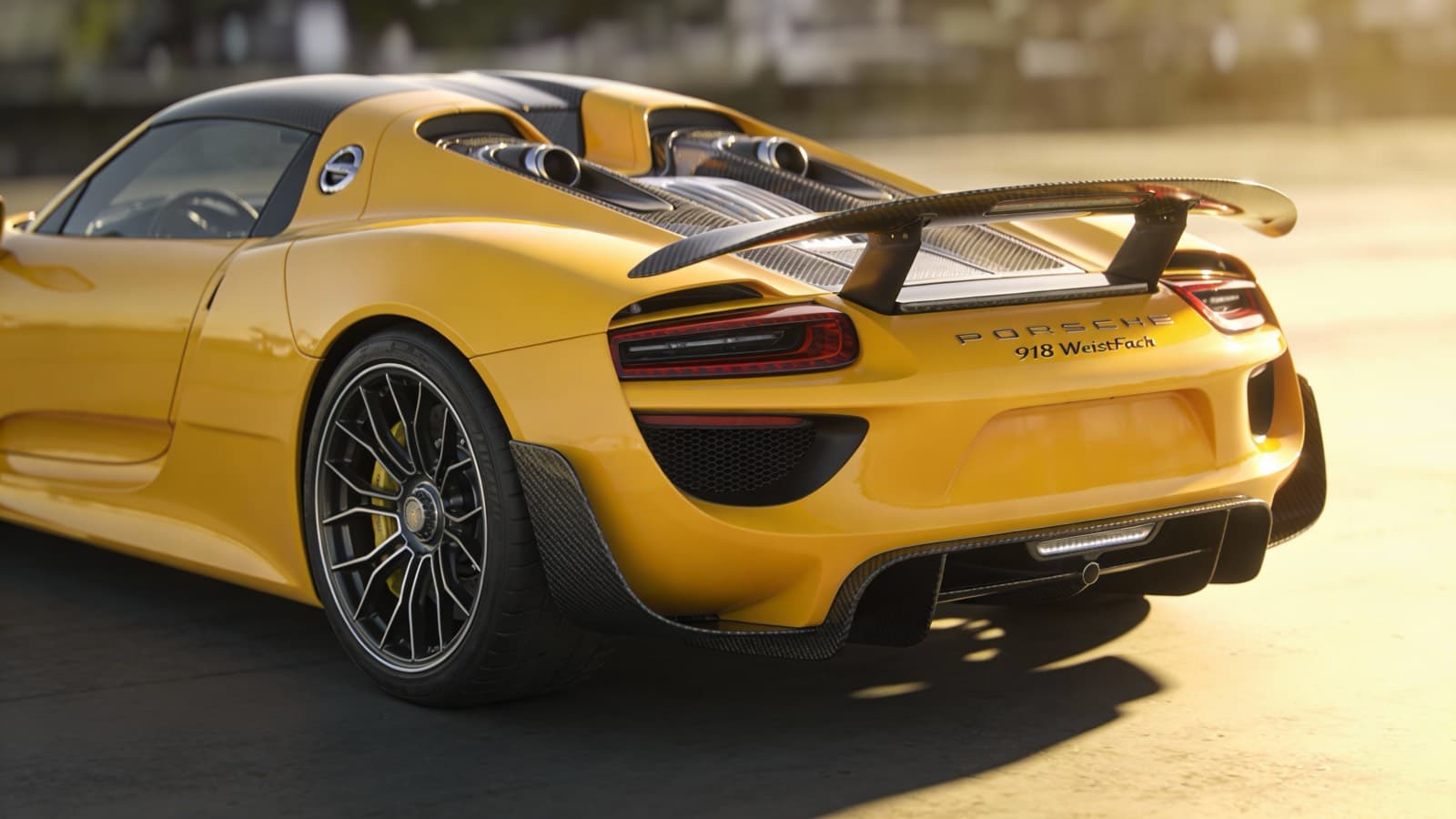
When Marc Lieb piloted a Weissach-equipped 918 around the Nürburgring Nordschleife in 6 minutes and 57 seconds, it shattered assumptions about hybrid hypercars. At the time, this was the production car lap record. The combination of straight-line speed, cornering grip, and braking performance created a lap time that left skeptics with nothing left to criticize.
The 918 performs consistently across different circuit types. Laguna Seca's elevation changes and technical corners suit its torque vectoring all-wheel drive. Circuit of the Americas' long straights reward the combined power output. Spa-Francorchamps demonstrates the car's capability in variable conditions—the instant electric torque proves particularly valuable on damp surfaces where wheelspin would otherwise limit acceleration.
The Holy Trinity: How the 918 Compares
The 918 Spyder competed directly with Ferrari's LaFerrari and McLaren's P1—three hybrid hypercars launched simultaneously, each representing its manufacturer's engineering philosophy.
On paper, the LaFerrari leads with 949 total horsepower compared to the 918's 887 and the P1's 903. Zero to sixty times cluster within tenths of a second: 2.4 for the Ferrari, 2.5 for the Porsche, 2.7 for the McLaren. Top speeds land between 214 and 217 miles per hour.
But the numbers obscure more important differences.
The 918 is the most technologically sophisticated and usable of the three. Its electric-only mode enables twelve or more miles of silent running—something neither rival can match. The LaFerrari's hybrid system exists purely to enhance performance; it cannot drive on electricity alone. The P1 offers about six miles of electric range, useful for rolling into events silently but not practical for actual electric commuting.
The LaFerrari delivers the most emotional experience. Ferrari's F1-derived technology creates theater in ways that Porsche's engineering-focused approach doesn't attempt. The sound, the drama, the sensation of driving something derived from Formula 1 machinery—these aren't rational advantages, but they're real.
The McLaren P1 is the most focused track tool. Active aerodynamics, exceptional mechanical grip, and a driving experience that demands maximum attention from the driver. The P1 is the most demanding at the limit—some would say the most rewarding, others the most intimidating.
Which wins? There's no objective answer. Each car expresses different priorities. Want technology and usability? The 918. Want emotion and theatrics? The LaFerrari. Want track precision and focus? The P1.
Collectors increasingly value having all three, because each offers experiences the others simply cannot provide. They're not competitors so much as complementary expressions of what hybrid hypercar technology can accomplish.
Five Modes, Five Characters
The 918's driving modes transform its personality more dramatically than simple power adjustments.
E-Power mode runs on electricity alone, using the front motor to drive the front wheels with the rear motor assisting as needed. Maximum speed reaches 93 miles per hour—faster than most drivers ever push a car. Range extends to twelve or more miles under ideal conditions. The experience is silent, smooth, and deeply strange in a car capable of approaching 900 horsepower.
Hybrid mode serves as the default, balancing efficiency and performance automatically. The system manages power sources without driver input, maintaining battery charge for electric assistance when needed. This mode suits normal driving, preserving both fuel and battery.
Sport Hybrid mode prioritizes performance while maintaining hybrid operation. The system keeps the battery charged for consistent boost, throttle mapping becomes more aggressive, and the car responds more eagerly to inputs. This is the mode for spirited driving on interesting roads.
Race Hybrid mode unleashes everything. The full 887 horsepower becomes available, the battery depletes to provide maximum electric assistance, and the car transforms into something approaching its track capability. Use this mode for maximum acceleration or circuit driving.
Hot Lap mode goes further still, temporarily enabling every performance feature simultaneously. Aggressive cooling, maximum power management, and settings optimized for the fastest possible lap times. This mode is time-limited—thermal protection activates before components exceed their limits.
Preserving What the Engineers Gave You
The 918's performance capabilities require proper maintenance to preserve.
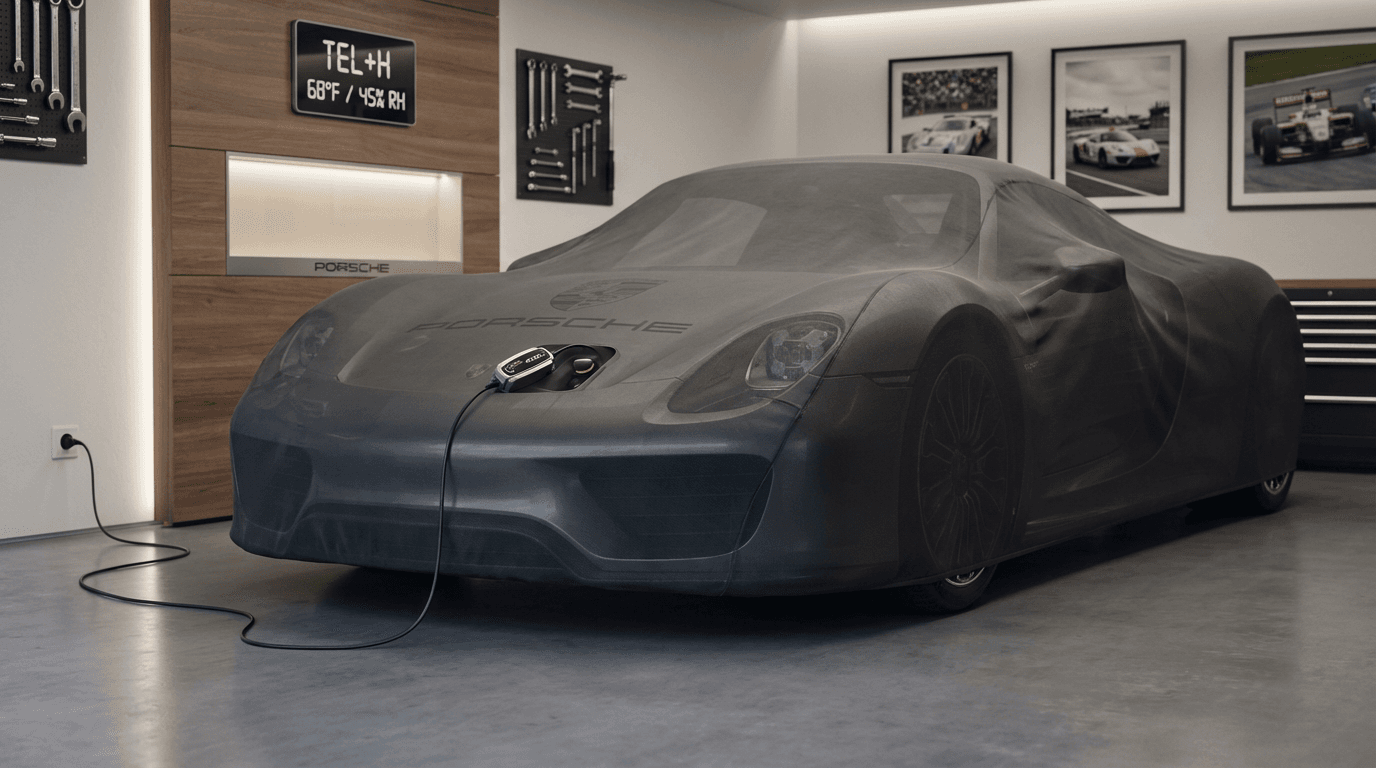
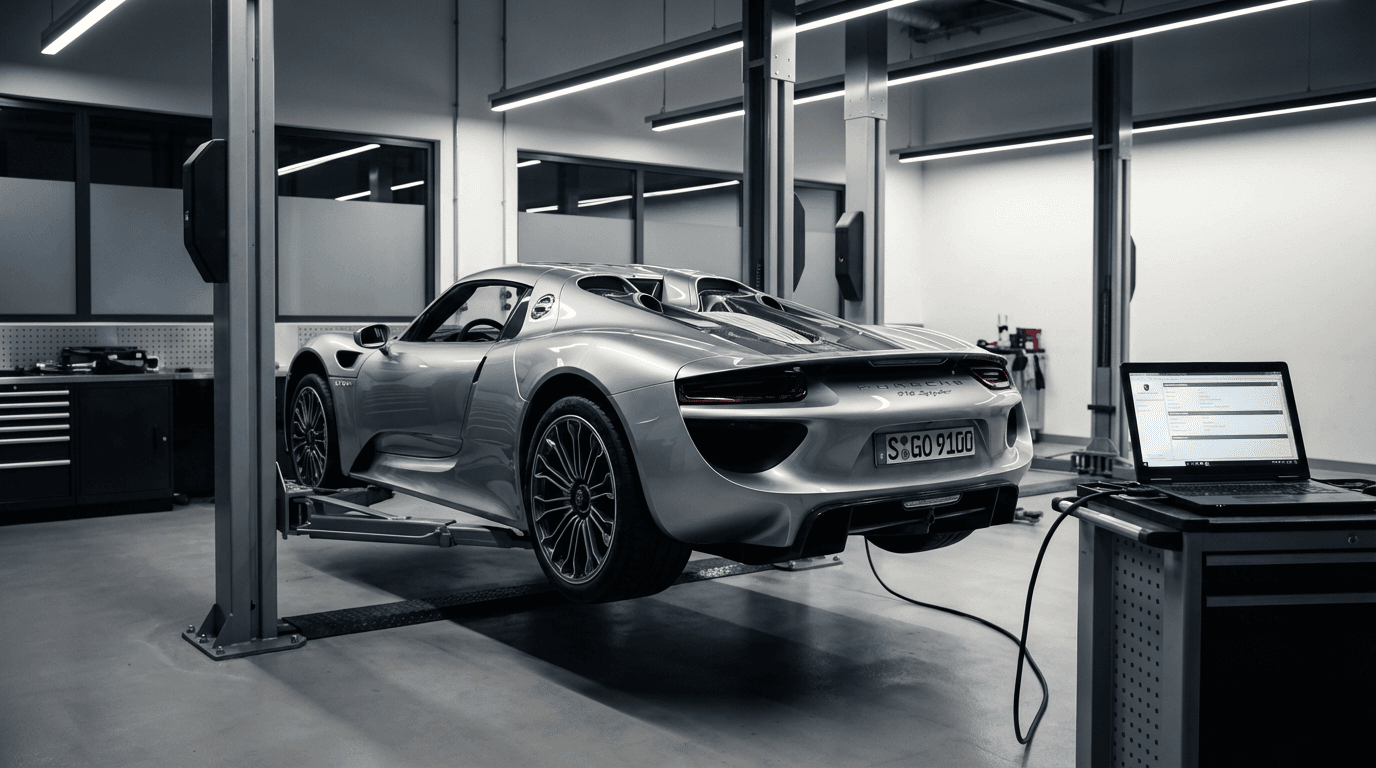
The hybrid system demands regular driving to maintain battery health. Proper charging protocols preserve capacity over time. Software updates optimize performance and sometimes improve capability. The cooling systems—multiple circuits serving engine, motors, and battery—require attention to keep everything operating within specifications.
The V8 demands quality service: proper oil, correct intervals, attention to the details that racing-derived engines require. The brake system must be maintained at a level commensurate with the car's capability. Suspension alignment affects handling and tire wear. Tire selection impacts every performance metric the car is capable of achieving.
For owners who track their 918s, preparation matters more. Fresh brake fluid before events. Comprehensive fluid checks and top-offs. Tire selection appropriate for the track surface and conditions. Cooling system verification to ensure everything will survive sustained high-speed running.
The contrast between well-maintained 918s and neglected examples extends beyond reliability into actual performance. Degraded batteries deliver less electric assistance. Compromised cooling limits how hard the systems can work. Worn suspension affects handling precision. Proper maintenance doesn't just preserve the car—it preserves what the car can do.
What We Understand About These Machines
At Repasi Motorwerks, we service 918 Spyders with full understanding of their hybrid complexity. Our technicians are certified for high-voltage systems and trained specifically on 918 procedures.
Whether you're maintaining your 918 for street enjoyment, preparing for track events, or addressing specific concerns, we provide the expertise these remarkable machines deserve. The 918 represents Porsche at its most ambitious—and maintaining that ambition requires service that matches the engineering.
Ready to discuss your 918 Spyder? Contact Repasi Motorwerks in Stratford, Connecticut. We understand what makes these hybrids exceptional and what keeps them performing at the level Porsche intended.