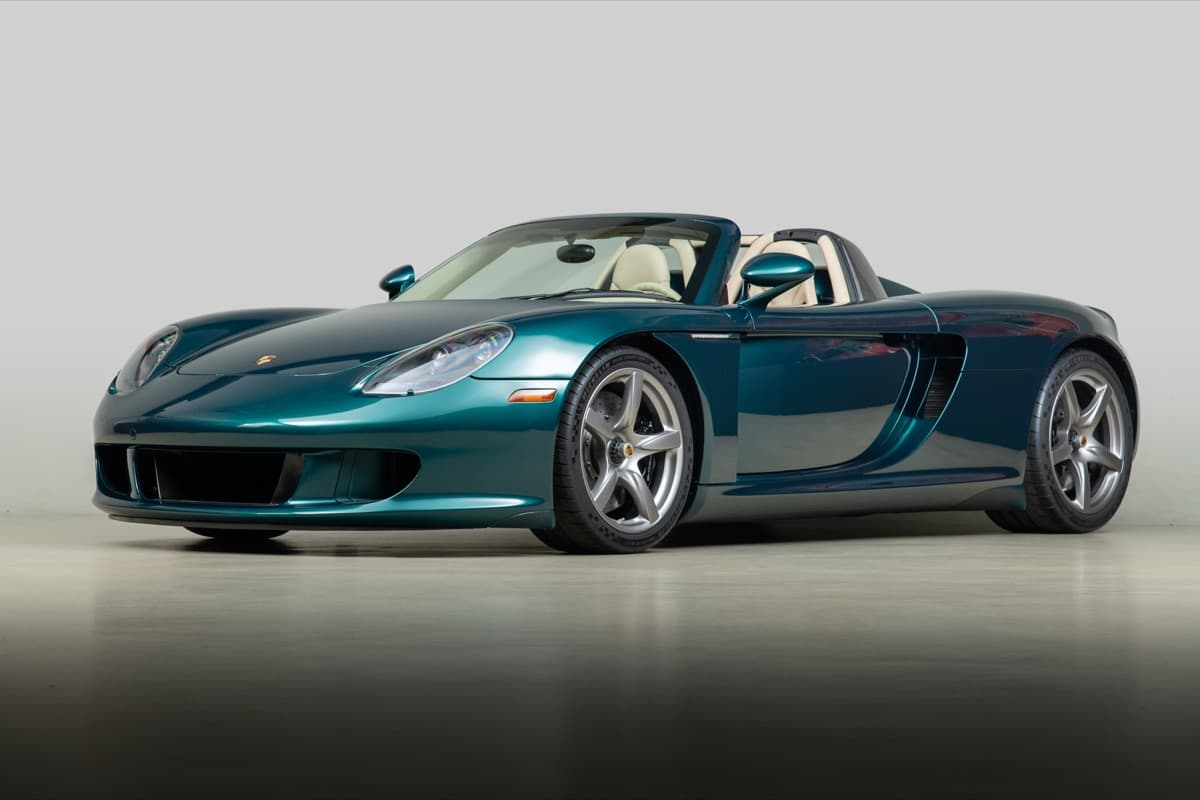
The Carrera GT's suspension is one of its most remarkable engineering achievements. A pushrod-activated inboard damper system — borrowed directly from Formula 1 — gives the car handling precision that surprises even experienced drivers familiar with other supercars of its era.
Understanding this suspension system, and knowing how to configure it for different uses, is part of getting the most out of CGT ownership. At Repasi Motorwerks, we set up CGT suspensions for everything from comfortable touring to aggressive track use.
Suspension Architecture
Front Suspension
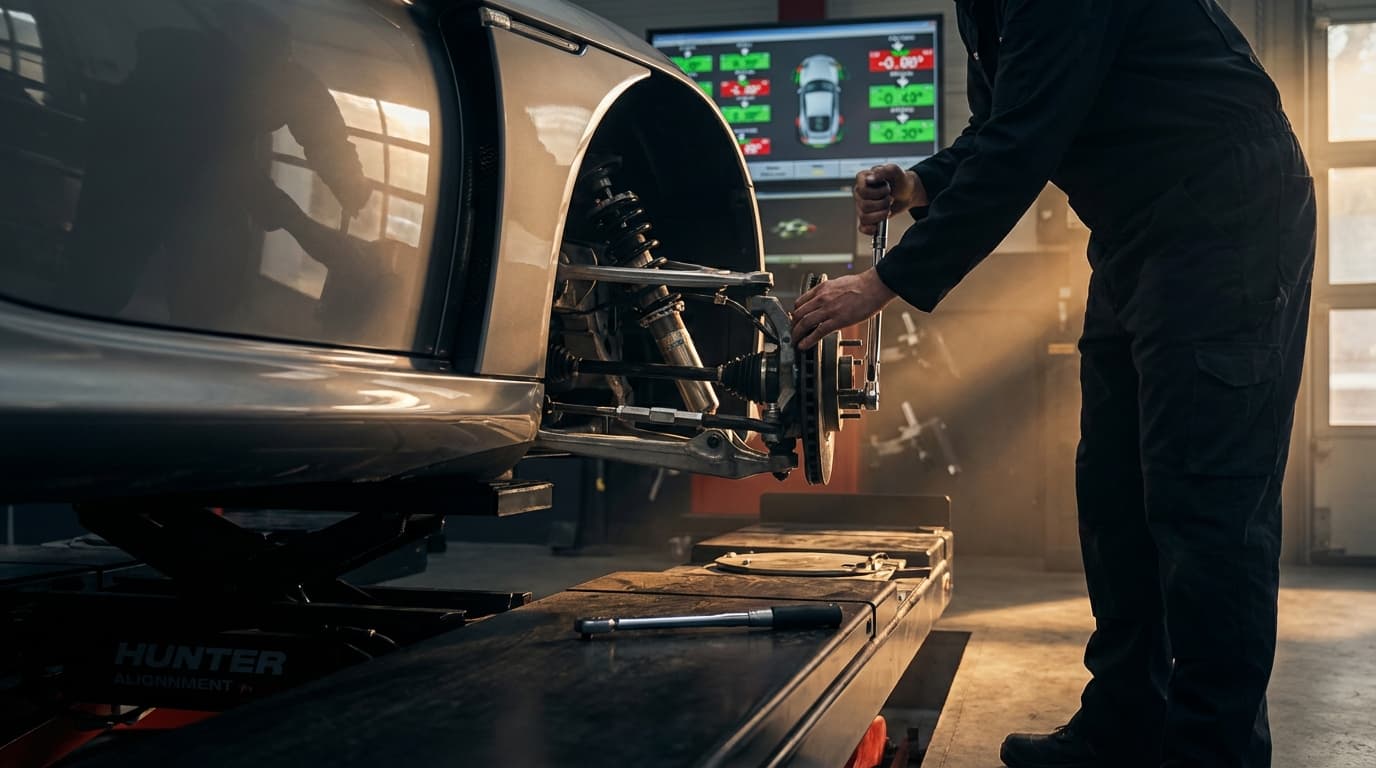
The CGT's front suspension uses a double-wishbone layout with pushrod-activated inboard coilover dampers. This is the same fundamental design used in Formula 1 cars.
Key components:
- Upper and lower wishbones (forged aluminum)
- Pushrod connecting the lower wishbone to the inboard damper
- Inboard-mounted coilover damper units
- Anti-roll bar
Advantages of this layout:
- Reduced unsprung mass (heavy damper weight is moved inboard)
- More precise control of wheel movement
- Lower center of gravity for the suspension components
- Better aerodynamic packaging (slimmer wheel well profile)
Rear Suspension
The rear suspension is a multi-link design, also with inboard dampers. The rear setup manages the additional complexity of housing the V10 engine and transmission.
PASM (Porsche Active Suspension Management)
The CGT did not come equipped with PASM — that system was introduced on later Porsches. The CGT uses fixed-rate dampers, which means the suspension tune is determined by spring rates, damper valving, anti-roll bar settings, and alignment geometry.
Note: This is actually preferred by many purists and track drivers. A fixed-rate system provides consistent, predictable behavior without electronic intervention.
Street Configuration
The factory street setup balances comfort with performance. For owners who primarily drive on the road with occasional spirited drives:
Alignment Specifications (Street)
| Parameter | Front | Rear |
|---|---|---|
| Camber | -0.8° to -1.2° | -1.2° to -1.5° |
| Toe | 0.0° to +0.05° (slight toe-in) | +0.05° to +0.10° (slight toe-in) |
| Caster | Per factory specification | N/A |
Why these settings:
- Moderate negative camber provides good cornering grip while limiting inside-edge tire wear
- Slight toe-in front and rear promotes straight-line stability
- These settings provide predictable handling in all conditions while preserving tire life
Ride Height
Factory ride height should be verified at every alignment service. The CGT's low ground clearance means even small changes in ride height affect both aerodynamics and practical clearance for driveways and speed bumps.
Check for:
- Uneven ride height (side to side) — indicates spring settling or damaged component
- Ride height below factory specification — may indicate worn springs
- Ride height changes after service — verify nothing shifted during work
Tire Pressures (Street)
Follow factory recommendations, typically:
- Front: 33-35 PSI cold
- Rear: 38-40 PSI cold
Adjust based on conditions and tire choice. Consult the door placard and owner's manual for your specific tire size.
Track Configuration
For track use, the suspension setup changes to prioritize maximum grip and precise handling feedback.
Alignment Specifications (Track)
| Parameter | Front | Rear |
|---|---|---|
| Camber | -2.0° to -2.5° | -1.8° to -2.2° |
| Toe | 0.0° (zero toe) to -0.02° (trace toe-out) | +0.05° to +0.10° (maintain slight toe-in) |
| Caster | Maximum per factory specification | N/A |
Why these settings differ from street:
- Increased negative camber keeps the tire contact patch flat during hard cornering
- Reduced or zero front toe improves turn-in response
- Maintained rear toe-in provides stability under hard braking and corner exit
- Maximum caster increases self-centering feel and stability at speed
Important: Track alignment settings will cause uneven tire wear on the street (heavy inside-edge wear). If you alternate between street and track use, consider having the alignment adjusted for each use case — or compromise with a mild track alignment.
Tire Pressures (Track)
Starting pressures for track use are typically lower than street pressures, since tire temperatures (and therefore pressures) increase significantly during track driving.
- Start at approximately 30-32 PSI cold front and 34-36 PSI cold rear
- Measure hot pressures after your first session
- Target hot pressures vary by tire, but generally 36-38 PSI is a good starting point
- Adjust based on measured temperatures across the tire face (pyrometer readings)
Damper Service
The CGT's inboard dampers are not off-the-shelf components. They require specialized service.
Service Intervals
- Inspection: At every major service or annually
- Rebuild: Every 30,000-50,000 miles, or when performance degradation is noticed
- Track use: Accelerate the rebuild interval proportionally to track mileage
Signs of Damper Wear
- Increased body roll in corners
- Nose dive under braking that wasn't present previously
- Uneven tire wear patterns
- Feeling of the car "floating" over undulations
- Oil seepage visible on damper bodies (inboard — requires inspection from below)
Rebuild Process
Damper rebuilding on the CGT is specialized work:
- The units must be removed from the car (requires significant disassembly)
- Sent to a damper specialist for rebuilding with fresh valving, seals, and fluid
- Reinstalled and the alignment re-verified
- Cost: $3,000-$6,000 for a complete four-corner rebuild
Anti-Roll Bar Considerations
The CGT's anti-roll bars (also called sway bars) control body roll during cornering. The factory setup provides a good balance between roll control and ride compliance.
Adjustable options:
- Some aftermarket anti-roll bars offer adjustable stiffness settings
- Stiffer settings reduce body roll but can reduce tire compliance over bumps
- For track use, slightly stiffer rear anti-roll bar settings can help rotation
- For street use, factory settings are well-balanced
Spring Rate Considerations
The factory spring rates are designed for the car's intended use as a high-performance road car. Changing spring rates is a significant modification that should be considered carefully.
When stiffer springs make sense:
- Dedicated track car with minimal street use
- The car feels "soft" or under-damped after damper service (may indicate worn springs)
When factory springs are correct:
- Mixed street/track use
- Preservation of factory ride quality
- Maintaining originality for collector value
Related Resources
- Carrera GT Cooling System Maintenance
- Carrera GT Annual Service Checklist
- Carrera GT Buyer's Guide
- Carrera GT Common Problems
Suspension Service at Repasi Motorwerks
Whether you need a factory alignment verification, track setup, or complete damper rebuild, our team has the equipment and experience to optimize your Carrera GT's suspension. We perform all alignment work on a Hunter alignment rack calibrated for these specific vehicles.