The question arrives in different forms, but the concern behind it is universal: what does it actually cost to keep a 918 Spyder running properly? Not the fantasy version where nothing ever breaks and you somehow avoid all the expensive services. The real number. The one that determines whether ownership is sustainable or slowly bleeding you dry.
I appreciate owners who ask this question directly. It tells me they're planning for success rather than hoping problems don't materialize. At Repasi Motorwerks, we've serviced enough 918s to know exactly what ownership costs—and more importantly, what factors push those costs up or down. See our 918 Spyder Complete Ownership Guide for the full maintenance picture.
The Annual Service Baseline
Every 918 requires annual service regardless of mileage. This isn't Porsche being conservative; it's recognition that hybrid components age with time, not just use. Battery cells degrade whether you drive or not. Fluids absorb moisture. Seals dry out during extended storage.
What does that annual service include? The essentials start with engine oil and filter change, which runs between eight hundred and twelve hundred dollars. The 4.6-liter V8 uses specific oil and requires proper dry-sump handling. Brake fluid flush adds another four to six hundred. Cabin air filter replacement runs two to three hundred fifty. Wiper blades—seemingly trivial—cost a hundred fifty to two fifty because nothing on this car is ordinary.
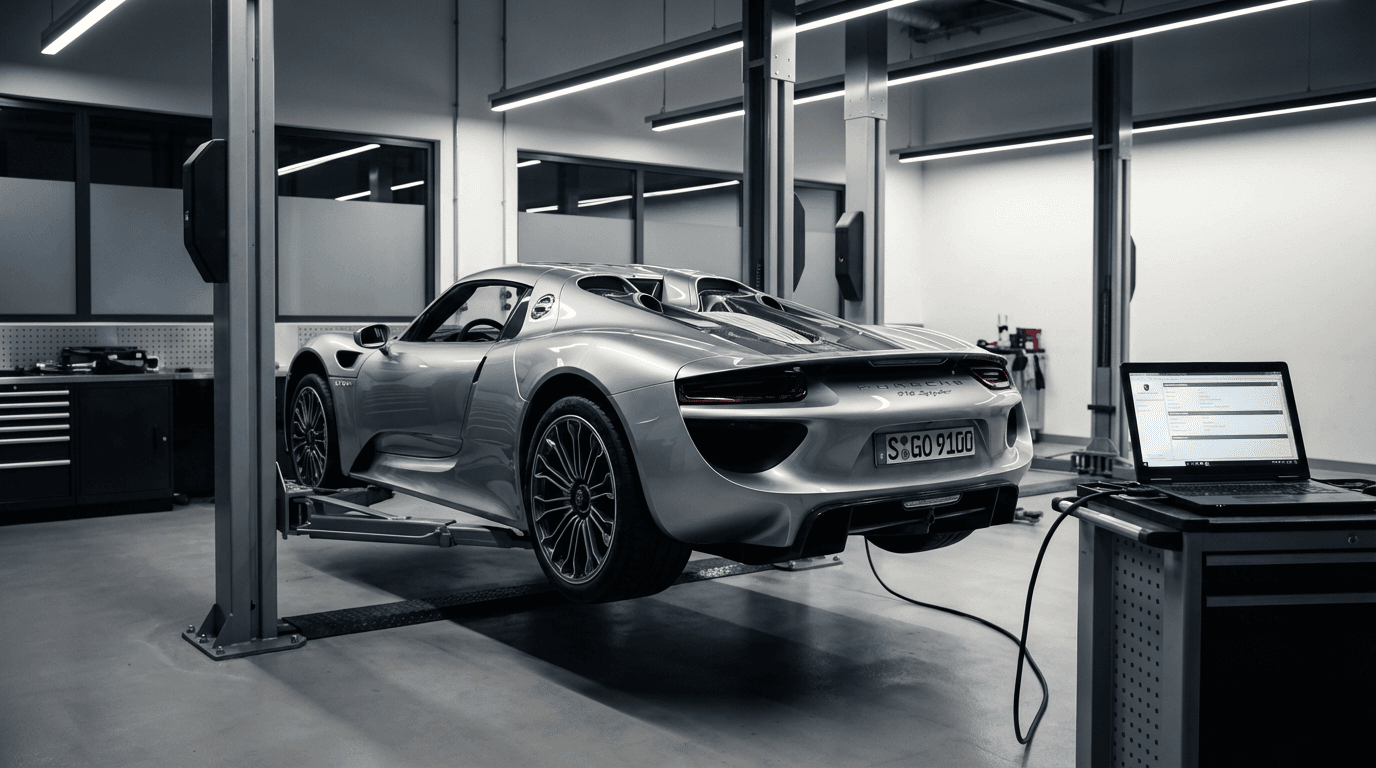
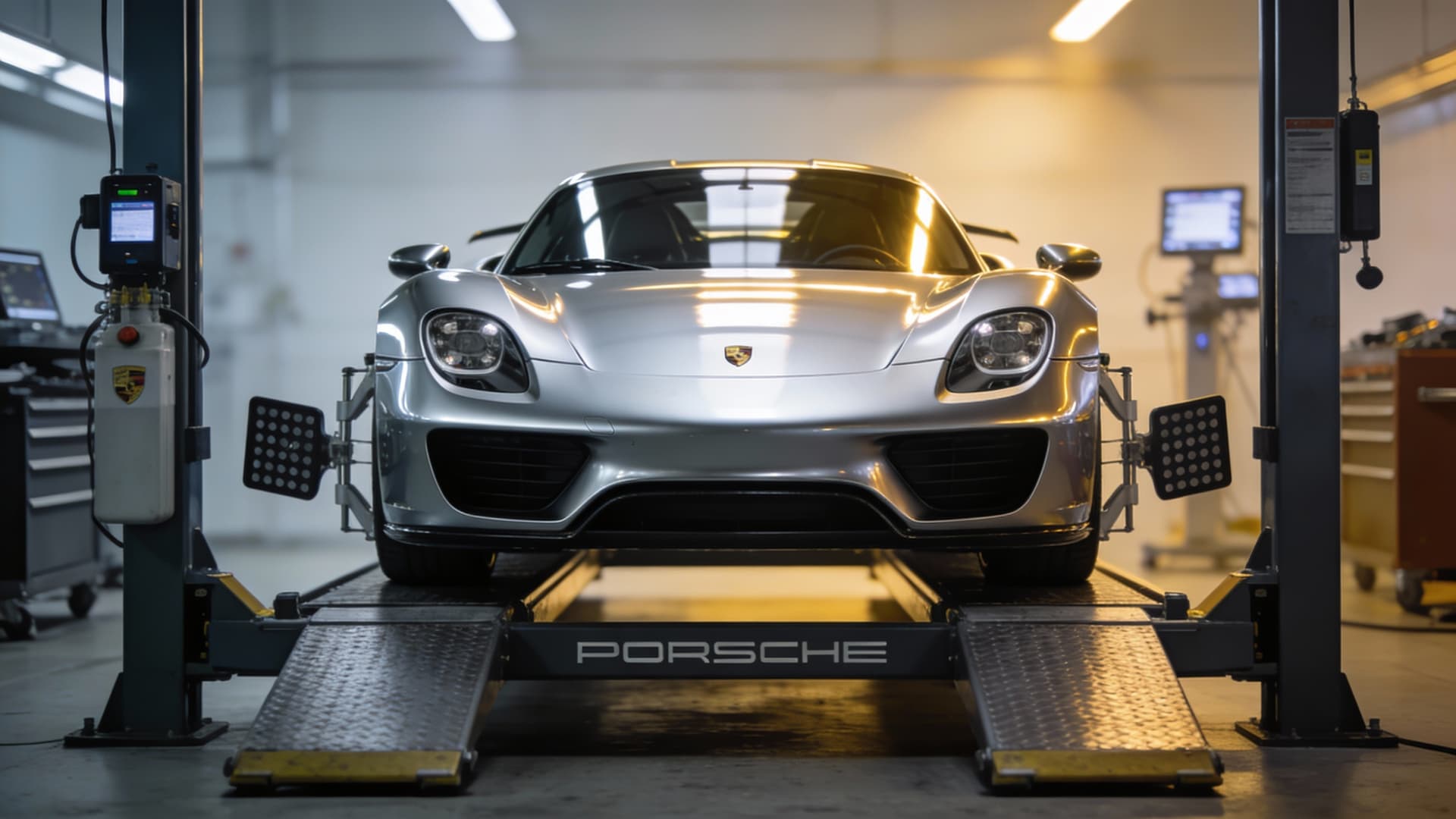
The multi-point inspection is where real value lives. This thousand-to-fifteen-hundred dollar examination covers every system: brake wear measurements on the carbon ceramics, tire condition, suspension components, exhaust systems, underbody inspection for damage, engine fluid levels, transmission check, cooling systems, drive axles, engine mounts, and the complete hybrid powertrain. For the battery specifically, we verify state of health, charging system function, electric motor condition, high-voltage connections, and thermal management. Inside the car, we check all warning systems, climate control, infotainment, power accessories, and the convertible mechanism if applicable.
Add diagnostic scanning and software update verification—another three to five hundred—and you're looking at a baseline annual service between twenty-eight fifty and forty-four hundred dollars. That assumes nothing's wrong. Finding problems—even minor ones—adds to the bill. But this is what proper maintenance costs on a car this sophisticated.
The Two-Year and Four-Year Reality
Beyond annual service, more comprehensive work arrives at regular intervals.
Every two years or twenty thousand miles, spark plug replacement becomes necessary. The high-revving V8 runs eight plugs, and proper gapping matters at the engine speeds this unit reaches. Budget twelve to eighteen hundred. Air filter replacement adds four to six hundred. PDK fluid service—critical for transmission longevity—runs fifteen hundred to twenty-five hundred. Extended brake inspection adds five to eight hundred.
These biennial additions total thirty-six to fifty-seven hundred on top of annual items, bringing a typical two-year service to sixty-five hundred to ten thousand dollars.
At four years or forty thousand miles, major service adds coolant replacement across all circuits—including the hybrid system cooling—at fifteen to twenty-five hundred. Drive belt replacement runs eight hundred to twelve hundred. Complete brake fluid flush adds six to nine hundred. Detailed hybrid system examination adds another thousand to fifteen hundred.
A four-year major service totals ten to sixteen thousand dollars when you include all annual and biennial items. This sounds substantial until you remember what you're maintaining: eight hundred eighty-seven horsepower of integrated hybrid technology in a car that weighs under thirty-seven hundred pounds.
Battery: The Elephant in the Room
Every prospective 918 buyer wonders about the hybrid battery. Let me be direct: with proper care, complete battery replacement is rare during typical ownership periods. But the potential expense exists, and understanding it matters.
Battery conditioning—essentially a health optimization service—runs twenty-five hundred to five thousand dollars. This is maintenance, not repair, and we recommend it every six to eight years depending on use and storage patterns. Module replacement, addressing specific failing cells rather than the entire pack, ranges from fifteen to thirty thousand dollars. Complete battery replacement—which most owners will never need—runs eighty to a hundred fifty thousand.
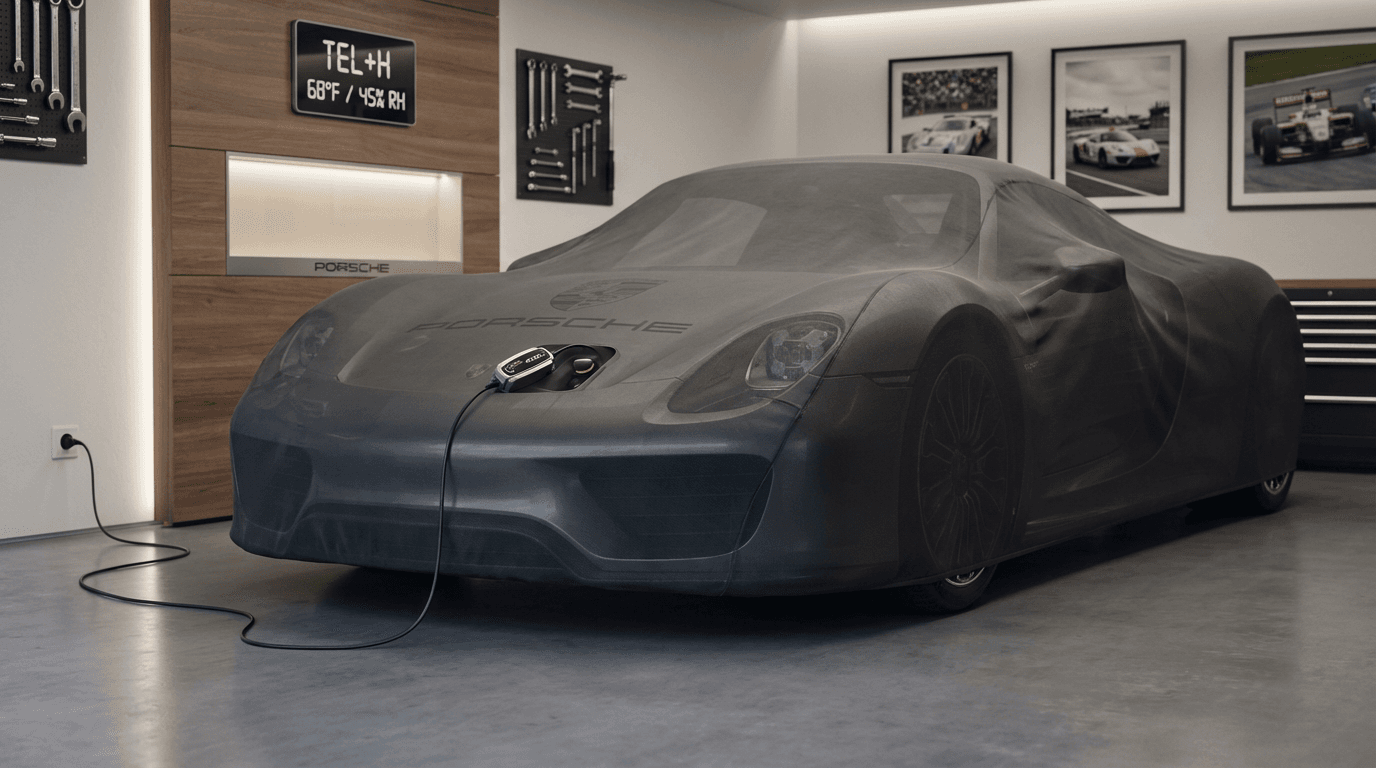
The difference between cars that need major battery work and those that don't often comes down to storage practices and charging habits. Cars stored in climate-controlled environments at fifty to seventy percent charge, driven monthly even during storage seasons, show dramatically less degradation than cars baked in hot garages or left sitting at full charge for months.
Wear Items: Tires and Brakes
These costs vary enormously based on driving style and use.
The 918 runs staggered sizing: 265/35 front tires on twenty-inch wheels, 325/30 rears on twenty-ones. A standard replacement set costs twenty-five hundred to four thousand. High-performance options push toward thirty-five to fifty-five hundred. Track-oriented compounds can exceed six thousand. Tire life depends entirely on use—track days consume rubber quickly, while careful street driving might yield fifteen thousand miles or more.
Carbon ceramic brakes last impressively long but cost accordingly when they finally need attention. Front pads run eighteen hundred to twenty-five hundred; rears cost fifteen to twenty-two hundred. The rotors themselves are the significant expense: twelve to sixteen thousand for fronts, ten to fourteen thousand for rears. The good news is that with proper use, rotors can last sixty thousand miles or more. Pads typically need replacement every twenty-five to forty thousand miles depending on how aggressively you drive.
Building a Realistic Annual Budget
For someone driving two to three thousand miles per year—typical for a collector car—realistic annual budgeting looks like this: scheduled service averages four to six thousand, tire costs prorated across their lifespan add eight hundred to twelve hundred, brake pad reserves add four to six hundred, and a contingency fund of two to three thousand covers the unexpected. Total: roughly seventy-two hundred to ten thousand eight hundred per year.
Active owners putting five thousand or more miles on their 918, especially with occasional track time, face different math. Scheduled service runs five to eight thousand as minor issues get caught more frequently. Tire budgets jump to twenty-five hundred to four thousand annually. Brake consumables add fifteen hundred to three thousand. Track preparation and inspection adds another thousand to two thousand. Larger contingency—three to five thousand—reflects increased component stress. Total: thirteen to twenty-two thousand annually.
These numbers don't include insurance, which varies dramatically based on location, driver history, agreed value, and usage restrictions. Expect eight to twenty-five thousand annually for proper coverage. Climate-controlled storage—non-optional for cars in most climates—runs four hundred to two thousand monthly depending on location and amenities.
Why Some 918s Cost More Than Others
I see 918s come through with wildly different cost histories, and the patterns are consistent.
Cars stored properly cost less to maintain. Climate control, appropriate charge levels during storage, and monthly activation prevent the creeping degradation that shows up as expensive repairs during service.
Cars with complete documentation cost less because we don't waste time diagnosing issues that were already addressed. Previous service records prevent redundant work and help us spot patterns that might indicate developing problems.
Cars serviced by qualified specialists cost less long-term because work gets done correctly the first time. Shops without 918 experience sometimes create problems while solving others, leading to cascading repairs.
And cars where owners address small issues promptly cost dramatically less than those where problems compound. A minor coolant weep becomes a major repair if ignored. A slight battery imbalance becomes module replacement if left unaddressed. Preventive maintenance exists for good reason.
Our Approach to 918 Costs
At Repasi Motorwerks, we provide transparent pricing before beginning any 918 service. Detailed estimates let owners make informed decisions. Our goal isn't maximizing invoices—it's appropriate maintenance that preserves these remarkable cars without unnecessary expense.
We've found that honest communication about costs builds relationships that last. Owners who understand what their cars need make better decisions. And cars that receive proper attention stay reliable and valuable.
Planning for 918 Spyder ownership? Contact Repasi Motorwerks for an honest assessment of what your car needs and what it will cost. We believe in transparency—no surprises, no unnecessary services, just proper care for an extraordinary machine.