The question comes up every time someone considers a 918 Spyder. Two cars sit on the market—one with the Weissach Package, one without—and the price gap stretches beyond four hundred thousand dollars. Is the lighter, more focused car worth nearly half a million more than its already-extraordinary standard sibling?
The answer depends entirely on what you want from a 918 and how you plan to use it. Having serviced both configurations and spoken with owners of each, I can tell you the Weissach Package delivers something real—but whether that something justifies the premium is a deeply personal calculation. For the complete ownership picture, read our 918 Spyder Complete Ownership Guide.
Let me walk you through what you actually get for that money, how it affects the car, and what it means for long-term ownership.
What the Weissach Package Actually Is
The Weissach Package—named after Porsche's legendary development center—isn't a single modification. It's a comprehensive weight reduction and visual enhancement program that touches nearly every component of the car.
The primary goal is weight reduction. Every gram saved improves acceleration, braking, and handling response. The headline number is ninety to just over a hundred pounds saved, depending on other options specified on the car.
The most significant weight comes from the wheels: forged magnesium replaces forged aluminum, shedding approximately twenty-two pounds from the rotating mass. This matters more than static weight because rotational inertia affects how quickly the car responds to inputs. Magnesium wheels change the way the car feels in motion.
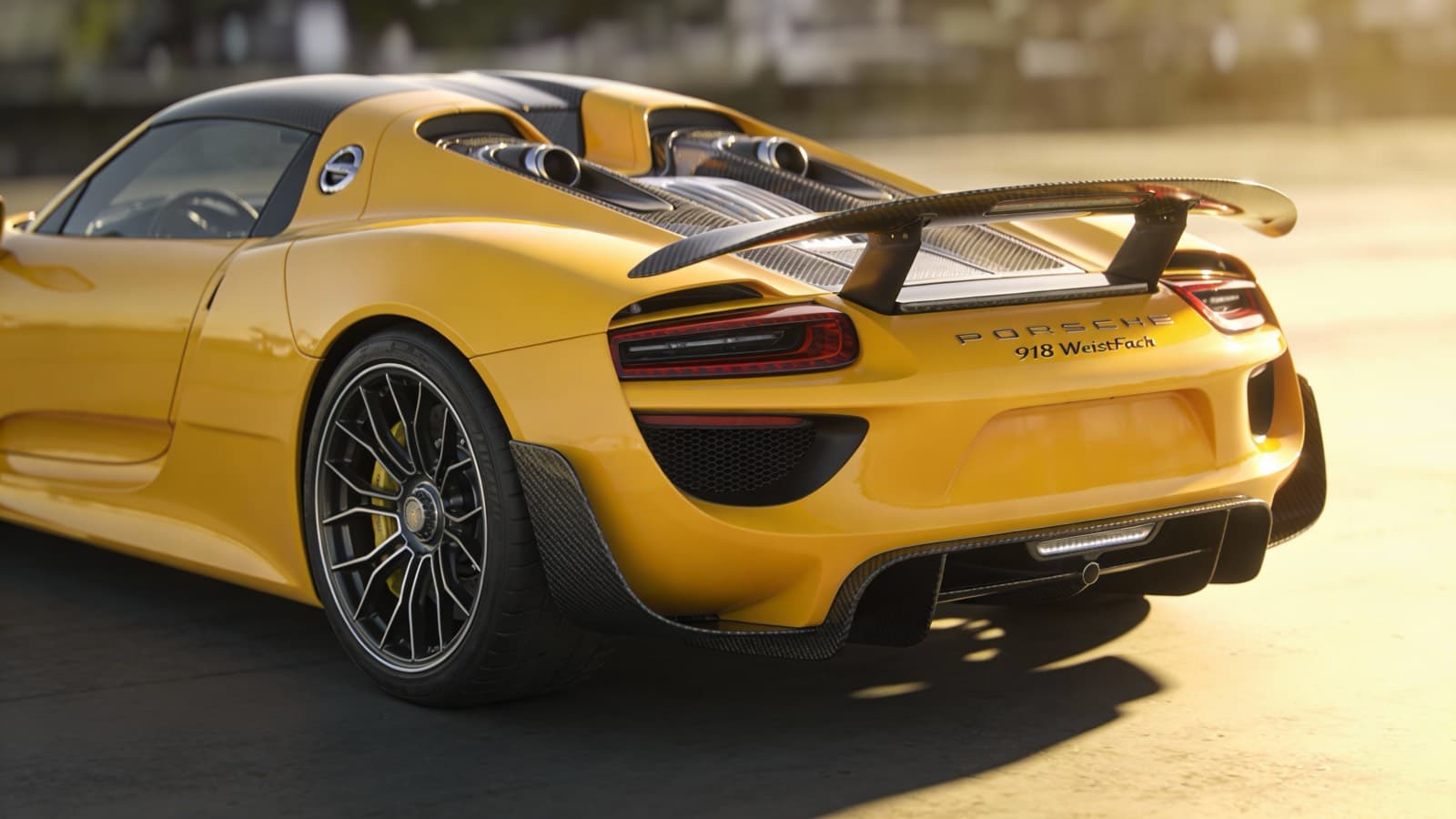
The roof panel switches from the standard carbon-and-glass construction to full carbon fiber, saving about four pounds while eliminating the targa top's weight penalty. Side mirrors receive full carbon fiber housings, shedding another two pounds. The rear wing is optimized carbon with a modified profile—three pounds lighter while maintaining aerodynamic effectiveness. The roll bar switches to magnesium alloy for four additional pounds of savings. Interior trim throughout becomes exposed carbon fiber, removing eight pounds of standard materials. And various hardware items throughout the car switch to titanium, accounting for another five pounds or so.
These individual savings seem modest, but they compound. More importantly, they're distributed throughout the car rather than concentrated in one area, maintaining the 918's exceptional balance while reducing overall mass.
The Visual Transformation
Beyond the weight savings, the Weissach Package transforms how the 918 looks.
Exposed carbon fiber becomes visible across many exterior panels. The weave catches light differently than painted surfaces, creating depth and drama that painted carbon lacks. The carbon fiber side mirrors and modified rear wing contribute to a more aggressive aesthetic. The magnesium wheels offer a unique finish that distinguishes Weissach cars at a glance.
For those who wanted even more distinction, Porsche offered special livery options with the Weissach Package—the famous Salzburg and Martini racing patterns that connect the 918 to Porsche's motorsport heritage. Cars wearing these liveries command significant premiums today, their visual impact as much a part of their value as any mechanical advantage.
Inside, Alcantara replaces leather throughout. The door panels become lightweight units with pull straps replacing conventional handles. Carbon fiber trim appears on doors, console, and dashboard. Racing-inspired details appear throughout the cabin. The overall effect is purposeful rather than luxurious—a cabin designed for driving rather than lounging.
What the Numbers Say About Performance
The specification sheet improvements are modest in absolute terms. The Weissach 918 hits sixty miles per hour in 2.5 seconds versus 2.6 for the standard car—one-tenth of a second faster. Zero to 124 miles per hour improves by the same margin. Top speed remains identical at 214 miles per hour.
Those numbers undersell the actual difference. Experienced drivers report noticeable improvements that the stopwatch struggles to capture.
Turn-in response feels sharper because less mass resists the car's change of direction. The front end dives into corners more eagerly, requiring subtle adjustment to driving style. Braking distances improve slightly because less mass needs deceleration. More importantly, braking feels lighter—the car sheds speed with less effort from the driver. Handling balance improves across all conditions because the weight reduction is distributed throughout rather than concentrated in one area.
The magnesium wheels may contribute improved steering feedback, though distinguishing this from placebo effect would require back-to-back comparison under controlled conditions. What's certain is that reduced unsprung weight and rotational inertia affect how the car communicates with the driver.
For track-focused owners, these improvements compound over the course of a lap. Fractions of seconds here and there add up to meaningful time gains. More importantly, the reduced weight means the car asks less from its tires, brakes, and cooling systems during sustained track use—allowing for more laps before heat becomes limiting.
The Money Question: Then and Now
When the 918 was new, the Weissach Package cost approximately ,000 on top of the ,000 base price. A Weissach-equipped 918 started at ,000 before any additional options. Fully loaded examples with special paint and liveries easily exceeded one million dollars.
Today, that premium has grown substantially. Standard 918s trade between roughly .6 million and million depending on condition, mileage, specification, and provenance. Weissach-equipped cars command million to .5 million or more. The Weissach premium—once ,000—now exceeds four hundred thousand dollars and continues growing.
Several factors drive this appreciation. Weissach-equipped 918s represent only about thirty to forty percent of production, creating relative scarcity. Collectors seeking the ultimate 918 specification gravitate toward the Weissach Package. The performance-focused character appeals to owners who actually drive their cars. And the visual impact of exposed carbon and racing liveries creates presence that standard cars lack.
Looking forward, the Weissach premium seems likely to persist or grow. Hypercar collectors increasingly prefer ultimate specifications when they exist. The 918's significance as the first successful hybrid hypercar grows with time. Lower Weissach production numbers create the kind of scarcity that collector markets reward. And historically, track-focused variants of significant cars appreciate more strongly than their standard siblings.
Ownership Realities: What the Weissach Package Demands
The specialized materials that make the Weissach Package special also require specific care.
The magnesium wheels are lightweight and beautiful, but they demand attention. Cleaning requires pH-neutral products—acidic or alkaline wheel cleaners can attack the surface. Automatic car washes with harsh chemicals are out of the question. Hand washing with appropriate products is the only safe approach. Regular inspection catches oxidation before it spreads. Any damage should be addressed immediately because magnesium can develop problems quickly if neglected. And replacement costs significantly exceed standard aluminum wheels, making protection worthwhile.
The exposed carbon fiber requires UV protection. Without it, carbon can yellow over time, dulling the dramatic appearance that justifies the Weissach's visual premium. Many owners apply paint protection film to exposed carbon surfaces. Cleaning requires gentle products formulated for carbon—no abrasives, regular waxing to protect the finish. And any damage requires specialist repair. Carbon fiber doesn't dent like metal; it fractures. Even minor impacts should be inspected by someone who understands composite materials.
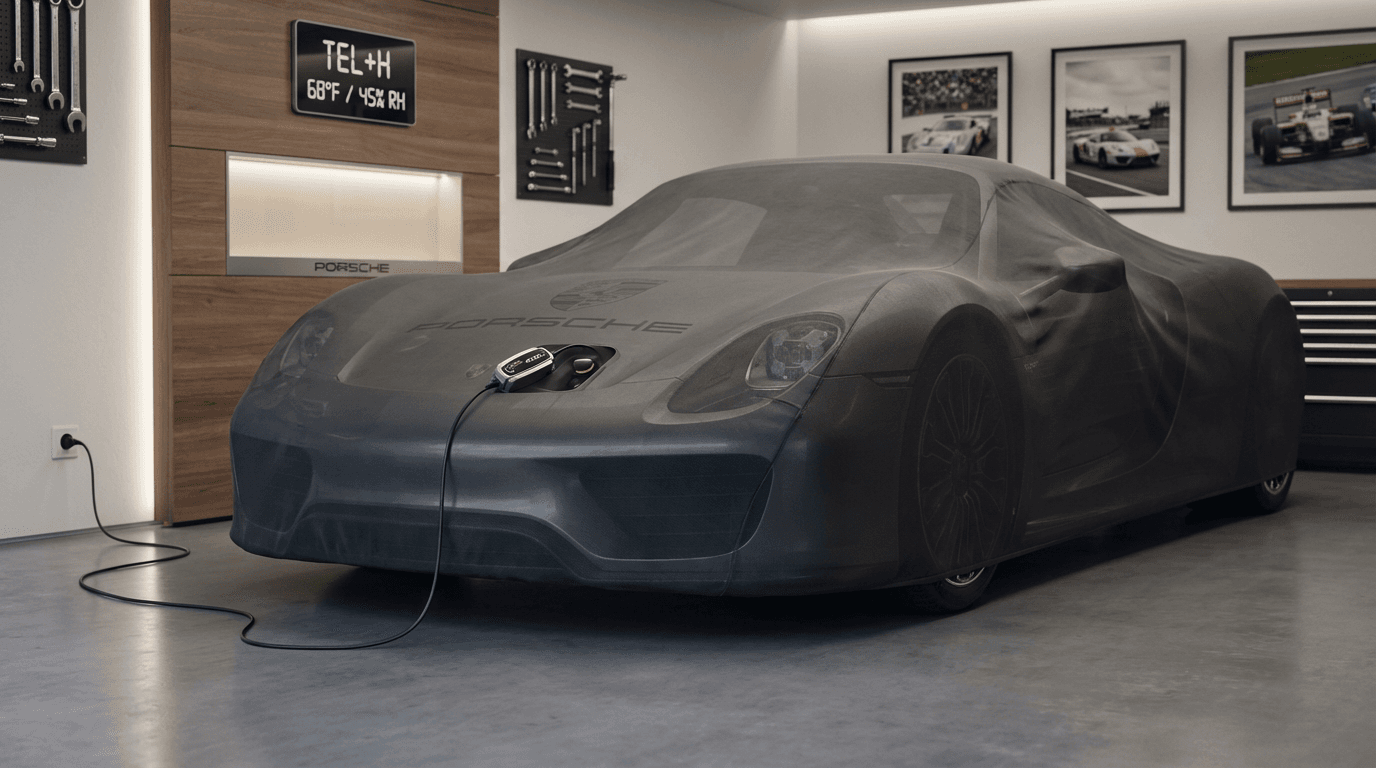
The Alcantara interior needs different care than leather. Regular vacuuming removes particles that can work into the material. Cleaning requires Alcantara-specific products—leather conditioners are wrong for this material. Gentle brushing with an appropriate brush maintains texture. Spills must be addressed immediately because Alcantara absorbs liquids. Significant stains may require professional cleaning. High-use areas will show wear patterns over time, though regular conditioning helps. Some owners use protective covers during storage.
These requirements don't make the Weissach Package harder to own—they make it different to own. The maintenance isn't more expensive for routine service, but specialized care adds complexity that standard materials don't require.
Making the Decision
The Weissach Package makes sense if track use is part of your ownership plan. The weight reduction benefits circuit driving more than street driving—the improvements matter when you're pushing the car's limits. If ultimate specification is important to you, the Weissach Package represents the most focused 918 available. If resale value matters, the Weissach Package has proven to hold value exceptionally well. If you prefer Alcantara's grip and racing-derived character over leather's luxury, the interior suits you. And if visual impact matters—if you want the 918 that stops conversations—exposed carbon and optional racing liveries deliver presence that standard cars lack.
The standard 918 makes sense if budget is constrained. That four-hundred-thousand-dollar premium buys significant experiences elsewhere—another car, extensive track time, years of maintenance. If leather interior appeals to you more than Alcantara, the standard car delivers the material you prefer. If lower maintenance complexity appeals, standard materials require less specialized care. If daily use is intended, the standard interior may wear better under frequent use. And if the 918 experience itself is the goal—rather than having the ultimate specification—both configurations deliver the hybrid hypercar thrill that makes these cars extraordinary.
What We Do for Weissach Owners
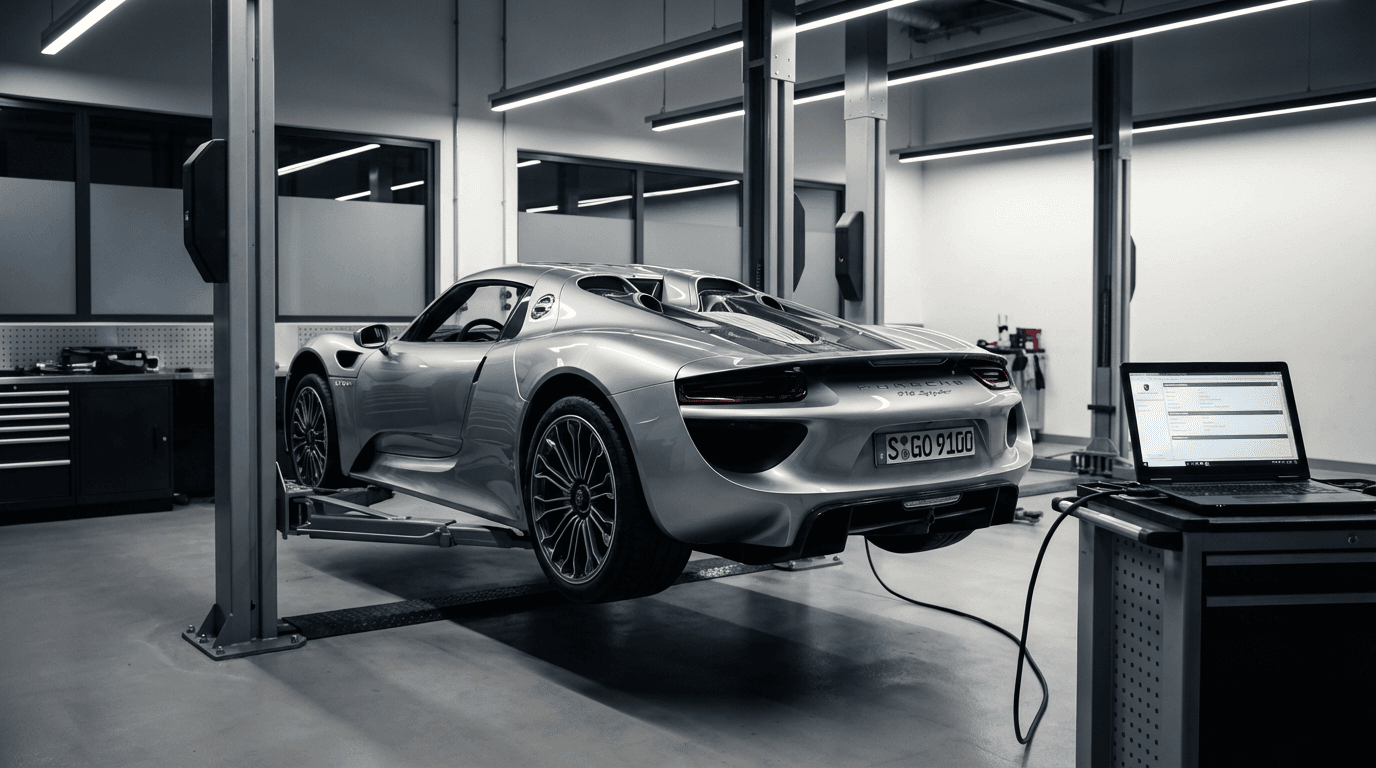
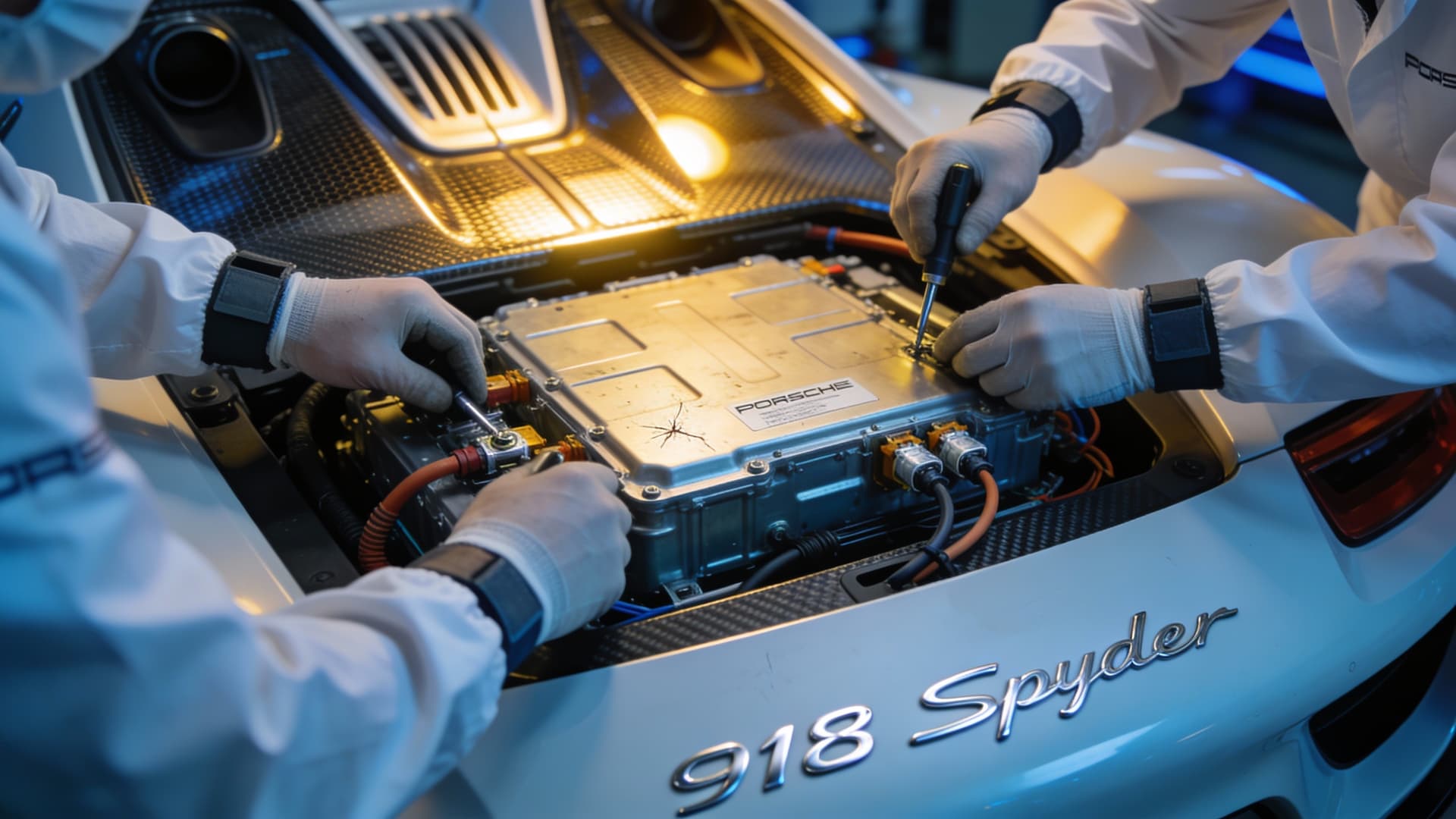
At Repasi Motorwerks, we service both standard and Weissach-equipped 918 Spyders. We understand the specific care requirements that the Weissach Package demands: proper magnesium wheel care procedures, carbon fiber inspection and protection, Alcantara cleaning and maintenance, and complete hybrid system service that applies equally to both configurations.
Whether you own a Weissach 918 or are considering acquiring one, our Gold Meister technicians provide the expertise these special machines deserve.
Questions about the 918 Spyder Weissach Package? Contact Repasi Motorwerks in Stratford, Connecticut. We understand what makes these cars special and what keeps them performing at the level Porsche intended.