The conversation always starts the same way. An owner calls about their 918, mentions reduced electric range or an unusual warning message, and asks the question that's really on their mind: "Is this going to be a hundred-thousand-dollar problem?"
The answer is usually more nuanced than they expect. Battery replacement on a 918 Spyder is indeed expensive—among the most significant repair costs possible on this platform. But understanding the system, recognizing early warning signs, and implementing proper care can dramatically extend battery life and, in many cases, allow for partial rather than complete replacement when issues do arise. For comprehensive hybrid system care, see our 918 Spyder Complete Ownership Guide.
At Repasi Motorwerks, we've worked through enough 918 hybrid systems to understand what owners actually need to know—not the theoretical maximum cost, but the realistic picture of battery ownership and the strategies that preserve both the battery and your investment.
How the 918 Battery Actually Works
The 918's battery isn't just a larger version of what's in your laptop. It's a liquid-cooled lithium-ion pack with its own dedicated cooling circuit, sophisticated thermal management, and integration into a system designed for racing-level performance rather than commuter efficiency.
The numbers tell part of the story: 6.8 kilowatt-hours of total capacity, running at 400 volts, weighing roughly 310 pounds. But what matters more is what those numbers enable. The battery powers two electric motors—a 129-horsepower unit at the front axle providing all-wheel-drive capability and pure-electric front-wheel drive, and a 156-horsepower motor integrated with the rear transmission that assists the V8 during acceleration.
Combined, those motors add 285 horsepower to the 608 from the V8, creating the 887-horsepower total that defines the 918's performance. But more importantly, they fill the torque curve with instant electric response, eliminating the slight hesitation that even the best naturally aspirated engines exhibit at low RPM.
This isn't a Prius battery designed for decades of gentle cycling. It's a performance component that experiences significant stress during spirited driving and track use. Understanding that context helps set realistic expectations for longevity.
What Determines How Long Your Battery Will Last
Time affects the 918 battery more than mileage. A low-mileage example that sat in a hot garage for years may have worse battery health than a well-maintained car with three times the odometer reading. This counterintuitive reality catches some buyers off guard.
Under typical ownership conditions with proper care, a 918 battery should maintain useful capacity for ten to fifteen years. The cells can handle fifteen hundred to twenty-five hundred complete charge cycles, and capacity retention of seventy to eighty percent after a decade is realistic for well-maintained cars.
But several factors accelerate degradation, and owners have meaningful control over most of them.
Heat is the battery's primary enemy. High temperatures accelerate chemical degradation within the cells in ways that can't be reversed. Owners who store their 918s in non-climate-controlled garages—especially in hot climates like Arizona, Texas, or Florida—should expect measurably faster degradation than owners who maintain their cars at moderate temperatures year-round.
Charge behavior matters more than most owners realize. Lithium-ion batteries prefer moderate states of charge. Keeping the battery at 100% for extended periods stresses the cells. So does repeatedly depleting it to zero. The ideal storage range is between thirty and eighty percent. If you're leaving the car for more than a week, parking it at fifty to seventy percent charge protects cell longevity.
Inactivity creates its own problems. The battery management system draws power even when the car sits, and over months, this can deplete the pack completely. Deeply discharged cells may become permanently damaged. Equally problematic, cells become unbalanced when they sit, and the management system can't correct this without the car running. We recommend driving the 918 at least monthly, even during winter storage.
Charge cycles accumulate with use—every complete discharge and recharge creates wear, with partial cycles causing proportionally less stress. Track use that repeatedly depletes the battery accumulates cycles much faster than street driving. A 918 used primarily for track days may see degradation years earlier than a garage queen driven only occasionally.
Recognizing When the Battery Is Declining
Early recognition allows planning rather than panic. The 918 provides several indicators that battery capacity is diminishing.
Reduced electric range is the most obvious sign. A healthy 918 should achieve twelve or more miles on pure electric power. When that number drops below eight to ten miles, significant capacity loss has occurred. Pay attention to this number during ownership—the trend matters as much as the absolute value.
Charging behavior changes as capacity decreases. The battery may reach full charge faster than it once did, simply because there's less capacity to fill. You might notice the car not reaching a full hundred percent when left on the charger, or unusual patterns during charging. These subtle changes often precede more obvious symptoms.
Performance changes can be harder to recognize because they're gradual. The electric motors contribute less when battery capacity diminishes, so you might notice the V8 engaging earlier than expected, less aggressive acceleration feel off the line, or changes in how the hybrid modes behave. These symptoms can easily be dismissed as imagination until compared against a healthy example.
Warning messages deserve immediate attention. The 918's systems continuously monitor battery health, and any high-voltage warnings, charging system faults, hybrid mode restrictions, or temperature warnings should trigger a professional evaluation. Don't assume these messages are glitches—they're usually meaningful.
The Real Cost of Battery Replacement
Now for the numbers everyone wants to know. Complete battery replacement on a 918 Spyder runs between sixty thousand and a hundred twenty-five thousand dollars or more. That range is wide because several factors significantly affect final cost.
The battery modules themselves—the actual cells and their packaging—range from fifty to over a hundred thousand dollars depending on availability and scope of replacement. This is the biggest variable. Parts are sourced through Porsche Classic, and availability fluctuates. When supply is limited, prices increase. Some owners report waiting months for components when stock is depleted.
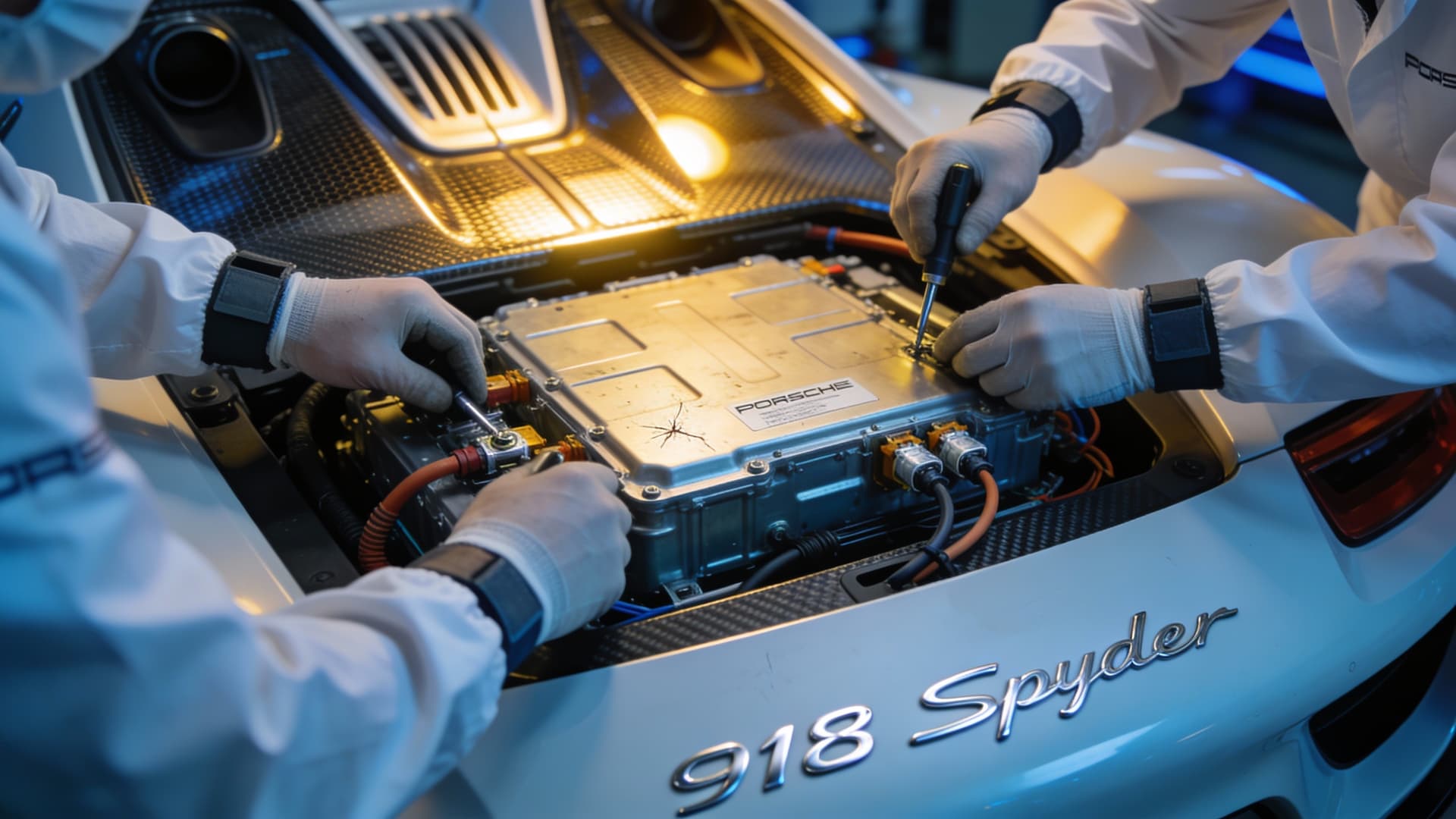
Labor adds five to fifteen thousand dollars. This isn't work for a general shop—high-voltage systems require specialized training, safety equipment, and procedures. The premium reflects genuine expertise and risk management.
Diagnostic and verification work runs another two to three thousand dollars. This isn't just scanning for codes—it's comprehensive evaluation of the entire hybrid system, verification of the new components, and calibration of the integrated systems.
Supporting components often need attention during battery work. Cooling system pieces, high-voltage connectors, and related hardware may show wear that becomes apparent only when the main battery is accessed. Budget another three to eight thousand for these potential additions.
Here's the important nuance: the 918 uses multiple battery modules. Sometimes individual modules can be replaced rather than the entire pack. When a specific module fails while others remain healthy, targeted replacement can cut costs significantly. Thorough diagnostics before committing to full replacement often reveals this opportunity.
Extending Battery Life: What Actually Works
Proactive care meaningfully extends battery life. This isn't wishful thinking—we see the difference in cars that come through our shop.
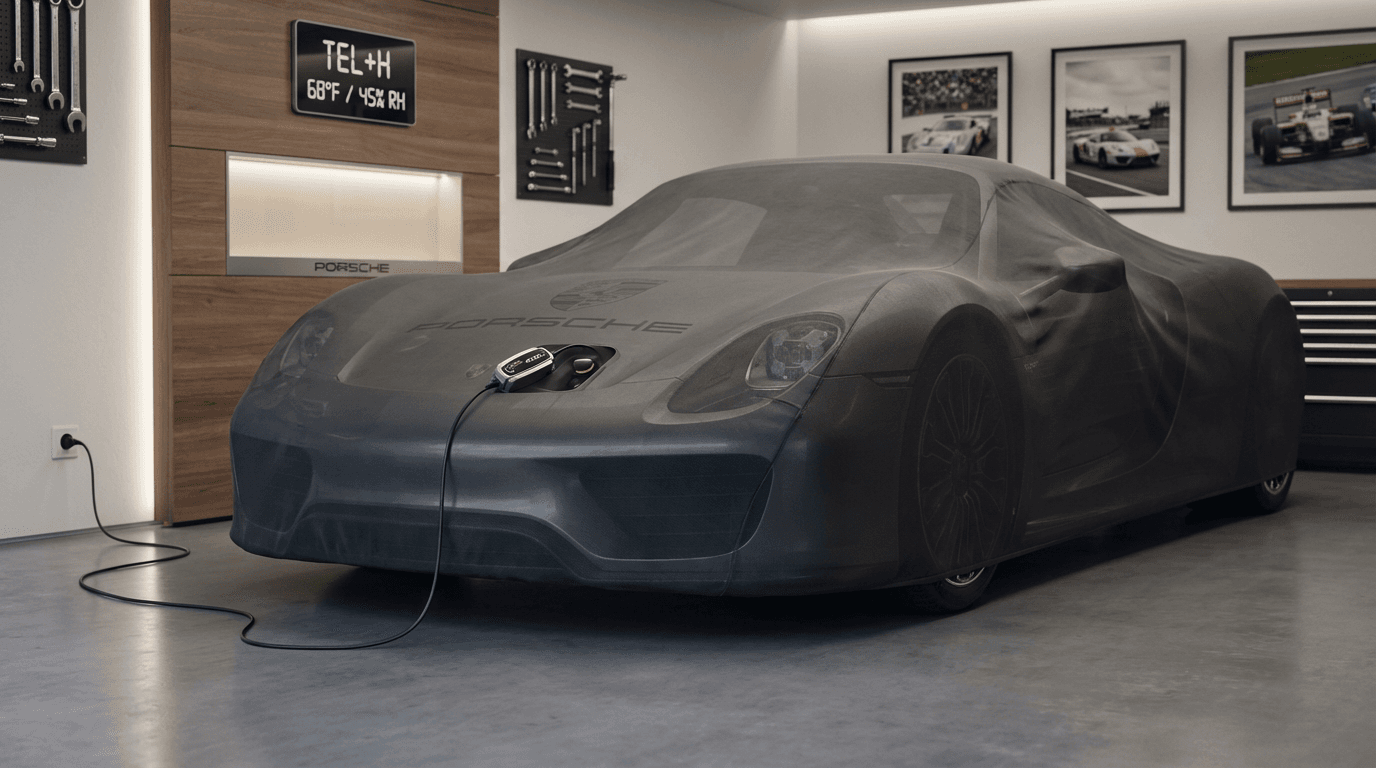
Storage temperature matters more than any other factor. Keep your 918 in a climate-controlled space between fifty and seventy degrees Fahrenheit. Avoid freezing conditions and temperatures above eighty-five degrees. If you're storing in a facility, verify their climate control actually maintains these parameters year-round.
Charge level during storage protects cell chemistry. When parking the car for more than a week, leave the battery between fifty and seventy percent. This isn't the maximum range—full charge stresses cells during storage. It's also not near empty, which risks deep discharge as the management system draws power over time.
Use the recommended charging equipment. The battery management system communicates with Porsche's charging system in ways that protect cell health. Generic chargers may not implement the same protective protocols.
Drive the car regularly. Monthly use—even brief trips—keeps the hybrid system functioning and allows the management system to balance cells. The worst thing for a 918 battery is sitting for months without activation.
Avoid routine extremes. Don't habitually deplete the battery completely or leave it at full charge for extended periods after charging. The chemistry performs best in the moderate middle range.
Allow proper initialization. When you start the 918, give the hybrid system time to initialize before demanding maximum performance. The battery management system performs checks and preparations that shouldn't be rushed.
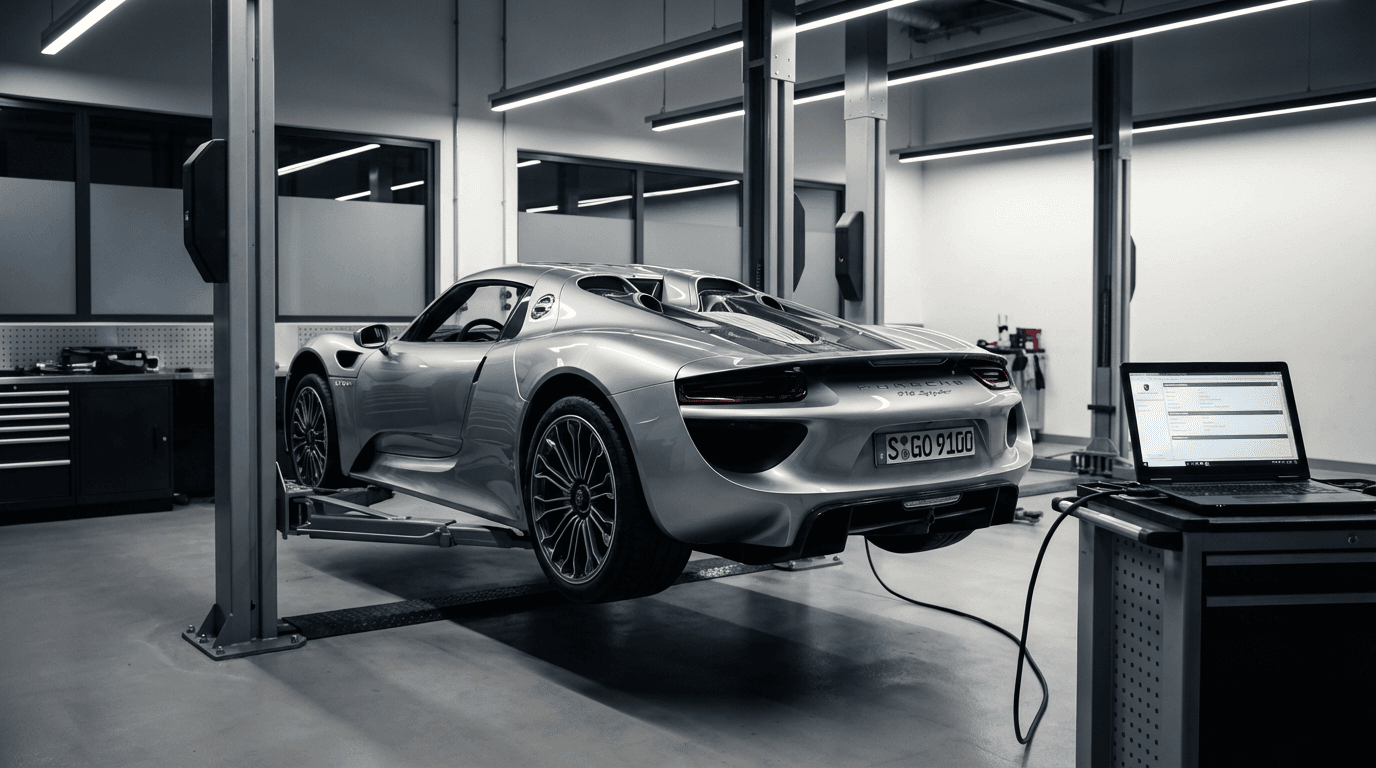
Annual hybrid-specific service matters. Beyond standard maintenance, schedule annual inspection of battery health diagnostics, cooling system verification, software updates, connector inspection, and charging system testing. This proactive approach catches developing problems before they cascade.
Finding Service That Won't Make Things Worse
High-voltage hybrid work requires specialized training and equipment. The consequences of improper service range from damaged components to serious safety hazards.
Technicians must hold high-voltage certification—this isn't optional. The 918's 400-volt system can kill without proper training and safety protocols. Beyond the safety certification, they need 918-specific training. General hybrid experience isn't sufficient—the 918's systems have unique characteristics that require specific knowledge.
Factory diagnostic tools are essential. PIWIS access allows proper battery health analysis and system verification in ways that generic scan tools cannot replicate. Any shop claiming to service 918 hybrid systems without current PIWIS capability is cutting corners.
Proper safety equipment—insulated tools, safety barriers, emergency procedures—is mandatory for high-voltage work. If a shop can't demonstrate these capabilities, they shouldn't be touching your car.
Not all Porsche dealers maintain 918 service capability. Before scheduling work, verify that the specific location has experience and currently certified technicians. Some dealers send 918s to other locations for service, adding complexity and transit risk.
Independent specialists who maintain genuine 918 capability are rare but do exist. Our Gold Meister technicians hold high-voltage certification and have completed Porsche's 918 training program. We maintain current diagnostic equipment and appropriate safety infrastructure.
For significant work, Porsche Classic provides factory-level service with direct access to parts and engineering support, though typically at premium pricing.
Planning Ahead
Given the eventual reality of battery service, financial planning makes sense. Set aside funds for future work based on your car's current battery age, usage patterns, storage conditions, and how long you intend to own.
Some buyers factor battery replacement into purchase negotiations, reducing the price to account for anticipated costs. This approach makes sense when buying a higher-mileage or older example where battery service may be imminent.
Verify your insurance covers battery replacement for non-accident damage. Some policies exclude wear components or have limitations that leave owners unexpectedly exposed.
Battery condition increasingly affects 918 values. Cars with documented battery health and proper service history command premiums over cars with unknown or compromised status. The records you build through proper service protect your investment.
What We Do for 918 Owners
At Repasi Motorwerks, our certified technicians provide comprehensive 918 hybrid service: complete system diagnostics, battery health analysis and reporting, cooling system service, software updates and recalibration, and preventive maintenance programs designed to maximize battery longevity.
We also perform pre-purchase hybrid system evaluations for buyers, providing honest assessment of battery condition before purchase decisions are finalized.
The 918's battery doesn't have to be a source of anxiety. With proper understanding and care, it's simply another aspect of owning an extraordinary machine—manageable with knowledge and planning.
Questions about your 918 Spyder's hybrid system? Contact Repasi Motorwerks in Stratford, Connecticut. We provide honest evaluation, transparent pricing, and the expertise these remarkable cars require.