Storing a 918 Spyder isn't like storing a standard car — or even a standard Porsche. The hybrid system introduces battery management requirements that don't exist on conventional vehicles, and getting storage wrong can result in degradation that costs five or six figures to repair.
At Repasi Motorwerks, we manage seasonal storage and long-term care for multiple 918 Spyders. This guide covers the specific procedures that protect both the hybrid system and the V8 during periods of inactivity. For the complete ownership picture, see our 918 Spyder Complete Ownership Guide.
Battery State-of-Charge Management
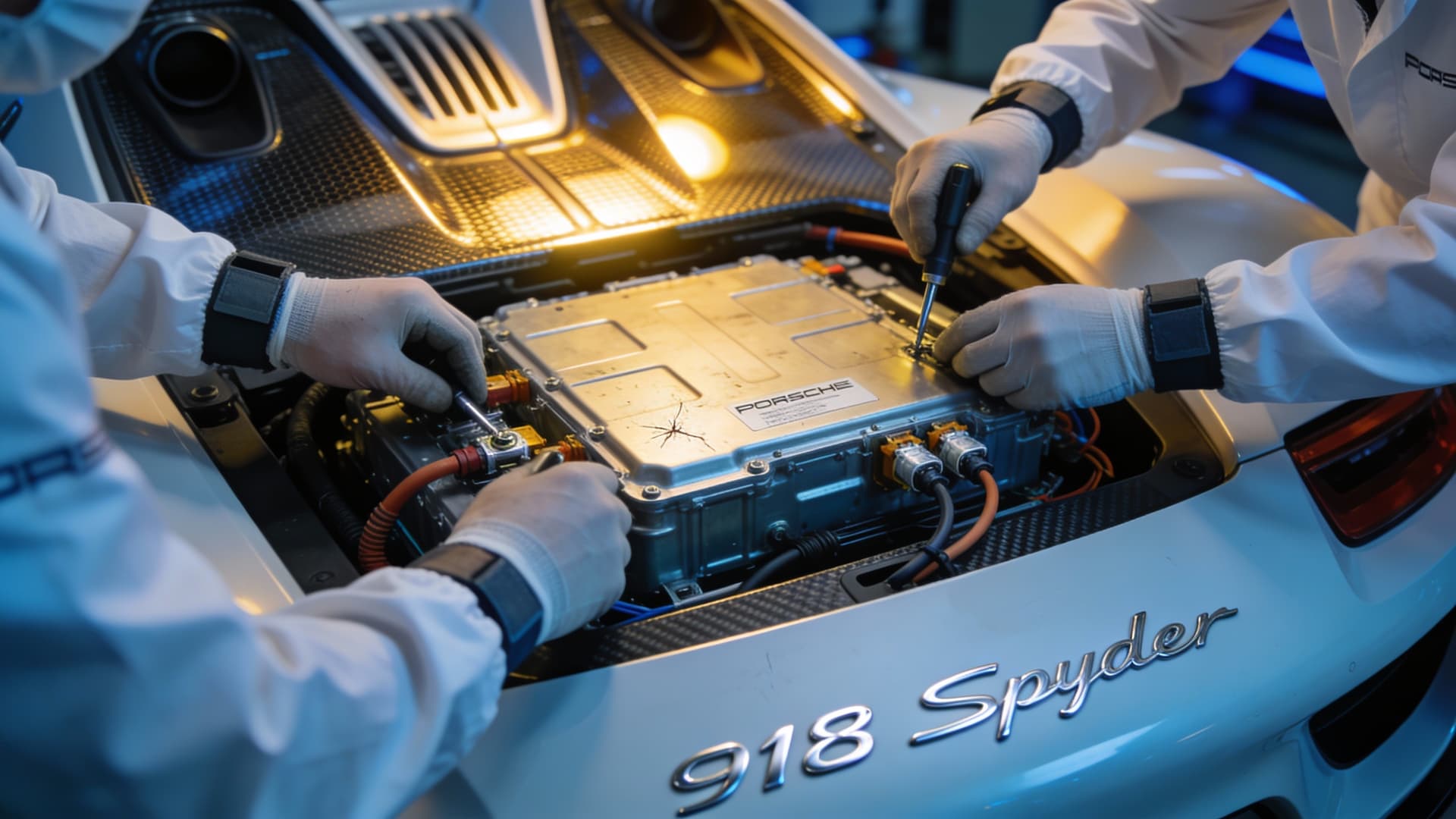
The high-voltage lithium-ion battery pack is the most storage-sensitive component in the 918. Unlike lead-acid batteries that tolerate a wide range of charge states, lithium-ion cells have an optimal storage range.
The 40-60% Rule
The battery should be stored at 40-60% state of charge. This range minimizes chemical degradation of the cells during storage.
Why not fully charged?
- A fully charged lithium-ion battery experiences accelerated capacity loss during storage
- Cell voltage stress at 100% SOC promotes chemical breakdown of the electrolyte
- Storing at full charge for weeks or months measurably reduces total battery capacity
Why not fully depleted?
- Deep discharge can cause irreversible cell damage
- Below a certain voltage threshold, individual cells can become unrecoverable
- The battery management system may require dealer-level intervention to reactivate a deeply discharged pack
Periodic Exercise
The 918 should not sit completely dormant for more than 4-6 weeks. During extended storage:
- Start the car and bring it to full operating temperature
- Drive it for at least 20-30 minutes — this allows the battery management system to balance cells
- Use multiple drive modes to exercise both the V8 and electric systems
- Return the battery to 40-60% SOC before re-storing
Why driving matters: The battery management system actively balances individual cell voltages during driving. Without periodic exercise, cell voltages can drift apart, which triggers protective limitations when the car is eventually driven.
12-Volt Auxiliary Battery
The 918 has a conventional 12-volt battery that powers auxiliary systems (locks, alarm, computer wake-up). This battery drains during storage as the car's systems periodically wake up for monitoring cycles.
Trickle Charger Requirements
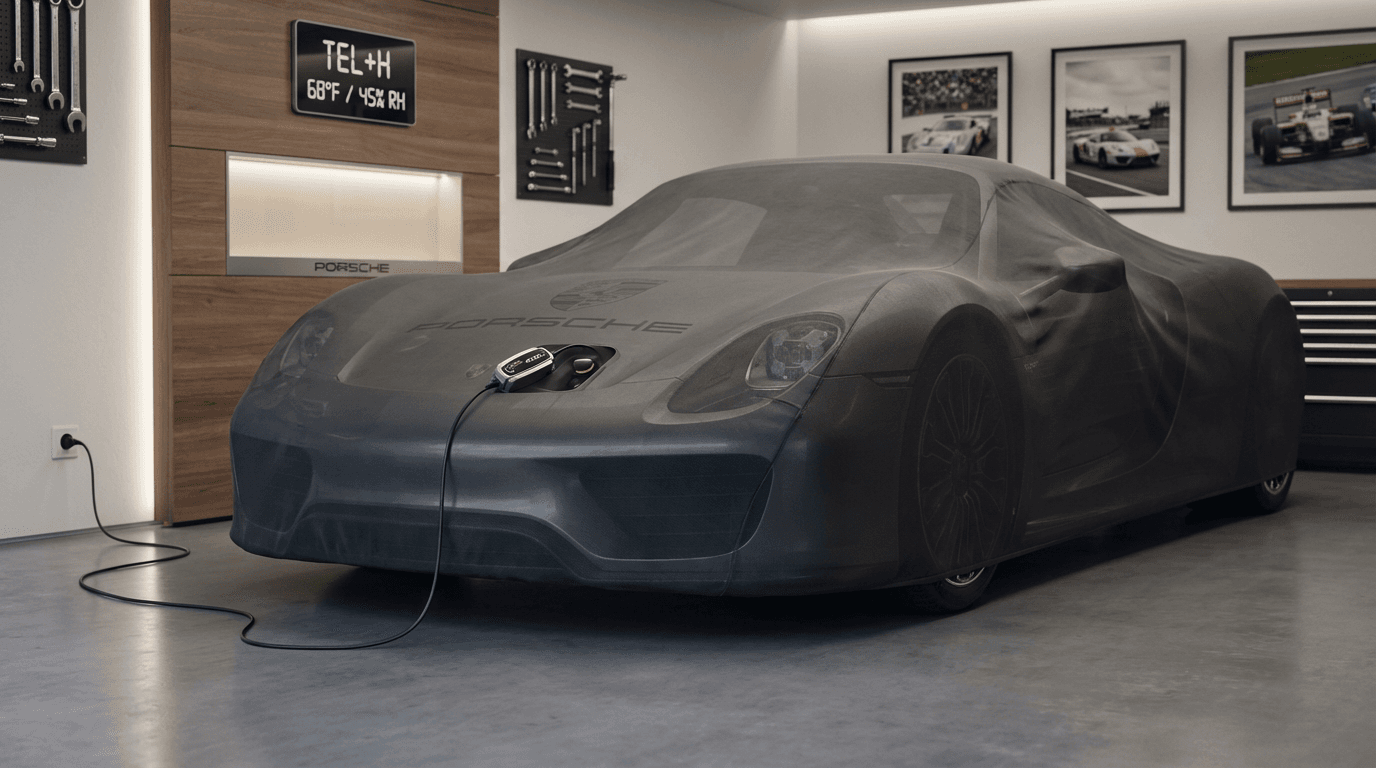
- Use a smart trickle charger (CTEK or equivalent) designed for modern vehicles
- Connect to the 12V battery terminals (consult your owner's manual for the correct connection point)
- Verify the charger maintains float charge without overcharging
- Check charger connection monthly during storage
Why this matters: If the 12V battery dies, the car's hybrid control systems cannot be woken up normally. Recovery may require PIWIS diagnostic connection and dealer-level procedures to re-establish communication with the high-voltage system.
Cooling System Care During Storage
The 918 has three independent cooling circuits:
- V8 engine cooling circuit
- Hybrid battery cooling circuit
- Electric motor cooling circuit
During storage, all three circuits must maintain proper fill levels and pressure. A slow leak in any circuit that goes undetected during storage can cause issues when the car is restarted.
Pre-storage cooling system check:
- Verify coolant levels in all three circuits
- Pressure test each circuit to check for leaks
- Note: The battery cooling circuit uses a different coolant specification than the V8 circuit — never mix them
Tire Flat-Spotting Prevention
The 918 runs on Michelin Pilot Sport Cup 2 tires (or equivalent performance compound). These soft-compound tires are particularly susceptible to flat-spotting during extended storage.
Prevention options:
- Over-inflate to 40-42 PSI during storage (reduce to normal specification before driving)
- Use flat-spot preventers — shaped supports that distribute the car's weight across a larger tire contact area
- Roll the car forward or backward by a few feet monthly to change the contact patch position
- Store in a climate-controlled environment — cold temperatures exacerbate flat-spotting
Note: Flat spots from storage are usually temporary and work themselves out after 15-30 minutes of driving. Severe flat-spotting from very long storage on cold concrete may be permanent, requiring tire replacement.
Climate-Controlled Storage
For a car valued at $1.5-$2.5 million, climate-controlled storage isn't a luxury — it's a necessity.
Temperature
- Ideal range: 55-68°F (12-20°C)
- Maximum: 75°F — higher temperatures accelerate battery degradation
- Minimum: 40°F — cold temperatures increase flat-spotting risk and can affect battery chemistry
Humidity
- Ideal range: 40-50% relative humidity
- Too dry (below 30%): Can dry out rubber seals, weather stripping, and interior leather
- Too humid (above 60%): Promotes corrosion, mildew, and electrical connection degradation
Air Circulation
- Gentle air circulation prevents moisture pockets
- Do not direct airflow directly onto the car (can carry dust)
- A dehumidifier in the storage space is beneficial in humid climates
Pre-Storage Checklist
Before placing the 918 in storage:
- Fresh oil change (old oil contains acids that attack bearings during storage)
- Battery SOC set to 40-60%
- 12V battery tender connected and verified
- All three cooling circuits checked for level and leaks
- Tires inflated to storage pressure (40-42 PSI)
- Fuel tank 90%+ full with stabilizer added
- Parking brake released (use wheel chocks instead)
- Exhaust tips covered (prevents rodent entry)
- Indoor car cover installed (breathable fabric, not plastic)
- Climate control set within recommended range
- Insurance updated for storage status (may reduce premiums)
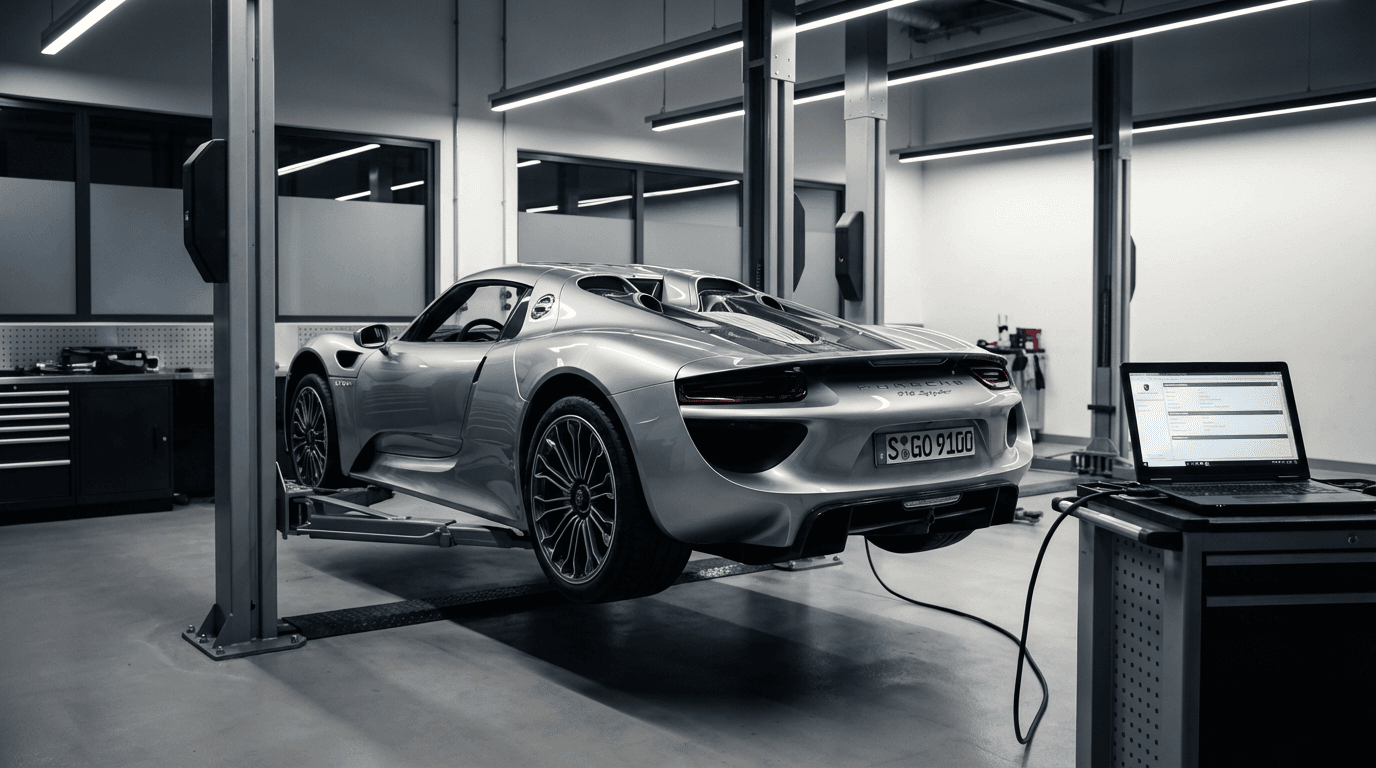
- PIWIS diagnostic scan completed and saved (baseline for post-storage comparison)
Post-Storage Restart Procedure
When bringing the 918 out of storage:
- Visual inspection — walk around the car checking for any signs of fluid leaks, rodent activity, or cover damage
- Check 12V battery — verify trickle charger maintained proper charge
- Check tire pressures — adjust from storage pressure to operating specification
- Check all fluid levels — oil, coolant (all three circuits), brake fluid
- Start the engine — let it idle until all systems reach operating temperature
- PIWIS scan — check for any stored fault codes from the storage period
- Test drive — gentle initial driving, progressively increasing to normal use over 15-20 minutes
- Battery system check — verify hybrid system is functioning normally in all drive modes
Related Resources
- 918 Spyder Complete Ownership Guide
- 918 Spyder Annual Maintenance Cost
- 918 Spyder Common Problems
- 918 Spyder Battery Replacement Cost
Storage Management at Repasi Motorwerks
We offer comprehensive storage management services for 918 Spyder owners, including preparation, periodic exercise, monitoring, and seasonal recommissioning. Contact us to discuss a storage plan tailored to your car.