When Porsche unveiled the 918 Spyder, they weren't just launching another supercar. They were proving that electrification and driving purity could coexist—that a hybrid could be the fastest Porsche road car ever built while also running silently through your neighborhood on electric power alone. But that extraordinary capability comes with maintenance requirements unlike anything else on the road.
I've worked on the 918 since its introduction, and watching owners navigate its unique service needs has taught me something important: the difference between a well-maintained 918 and a neglected one isn't just about reliability. It's about whether the car delivers the experience Porsche engineered into it—that seamless integration of combustion and electric power that makes the 918 feel like something from the future. For the definitive ownership resource, see our 918 Spyder Complete Ownership Guide.
Understanding What You're Maintaining
The 918's complexity isn't arbitrary engineering showmanship. Every system serves a purpose, and understanding how they work together helps you understand why maintenance matters.
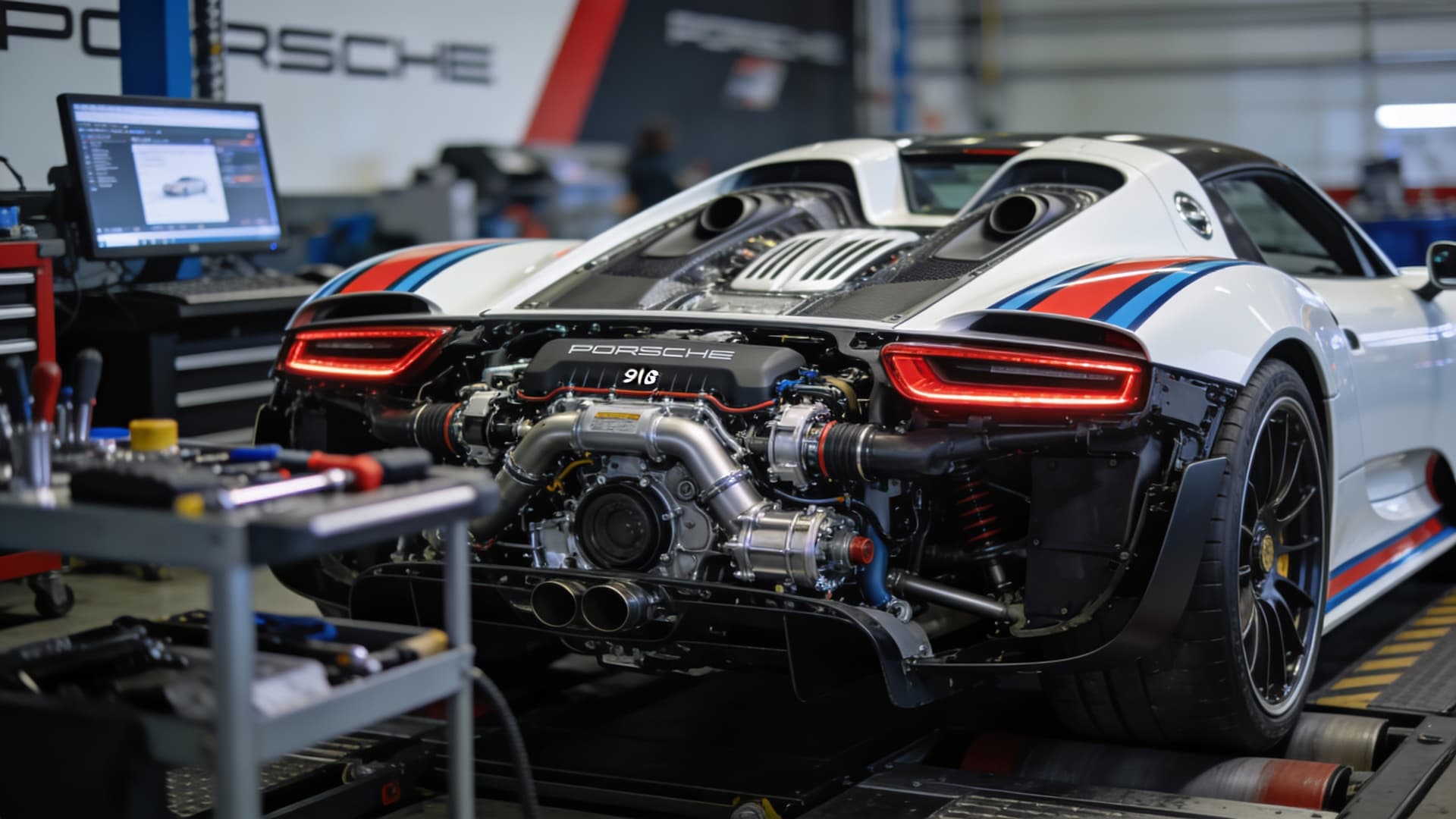
At the heart of the car sits a 4.6-liter V8 derived from Porsche's RS Spyder LMP2 racing engine. It's a naturally aspirated unit that revs to 9,150 RPM and produces 608 horsepower at 8,700. This engine would be remarkable in any car. In the 918, it's just part of the story.
Mounted within the PDK transmission sits a 156-horsepower electric motor that adds torque precisely where the V8's powerband has gaps. It also provides regenerative braking capability, recapturing energy during deceleration. At the front of the car, another electric motor produces 129 horsepower, enabling all-wheel drive when conditions demand it and pure electric front-wheel drive when you want to glide in silence. Above 146 miles per hour, this front motor decouples automatically—Porsche engineers calculated that at those speeds, eliminating its slight parasitic drag was worth more than the extra traction.
The whole system produces 887 combined horsepower and 944 lb-ft of torque, fed by a 6.8 kWh lithium-ion battery pack that requires active thermal management. This isn't a hybrid in the Prius sense. It's three power sources working in concert, each with its own maintenance requirements.
The Annual Service Reality
Every 918 Spyder should receive comprehensive annual service regardless of mileage. For a car this complex, calendar-based maintenance makes more sense than mileage-based schedules. Battery cells degrade whether you drive or not. Seals can dry out during storage. And the integration between systems means a small issue in one area can mask symptoms in another.
The V8 engine service follows protocols similar to other high-performance Porsches, but the specifics matter. The dry sump lubrication system requires proper oil and careful attention during changes. We inspect the oil system thoroughly, documenting any leaks or concerns. This engine was designed for racing applications—it tolerates no compromises in lubrication quality.
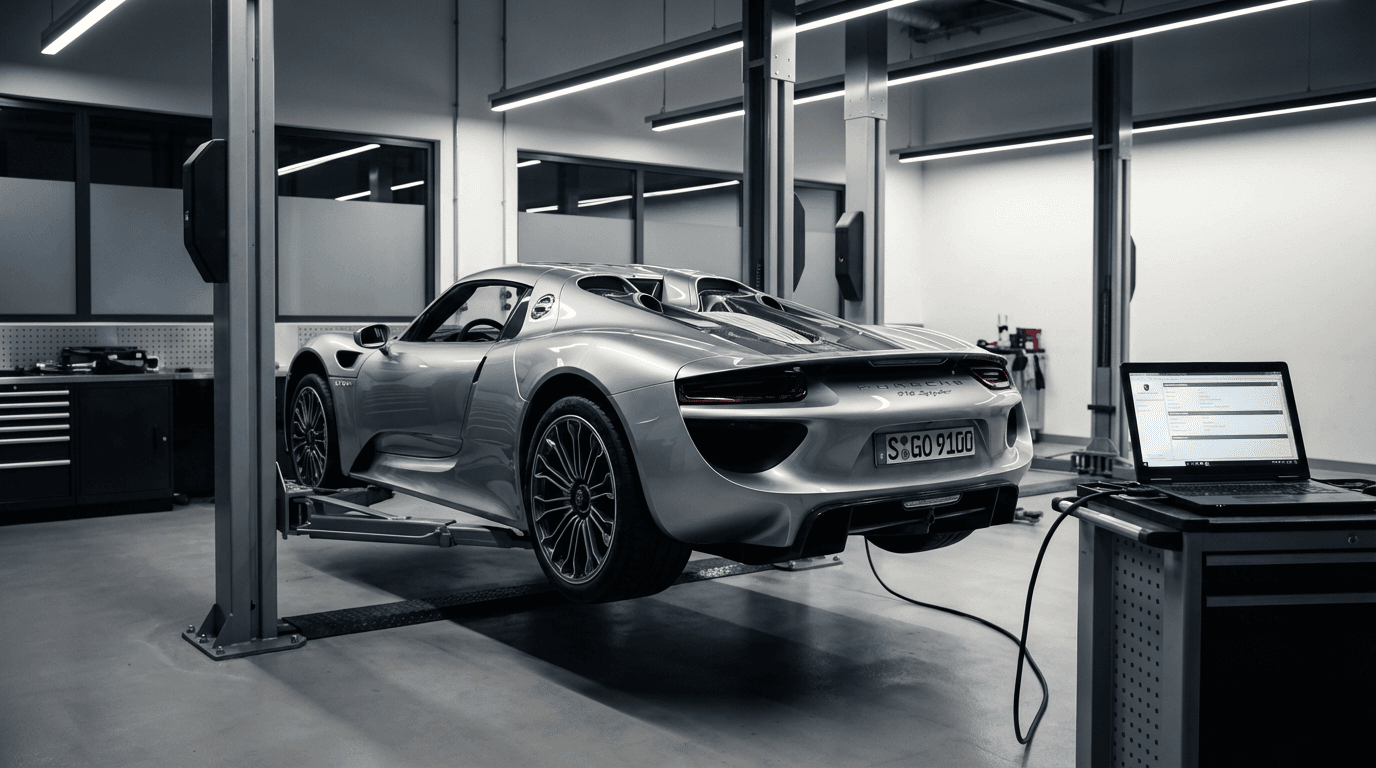
Hybrid system inspection goes beyond what most shops can evaluate. We perform comprehensive battery health diagnostics, checking capacity degradation, cell balance, and charging system function. The E-machine fluids—specialized cooling and lubrication for the electric motors—require verification. The high-voltage system demands careful inspection by technicians certified for this work.
The PDK transmission receives the same attention it would in a GT3: fluid level verification, shift quality assessment, and clutch wear evaluation. The regenerative braking system must integrate seamlessly with the mechanical brakes, so we verify both the electronic calibration and the physical condition of pads, rotors, and hydraulic components.
What does this cost? At Porsche dealers, annual service typically runs between fifteen and twenty-five thousand dollars. Specialists like us typically charge between eight and fifteen thousand. The range reflects geographic variation and the extent of inspection, but mostly it reflects what additional items get discovered and addressed.
Major Service: Every Four Years
Beyond annual maintenance, the 918 requires comprehensive major service every four years or twenty-four thousand miles. This is where the unique nature of the car really becomes apparent.
The combustion engine receives spark plugs for all eight cylinders—proper gapping is critical for an engine that revs this high. Air filters for both engine and cabin get replaced. The fuel filter ensures clean fuel reaches the direct injection system. Drive belts are inspected and replaced preventively. And valve adjustment, if needed, maintains the engine's mechanical precision.
The hybrid components receive their most significant attention during major service. E-machine fluid service requires specialized products and procedures—this isn't something a general shop can improvise. Battery conditioning optimizes capacity and cell balance. Complete system diagnostics verify every function. And software updates ensure the car runs the latest calibrations, which sometimes improve performance or efficiency.
PDK fluid change at this interval maintains clutch and shift quality. The mechatronic unit—the brain of the transmission—receives thorough evaluation.
Costs for major service range widely. Dealers typically charge between thirty and fifty thousand dollars. Specialists generally fall between eighteen and thirty thousand. The difference often comes down to overhead and parts sourcing rather than quality of work.
The Battery: Understanding the 918's Most Expensive Component
Battery maintenance deserves special attention because replacement represents the 918's most expensive potential repair. Understanding what affects battery life helps you make decisions that preserve this crucial component.
The battery management system continuously monitors cell health. During annual diagnostics, we can see current capacity compared to original, how well the cells are balanced, whether the charging system functions correctly, and how the thermal management performs. This data tells us whether the pack is aging gracefully or accelerating toward replacement.
Several factors affect battery longevity, and owners can influence most of them. Temperature matters enormously—high heat accelerates degradation. Climate-controlled storage isn't optional for a 918; it's essential protection for your investment. State of charge affects the cells too. Storing a battery fully charged or fully depleted stresses the chemistry. Keeping the car between fifty and seventy percent charge during storage extends pack life significantly.
Inactivity causes its own problems. Cells become unbalanced when they sit, and the management system can't correct this without running the car. We recommend driving the 918 at least monthly, even during storage seasons. Finally, charging cycles—the simple act of depleting and refilling the battery—causes gradual wear. Avoiding unnecessary full cycles, especially fast charging when slow charging is possible, reduces this wear.
What happens when the battery finally needs attention? Module replacement—addressing individual failing cells—can cost between fifty and a hundred thousand dollars or more, depending on the extent of degradation. Complete pack replacement runs higher still. Labor adds another five to fifteen thousand. These are sobering numbers, but they're also why proper maintenance pays such significant dividends. A well-maintained pack can last far longer than a neglected one.
Electric Motors and Regenerative Braking
The E-machines—Porsche's term for the electric motors—require their own specific attention. The cooling and lubrication fluid should be serviced at major intervals using specialized products. During inspections, we verify cooling system flow, electrical connections, insulation integrity, and performance characteristics.
The regenerative braking system requires periodic calibration and component verification. This system doesn't just recapture energy—it integrates with the mechanical brakes to provide consistent pedal feel regardless of battery state. When calibration drifts or components wear, the integration suffers. Owners sometimes describe a subtle inconsistency in brake feel without realizing the regen system is the culprit.
Weissach Package: Additional Care Requirements
Many 918s left the factory with the Weissach Package, which shaved ninety pounds through lightweight materials. Those materials require specific care.
The magnesium wheels look stunning but demand attention. They must be cleaned with pH-neutral products—anything acidic or alkaline can attack the surface. Regular inspection catches oxidation before it becomes problematic. During tire service, technicians must understand magnesium's properties to avoid damage.
Exposed carbon fiber components benefit from UV protection. Paint protection film prevents stone chips from compromising the clear coat. Specific cleaning products maintain the weave's appearance without leaving residue that could promote deterioration.
Alcantara interior surfaces require regular cleaning with appropriate products and UV protection when the car sits in sunlight. Wear patterns differ from leather, and the material can become permanently marked if spills aren't addressed promptly.
Storage Protocols for a Hybrid Supercar
Most 918s are driven seasonally, which means storage protocols matter as much as driving maintenance.
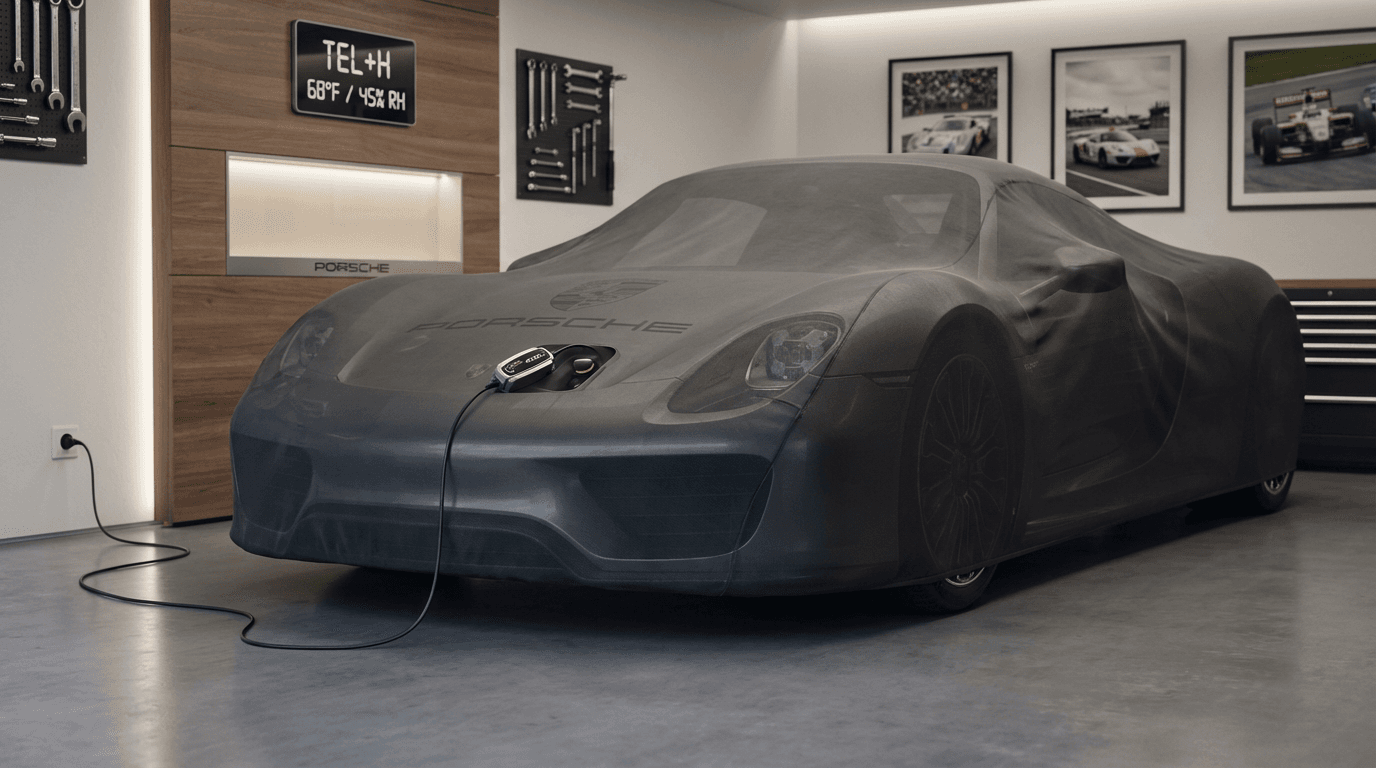
For short-term storage—one to four weeks—the process is straightforward. Charge the battery to sixty or eighty percent. Clean the exterior and interior thoroughly. Choose a climate-controlled space. Cover the vehicle to prevent dust accumulation.
Long-term storage adds considerations. The battery should sit at fifty to seventy percent charge—not full, which stresses cells, and not empty, which risks deep discharge. Fuel stabilizer protects against ethanol degradation if storage extends beyond a few months. The low-voltage system—the conventional twelve-volt battery—should connect to a trickle charger. Monthly activation remains our recommendation even in storage; if you can't drive the car, at least start it and run through its systems.
Climate-controlled storage isn't optional for a 918 in long-term rest. Temperature extremes and humidity swings stress every component, from battery cells to leather surfaces. Document your storage protocols—this information matters for future buyers and for tracking any issues that develop.
Reactivation after extended storage requires patience. Verify all fluid levels. Check tire pressures. Complete a thorough visual inspection. Allow the car's systems to fully initialize before driving. Start with gentle driving while everything comes up to temperature. Rushing this process risks damage to components that haven't been lubricated in months.
Finding Qualified Service
The 918's complexity makes service provider selection critical. This isn't a car where general mechanical competence suffices.
High-voltage certification is mandatory. The 918's four-hundred-volt system can kill. Technicians must be trained and certified for this work, with appropriate safety equipment and protocols in place. This requirement alone eliminates most shops.
Beyond electrical safety, 918-specific training matters. General hybrid experience—even extensive experience—doesn't prepare a technician for the 918's unique systems. Porsche's training programs for this car are specialized and not widely available.
Current PIWIS diagnostic tools are essential. The 918 communicates entirely through factory systems. Generic scan tools can't access most functions, and older PIWIS versions lack 918 capability.
Not all Porsche dealers maintain 918 service capability. Before scheduling, verify that the specific dealership has experience and current technician certification. Some dealers send 918s to other locations for service, which adds complexity and transit risk.
Independent specialists who maintain 918 capability are rare but do exist. Our Gold Meister technicians hold high-voltage certification and have completed Porsche's 918 training program. We maintain current diagnostic equipment and appropriate safety infrastructure.
For significant work, Porsche Classic provides factory-level service with direct access to parts and engineering support.
Our 918 Program
At Repasi Motorwerks, we provide the full spectrum of 918 Spyder service. Our annual maintenance programs keep cars running as Porsche intended. Hybrid system diagnostics reveal battery health and system integration issues before they become expensive problems. Pre-purchase inspections help buyers understand exactly what they're acquiring.
We also handle storage preparation and reactivation—proper protocols that protect your car during dormant periods and ensure it's ready to perform when you want to drive.
The 918 Spyder represents Porsche's vision of what a sports car can be. Maintaining that vision requires expertise, equipment, and genuine understanding of what makes this car extraordinary.
Ready to discuss your 918 Spyder? Contact Repasi Motorwerks in Stratford, Connecticut. Our certified technicians provide the specialized service these remarkable hybrids require.