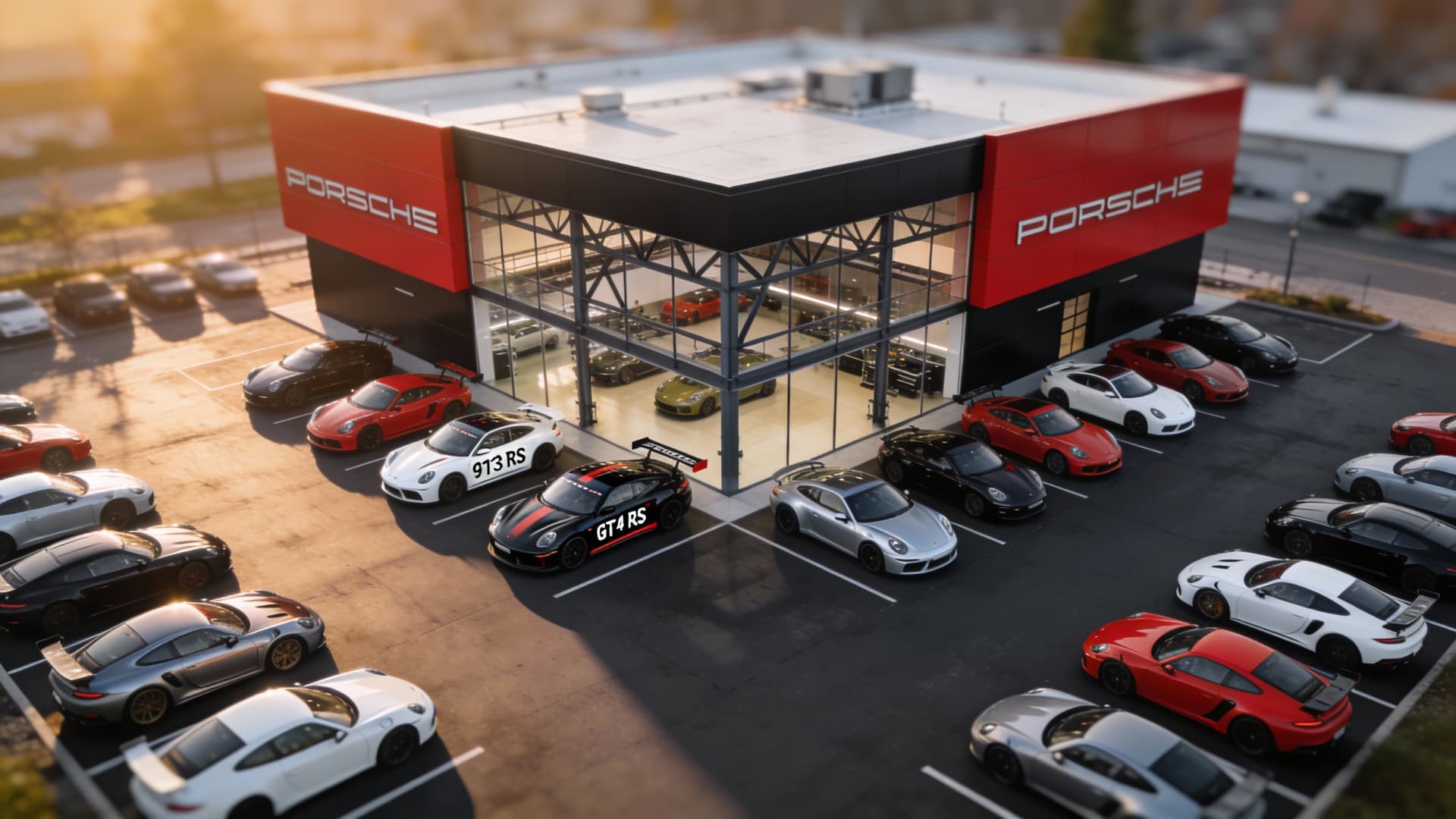
Connecticut occupies a peculiar position in the Porsche world. On paper, it's a small state wedged between New York and Boston, notable mostly for its location on the commuter rail line. In practice, it hosts one of the most interesting concentrations of high-end Porsches in the country, with a service infrastructure that has grown to match.
The demographics explain part of this. Fairfield County contains some of the wealthiest zip codes in America, populated by people who appreciate precision engineering and have the means to acquire it. Greenwich driveways shelter GT3 RSs. Westport garages contain 918 Spyders. Carrera GTs make occasional daylight appearances at coffee shops that charge eight dollars for a cortado. Not sure what to look for? Read our guide to choosing a Porsche specialist.
But demographics alone don't explain why Connecticut has become a destination for Porsche service. That requires understanding what's been built here—the combination of dealer infrastructure and independent expertise that serves cars ranging from daily-driven Macans to museum-quality exotics.
The Dealer Landscape
Several Porsche dealerships operate throughout Connecticut, each serving different segments of the market. The coastal corridor from Greenwich through Fairfield has particular density, reflecting the concentration of Porsche ownership in those areas. Northern options exist for owners in the Hartford region who prefer avoiding the I-95 corridor.
Dealer service makes sense for certain situations and certain cars. Warranty work must go through authorized channels, whether that's new car coverage, certified pre-owned programs, or extended warranty claims. Factory recalls and technical campaigns require dealer involvement. Software updates often do as well.
The service records generated by dealer visits appear in Porsche's official history database, which can matter at resale time. Buyers and their inspectors check these systems, and gaps in the official record sometimes raise questions regardless of how well the car was actually maintained elsewhere.
What dealer service costs, however, often surprises owners accustomed to less exotic transportation. Labor rates at Connecticut dealers typically run two hundred fifty to three hundred fifty dollars per hour. Parts carry markups of fifty to one hundred percent over wholesale. A routine oil change that feels like it should cost two hundred dollars actually costs four hundred to six hundred. Annual services reach into the thousands. Major work climbs quickly into five figures.
Beyond cost, specialization presents its own limitation. Dealer technicians work on the full Porsche range, from Macans to GT2 RSs. This breadth means less depth on any specific model than specialists can achieve. For common cars receiving common services, this rarely matters. For exotics requiring specific knowledge, it can matter enormously.
Many dealers decline certain work entirely. Carrera GT service frequently gets bounced because the expertise and equipment required don't justify the rare occasions when one appears. 918 Spyders require high-voltage hybrid certifications that not all dealer locations maintain active. Older air-cooled cars fall outside the institutional knowledge of technicians trained on modern platforms.
The Independent Alternative
Independent Porsche specialists have filled the gaps that dealer limitations create. Some serve as lower-cost alternatives for routine maintenance on everyday models. Others have developed specialized expertise that exceeds anything the dealer network provides.
The economic advantage is substantial. Independent labor rates typically run one hundred fifty to two hundred dollars per hour—roughly half of dealer pricing. Parts markup is lower as well. A service that costs six thousand at a dealer might run thirty-five hundred at a qualified independent. Over years of ownership, these differences compound into real money.
But cost isn't the only difference, and for many owners it isn't the primary one. Specialization matters at least as much. A shop that focuses on GT3s develops pattern recognition and expertise that rotating dealer staff cannot match. A technician who has worked on dozens of Carrera GTs knows what to look for in ways that someone seeing their first one cannot.
The trick lies in distinguishing genuinely qualified independents from shops that added Porsche to their marketing because it attracts customers. The gaps between excellent and adequate in this space are significant.
Finding Quality in the Independent Market
Credentials provide starting points for evaluation. Gold Meister certification represents the highest level of factory training Porsche offers to technicians. Earning it requires hundreds of hours of education and testing across all vehicle systems. Not every competent Porsche technician holds this certification, but having it on staff demonstrates investment in expertise that many shops skip.
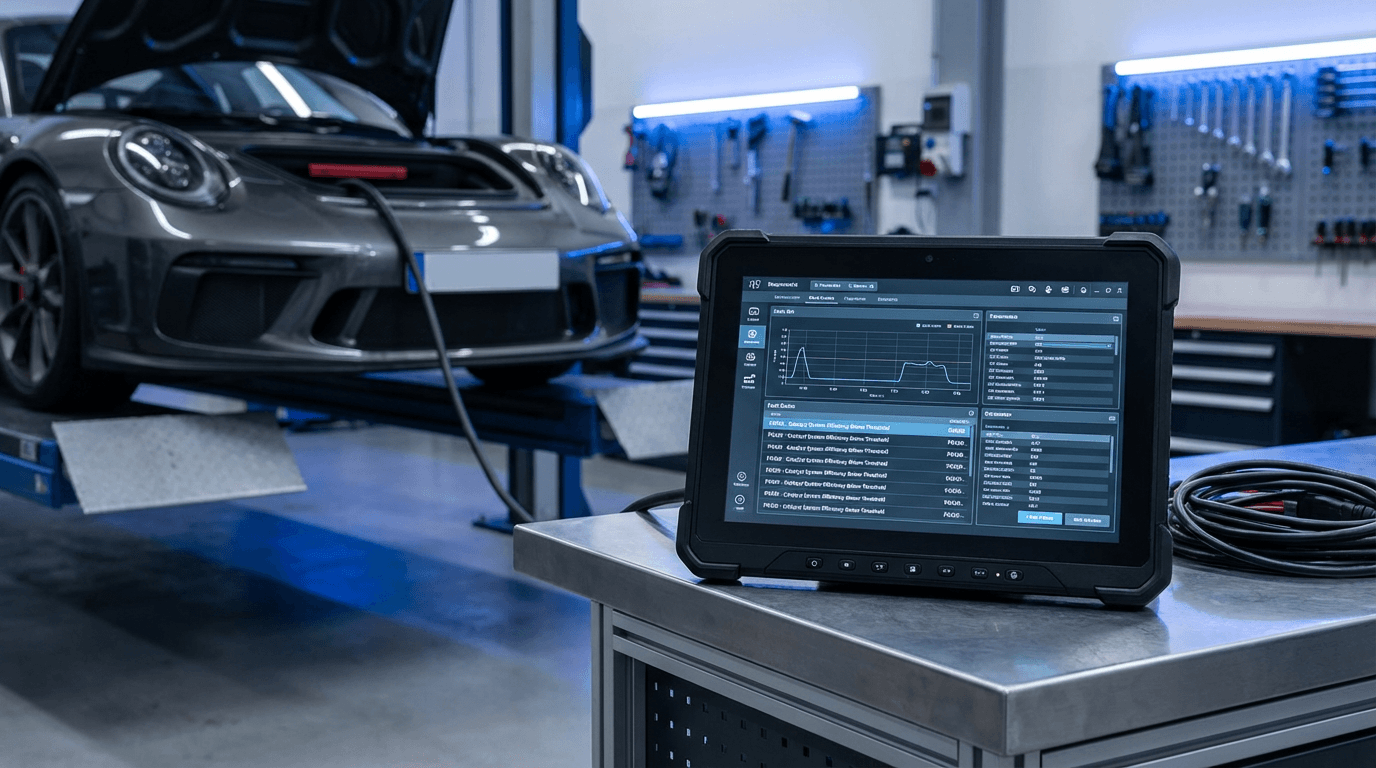
Equipment matters perhaps even more. Modern Porsches are as much computer as car, and proper diagnosis requires PIWIS—Porsche's factory diagnostic system. Shops without current PIWIS capability work partially blind, unable to access the full range of fault codes, live data, and programming functions. For any car built in the last two decades, verify that your shop maintains current diagnostic equipment.
Experience with your specific model trumps general Porsche expertise. A technician brilliant with 997 Turbos may never have touched a Carrera GT. The skills don't transfer automatically across model families, particularly for specialty vehicles. Ask specifically about experience with your car. How many have they worked on? What common issues do they see? The answers reveal depth that credentials alone cannot indicate.
Reputation travels through ownership communities. Online forums, local car groups, and word-of-mouth recommendations from other owners provide insight that marketing materials cannot match. When the same shop name appears repeatedly in conversations about quality work, that consistency means something.
The Connecticut Climate Reality
Four-season weather adds a dimension to Porsche ownership that southern owners don't face. Connecticut winters bring salt, moisture, and months of garage time for cars not suited to the conditions. This creates specific service needs that year-round driving climates don't require.
Storage preparation in fall protects cars that will sit through winter months. Battery tenders, fuel stabilization, proper tire management, and coverage decisions all matter for maintaining condition. Spring commissioning reverses the process—inspecting for rodent damage, checking fluids that may have deteriorated, ensuring that dormant systems wake up properly.
These seasonal rhythms connect cars to shops in patterns that make relationship-building natural. The technician who puts your GT3 to bed in November and wakes it up in March develops familiarity with that specific car. Over years, this continuity catches developing problems before they become expensive failures.
Matching Service to Car
The right service approach depends significantly on what you drive. Daily transportation Porsches—Cayennes, Macans, base 911s used as actual cars rather than collector pieces—tolerate a wider range of service options. Dealer convenience may outweigh cost considerations for quick services on vehicles depreciating anyway.
Enthusiast cars begin to benefit from specialist attention. Turbos, GTS models, Cayman GT4s—these platforms reward technicians who understand their specific characteristics and requirements. The cost savings at independents become more meaningful as services become more complex.
GT cars demand specialist service. GT3s, GT3 RSs, GT2 RSs operate on different maintenance assumptions than standard 911s. The engines rev higher. The tolerances are tighter. The track use many owners pursue adds inspection and preparation requirements that generalist shops may not understand. Qualified independents often bring deeper expertise to these cars than dealers can provide.
Hypercars—Carrera GTs, 918 Spyders—simply require specialists. Most dealers decline the work entirely. The complexity demands technicians with specific experience, specific training, and enough exposure to have developed genuine competence. For these cars, finding the right shop matters more than any other factor in ownership.
Air-cooled classics present yet another dimension. The skills required to work on mechanical fuel injection, carbureted engines, and pre-electronic systems don't overlap significantly with modern Porsche expertise. Specialists focused on vintage cars bring knowledge that contemporary technicians, however skilled with current platforms, may lack entirely.
Our Place in the Landscape
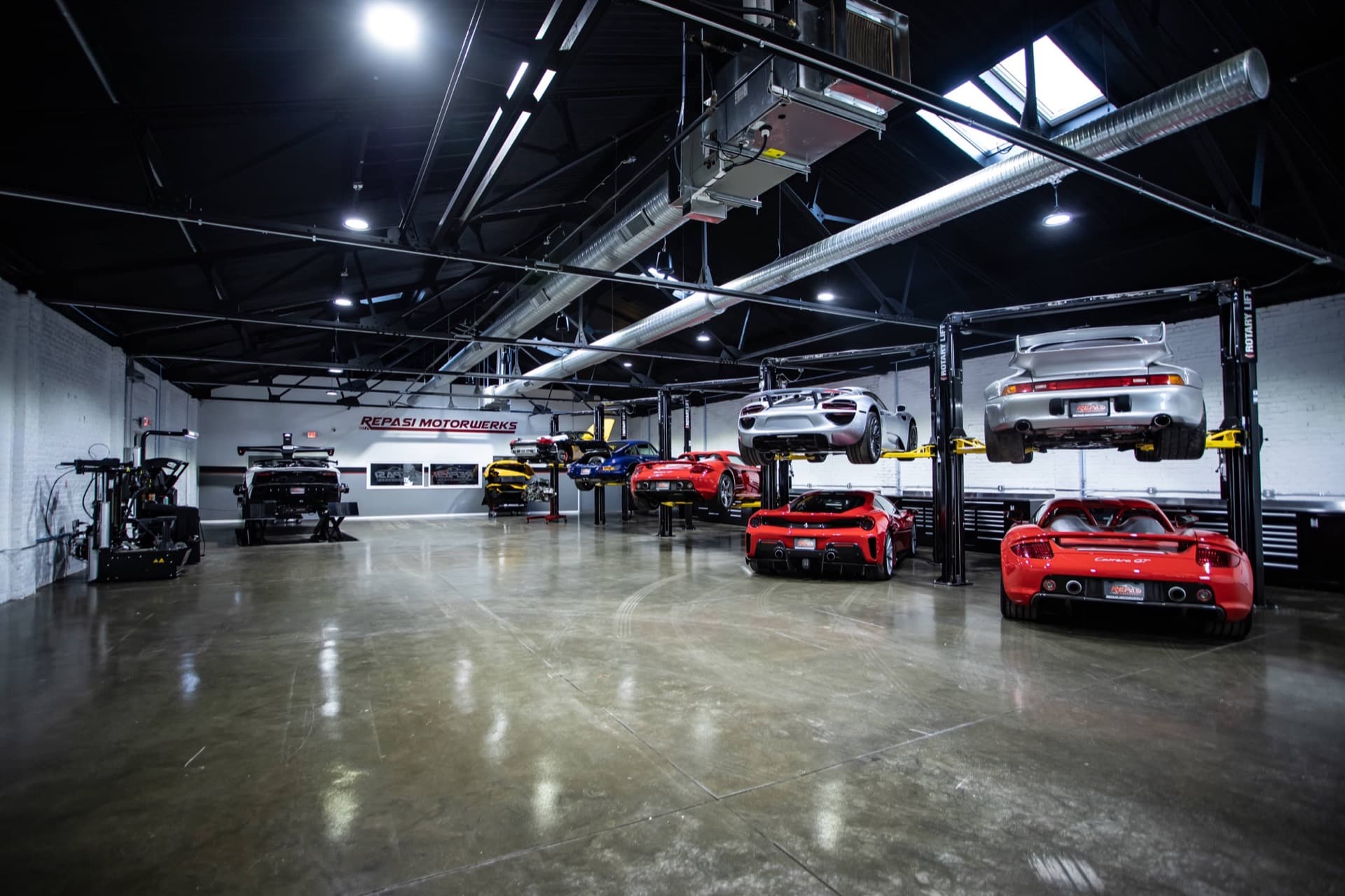
Our facility in Stratford has developed around the cars that benefit most from specialist attention. GT cars and exotics represent our core work, though we service the full range of Porsches for owners who want consistent expertise across their collections.
The Carrera GT brought us our reputation. We've serviced more of them than most shops see in a decade, developing pattern recognition and procedural expertise that comes only from repetition. 918 Spyders, GT3 RSs, GT2 RSs, and the range of GT-derived cars that reward serious maintenance fill our lifts alongside collector-quality air-cooled examples.
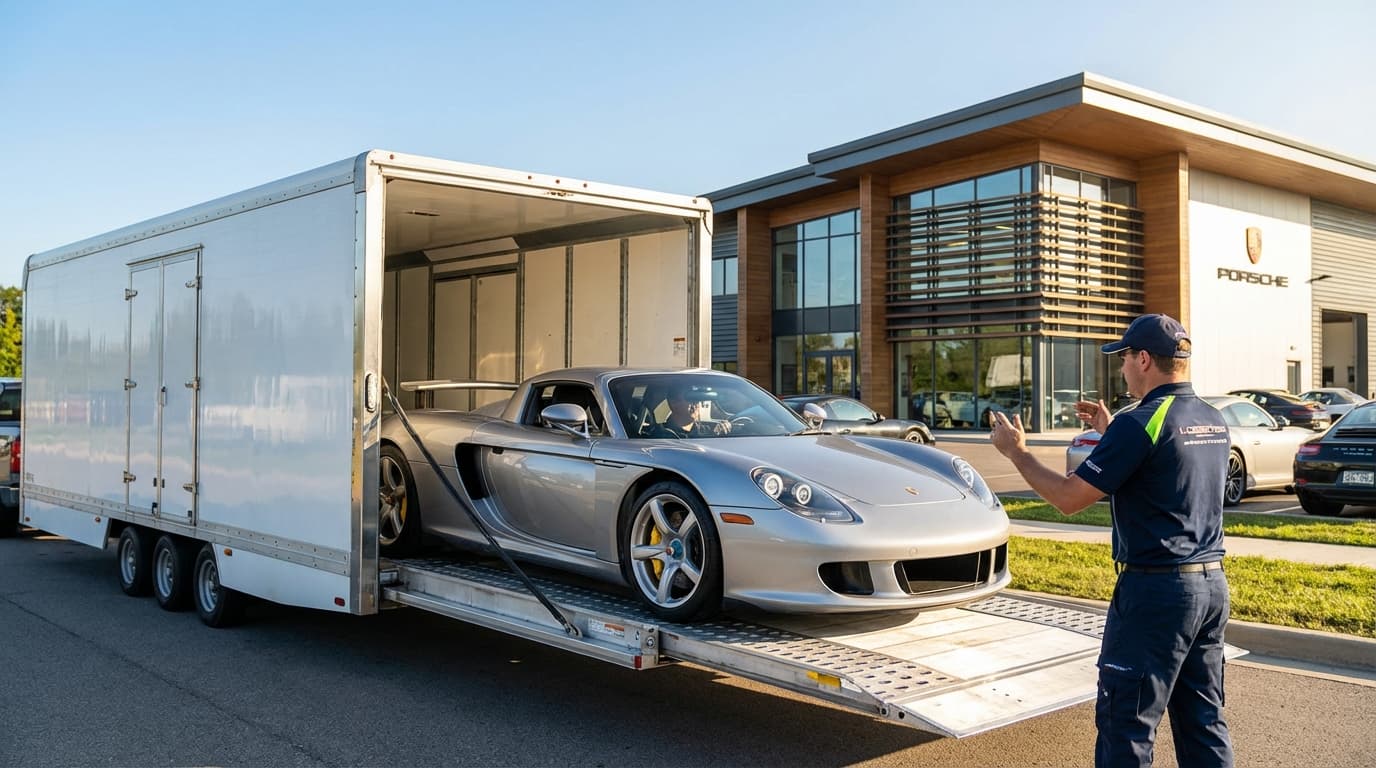
Clients reach us from throughout Connecticut and beyond. The coastal corridor—Greenwich through Bridgeport—provides a natural catchment area. New Haven and Hartford owners find us accessible for work that local options cannot provide. Westchester, Manhattan, and Long Island send cars regularly. And for owners across the country, enclosed transport has become routine.
What we've built serves the specific needs that general Porsche service cannot address. The expertise runs deep rather than broad. The documentation protects provenance for cars whose values depend on proper maintenance records. The communication happens directly between owners and the technicians who work on their cars.
Making the Right Choice
Connecticut Porsche owners have options that owners in many areas lack. The dealer infrastructure is substantial. The independent specialist community has developed meaningful depth. The question isn't whether quality service is available but rather which service approach matches your car, your budget, and your ownership priorities.
For warranty work and factory-required services, dealer relationships make obvious sense. For routine maintenance on daily drivers, convenience may trump cost considerations. For GT cars and exotics—for anything whose value depends on expert care—finding the right specialist becomes the most important ownership decision you'll make after the purchase itself.
Looking for the right service approach for your Connecticut Porsche? Contact Repasi Motorwerks in Stratford. We'll discuss your car, your needs, and whether our expertise matches what you're looking for—honestly and without pressure.