An engine rebuild is the single most significant mechanical investment most air-cooled Porsche owners will ever make. It is also the repair where the gap between a competent specialist and a general mechanic is widest. I have rebuilt hundreds of air-cooled flat-sixes over the past fifteen years, and I have also repaired a fair number of engines that were rebuilt poorly elsewhere. The difference in outcome is staggering.
This guide covers what goes into a proper air-cooled engine rebuild, what it costs, and how to make informed decisions about scope and timing.
When Does an Engine Need a Rebuild?
Not every sick engine needs a full rebuild. Here are the scenarios where a rebuild is the right answer:
Full Rebuild Indicators
- Scored cylinders: Vertical scoring on the cylinder walls that cannot be honed out. This is common on engines that ingested debris or ran low on oil.
- Worn crankshaft journals: Measured out of specification with excessive bearing clearance.
- Cracked or damaged case halves: From overheating, head stud failure, or impact.
- Catastrophic failure: Spun bearing, dropped valve, broken connecting rod.
- Comprehensive wear: Multiple systems (cylinders, bearings, cam, chains) all worn to the point where addressing them individually does not make economic sense.
Top-End Refresh May Be Sufficient
- Oil consumption from valve guide wear: Can be addressed without splitting the case.
- Head gasket issues: Resurfacing heads and replacing gaskets does not require a full teardown.
- Chain tensioner failure caught early: If the chains have not damaged the case, tensioner replacement with new chains may be enough.
The distinction matters because a top-end refresh runs $5,000-10,000 while a full rebuild starts at $15,000. I always perform thorough diagnostics — compression testing, leak-down testing, oil analysis, and borescope inspection — before recommending a course of action.
What a Full Rebuild Includes
A proper air-cooled engine rebuild is not just replacing worn parts. It is a complete remanufacturing of the engine to factory or better-than-factory specifications. Here is what is involved:
Case Work
The engine case halves are the foundation. They are split, cleaned, inspected, and measured at multiple points. Common case work includes:
- Align boring: Ensuring the main bearing bore is perfectly round and correctly sized
- Case saver installation: Repairing stripped or damaged head stud holes
- Crack repair: Welding and machining cracked areas (if the crack is repairable)
- Through-stud conversion: Replacing original studs with through-bolts for improved clamping force on 930 and 964 engines
Cylinders and Pistons
Original Nikasil-coated cylinders are measured for wear and scoring. In most rebuilds, new cylinders and pistons are installed because:
- Nikasil coating cannot be practically repaired
- New Mahle cylinders and pistons are readily available
- This eliminates any cylinder wear as a variable
For engines being built to a larger displacement (3.6 to 3.8 conversion, for example), this is where the size change happens — larger bore cylinders with matched pistons.
Crankshaft
The crankshaft is inspected for cracks (magnaflux testing), measured for journal wear, and polished or reground as needed. Main and rod bearings are replaced with correctly sized new bearings.
Cylinder Heads
Both heads are disassembled, cleaned, and inspected. Typical head work includes:
- Valve guide replacement
- Valve seat cutting
- New valves (if worn or damaged)
- Spring testing and replacement
- Combustion chamber volume matching (for equal compression across all cylinders)
Timing System
Every component in the timing chain system is replaced:
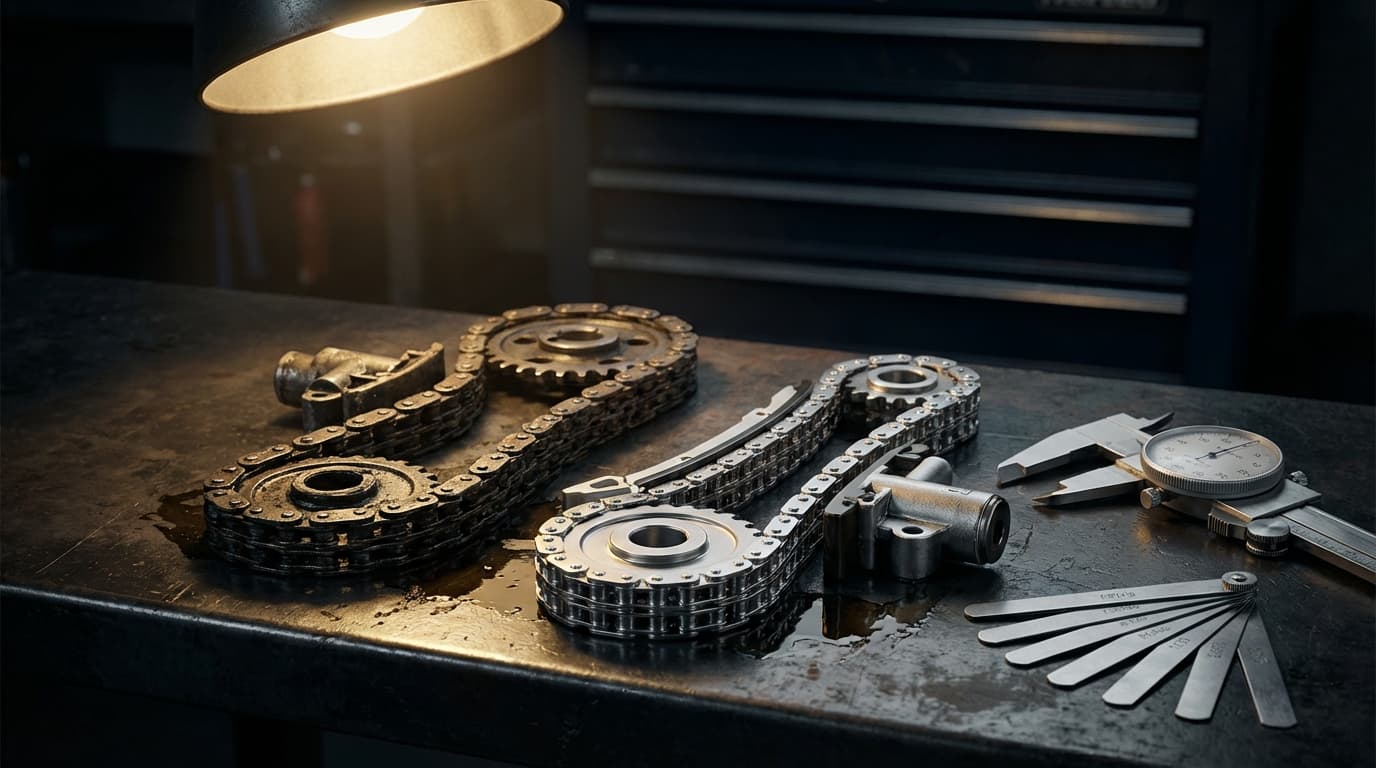
- Timing chains (duplex chains on most models)
- Chain tensioners (updated design where applicable)
- Chain guides and rails
- Sprockets (inspected, replaced if worn)
- Intermediate shaft bearings
Seals and Gaskets
Every seal and gasket on the engine is replaced. This includes items often overlooked in lesser rebuilds: oil gallery plugs, case sealant, oil cooler seals, and all external O-rings.
Assembly
This is where experience matters most. Bearing clearances are measured and verified. Piston-to-cylinder clearances are checked. Ring end gaps are set. Everything is assembled with correct torque specifications and proper lubricant on every fastening and bearing surface.
3.6 vs 3.8 Differences
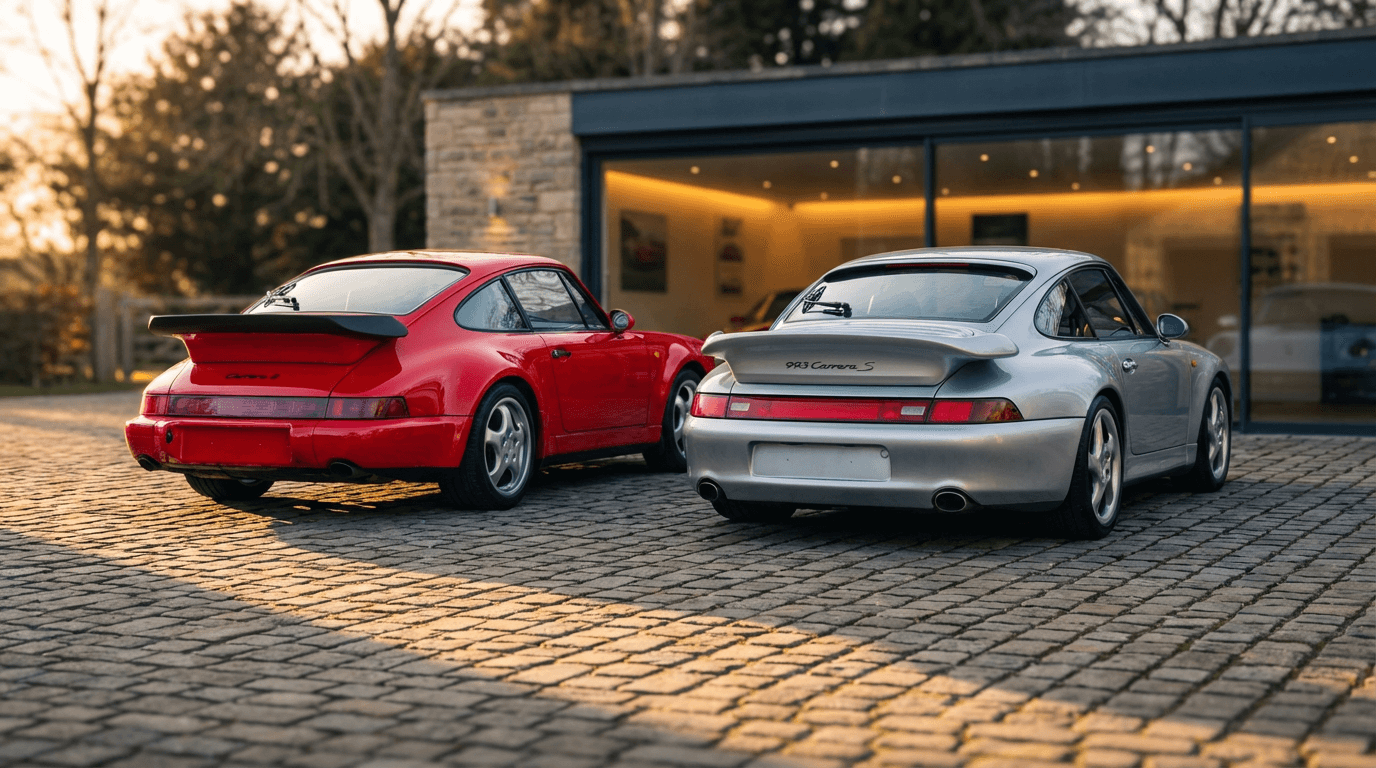
The 3.6-liter engine (964 and early 993) and the 3.8-liter engine (993 RS) share the same basic architecture but differ in bore and stroke dimensions. Here are the practical differences for a rebuild:
3.6-liter (964/993):
- 100mm bore, 76.4mm stroke
- Most common rebuild configuration
- Excellent parts availability
- Well-understood tolerances and specifications
3.8-liter (993 RS and conversions):
- 102mm bore, 76.4mm stroke
- Requires 3.8 specific cylinders and pistons
- Case may need additional machining for the larger bore
- Higher output potential but tighter tolerances
- Parts are more expensive
3.6 to 3.8 conversion: A popular option during a rebuild. The case work is slightly more involved, and the parts cost premium is $2,000-3,000 over a standard 3.6 rebuild. The result is approximately 15-20 additional horsepower and improved torque throughout the range.
Cost Ranges
Engine rebuild costs vary significantly based on the scope of work and the condition of your core components. Here is an honest breakdown:
| Rebuild Scope | Typical Cost Range |
|---|---|
| Top-end refresh (heads, valve guides, gaskets) | $5,000-10,000 |
| Standard full rebuild (3.6, reusable case) | $15,000-22,000 |
| Full rebuild with case repair/machine work | $20,000-28,000 |
| Full rebuild with 3.8 conversion | $22,000-30,000 |
| Race-spec build (balanced, blueprinted, ported) | $30,000-45,000+ |
These ranges include parts and labor. They do not include removal and reinstallation of the engine in the car, which adds $2,000-3,500 depending on the model.
What Drives Cost Variation
- Case condition: A cracked or heavily worn case adds machining cost
- Crankshaft condition: A crank that needs regrinding or replacement is a significant adder
- Cylinder head condition: Cracked heads or heavily damaged valve seats increase cost
- Displacement: 3.8 parts cost more than 3.6
- Performance level: Race-spec builds require balancing, blueprinting, and porting that add significant labor hours
Timeline
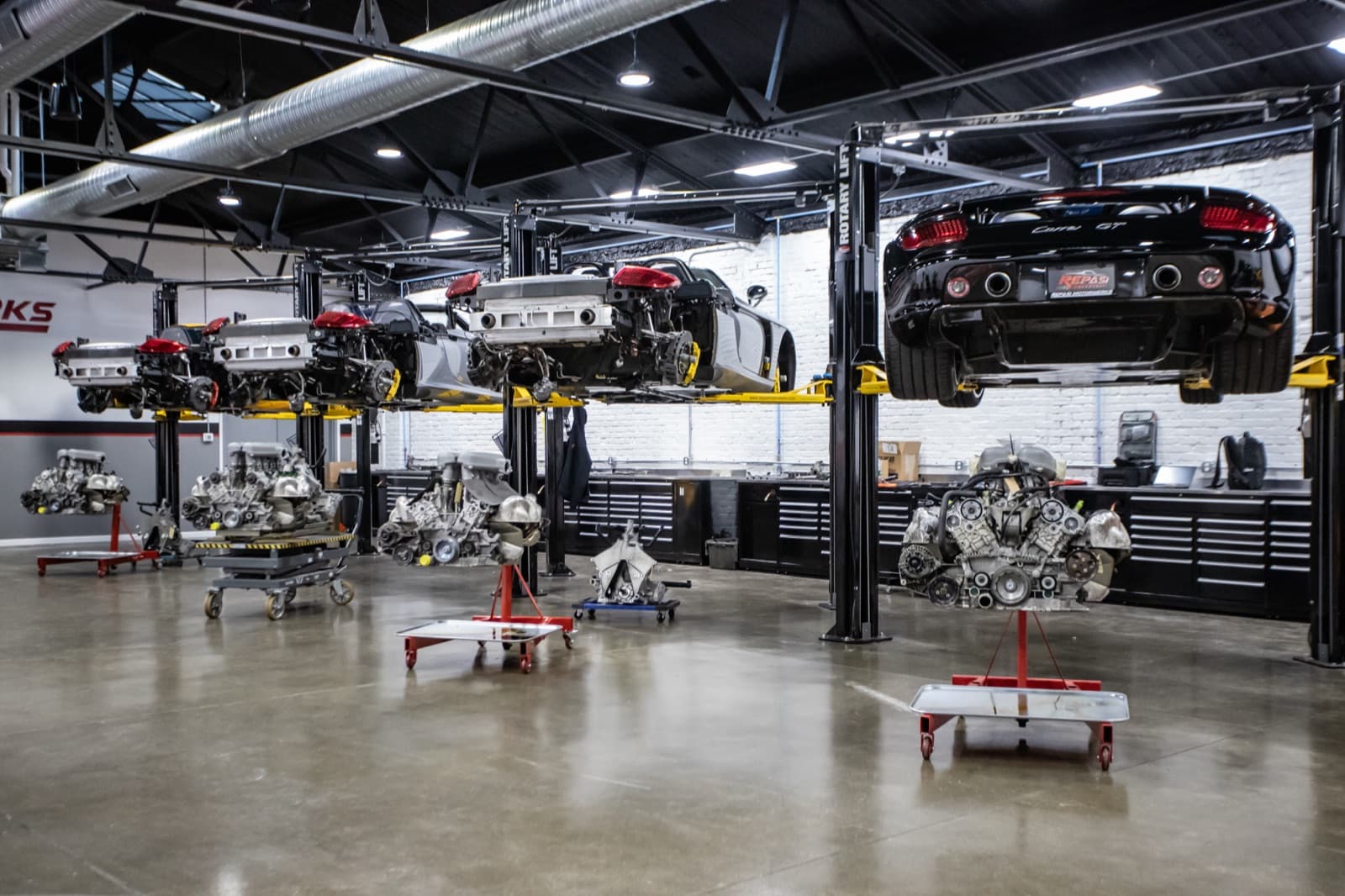
A complete air-cooled engine rebuild takes 6-12 weeks at Repasi Motorwerks. Here is why:
- Disassembly and inspection: 1-2 weeks
- Machine work (outsourced to specialized machinists): 2-4 weeks
- Parts procurement: 1-3 weeks (some parts have lead times)
- Assembly: 1-2 weeks
- Testing and break-in: 1 week
I will not rush an engine rebuild. Every clearance is measured and verified, every assembly step is documented, and the engine is test-run before it goes back in the car.
Why the Specialist Matters
Air-cooled Porsche engine rebuilds require specific knowledge that general mechanics and even general Porsche shops may not have:
- Torque sequences and values specific to the magnesium case
- Bearing clearance specifications that differ from other flat-six engines
- Sealing techniques for the case halves that prevent oil leaks
- Thermal expansion characteristics that affect assembly clearances
- Oil system routing that must be verified during assembly
I have seen engines rebuilt by shops that did technically competent work on paper but missed air-cooled-specific details. The result is oil leaks, premature wear, and in the worst cases, repeat failure.
What Repasi Motorwerks Includes
Every air-cooled engine rebuild from our shop includes:
- Complete photographic documentation of disassembly and assembly
- Written inspection report of all components with measurements
- New Mahle cylinders and pistons (standard or oversize)
- New bearings throughout
- New timing chains, tensioners, guides, and rails
- Complete gasket and seal set
- Cylinder head rebuild with new valve guides and seats
- Engine break-in procedure and initial oil change
- 12-month warranty on parts and labor
We also provide detailed records that become part of the car's history — valuable for both your ownership and future resale.
Making the Decision
An engine rebuild is a significant financial commitment. Here is how I help owners make the decision:
Thorough diagnostics first: Before recommending a rebuild, I perform comprehensive testing to confirm it is necessary and to identify the full scope of work needed.
Clear cost estimate: You get a detailed written estimate before we begin, with a clear breakdown of what is included.
No surprises: If we discover additional issues during disassembly, I contact you with an updated estimate before proceeding.
Consider the car's value: For a well-maintained 964 or 993 in good body condition, an engine rebuild almost always makes financial sense given current market values.
If your air-cooled Porsche is showing signs of internal wear — excessive oil consumption, low compression, unusual noises, or oil leaks from multiple sources — contact us to schedule a diagnostic evaluation. We will give you an honest assessment of what your engine needs and what it will cost.