If there's one topic that should keep every air-cooled 911 owner informed and proactive, it's the timing chain tensioner. A failed tensioner is the single most common cause of catastrophic engine failure in air-cooled Porsches, and it's almost entirely preventable.
At Repasi Motorwerks, we've seen the results of tensioner failure firsthand — engines with jumped timing, bent valves, and scored cylinders. We've also seen cars with 200,000+ miles on preventive upgrades that are running perfectly. The difference is awareness and action.
This guide explains how the system works, what fails, how to recognize warning signs, and what you can do to protect your engine. For a broader overview of air-cooled maintenance, see our Air-Cooled Porsche Service Guide.
How the Timing Chain System Works
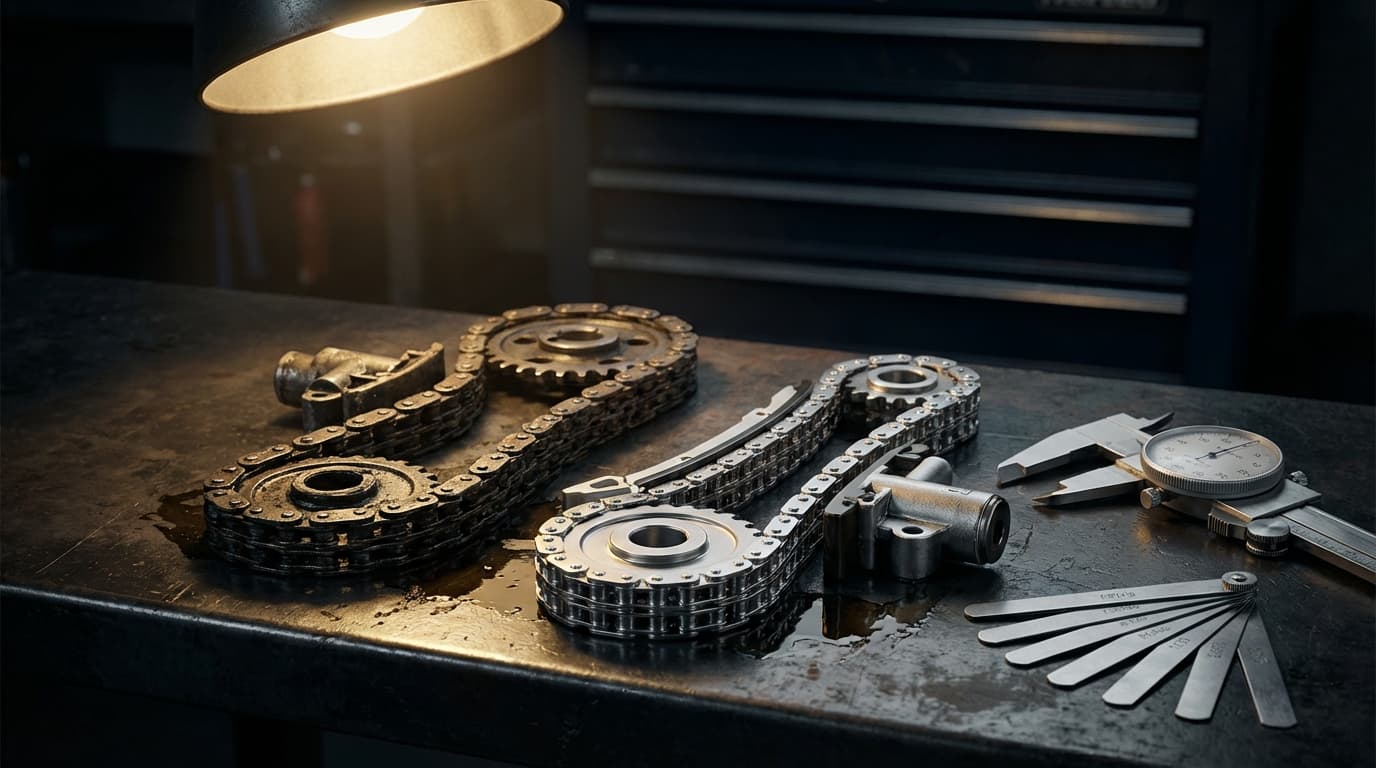
Air-cooled Porsche 911 engines use a timing chain (not a belt) to synchronize the crankshaft with the camshafts. The chain drives a pair of camshafts that open and close the intake and exhaust valves at precisely the right moments in the combustion cycle.
System components:
- Timing chain: A roller chain running from the crankshaft sprocket to the camshaft sprockets
- Chain guide rails: Plastic or metal rails that keep the chain on its intended path
- Chain tensioner: A spring or hydraulically-loaded device that maintains proper chain tension
- Idler sprockets/guides: Additional guides in the chain path
The chain tensioner's job is simple but critical: it takes up slack in the chain as the chain stretches naturally with use. Without proper tension, the chain can slap against guides, jump teeth on a sprocket, or skip timing entirely.
What Fails and Why
The Tensioner Itself
The original Porsche chain tensioner design varied by generation:
Early cars (pre-1984): Mechanical ratchet-type tensioners. These use a spring-loaded ratchet mechanism to maintain tension. The ratchet can wear, the spring can weaken, and the tensioner can lose its ability to maintain proper chain tension.
Later cars (1984-1998): Hydraulic tensioners became more common. These use engine oil pressure to maintain tension. They're generally more reliable but can fail if oil pressure is low during cold starts or if the oil passages become restricted.
Chain Stretch
All chains stretch over time. This is normal wear, and the tensioner is designed to accommodate it. But when chain stretch exceeds the tensioner's take-up range, the chain becomes loose even with the tensioner fully extended.
Expected chain life: 100,000-150,000 miles in normal service. Track use or aggressive driving can accelerate stretch.
Guide Rail Deterioration
The plastic guide rails that route the chain can become brittle with age and heat cycling. Broken rail fragments can jam the tensioner mechanism or fall into the engine case.
Failure Symptoms: What to Listen For
Cold-Start Rattle
The most common and recognizable symptom. When the engine is started after sitting (especially overnight or for several days), you may hear a brief rattling or slapping sound from the engine. This occurs because:
- Oil drains away from the hydraulic tensioner during extended sitting
- On startup, there's a brief period before oil pressure builds up
- During this window, the chain is loose and rattles against the guides
Important: A brief rattle (1-2 seconds) on cold start that goes away once oil pressure builds is a warning sign. A rattle that persists after the engine is warm is more serious.
Timing Variation
If the chain has jumped a tooth (partial timing loss), you may notice:
- Rough idle
- Reduced power
- Poor fuel economy
- Unusual exhaust smell (running rich or lean depending on which way timing shifted)
No Warning at All
In some cases, a tensioner can fail catastrophically without prior symptoms. This is why preventive replacement is so strongly recommended — you may not get a warning before failure.
The Cost of Failure vs Prevention
This comparison makes the case for preventive action more clearly than anything else:
| Scenario | Cost |
|---|---|
| Preventive tensioner upgrade | $2,000-$4,000 |
| Chain and tensioner replacement during major service | $3,000-$5,000 |
| Engine rebuild after timing failure (repairable) | $15,000-$30,000 |
| Engine replacement after catastrophic failure | $25,000-$50,000+ |
The math is straightforward: spending $3,000-$4,000 on prevention protects against a potential $30,000+ repair bill.
Prevention Options
Option 1: Tensioner Upgrade (Most Common)
Replace the original tensioner with an upgraded unit. Several aftermarket companies offer improved tensioners designed to address the weaknesses of the original design.
Popular upgrades:
- LN Engineering chain tensioner: Improved ratchet mechanism with greater take-up range
- Genuine Porsche updated tensioner: Porsche has revised the tensioner design several times; the latest revision is significantly better than early designs
Cost: $500-$1,000 for parts, plus labor (varies by accessibility)
Option 2: Dual-Row Chain Conversion
The most comprehensive prevention. Converts the single-row timing chain to a dual-row chain with updated tensioner and guides.
Benefits:
- Dual-row chain is stronger and less prone to stretch
- Updated tensioner designed for the dual-row system
- New guide rails replace potentially deteriorated originals
- Comprehensive solution that addresses all wear points simultaneously
Cost: $3,000-$5,000 including parts and labor (requires significant disassembly)
Recommended for: Cars with unknown chain history, high-mileage cars, or any car being opened up for other major service.
Option 3: Chain and Tensioner Replacement
Replace the chain, tensioner, and guides as a set without converting to dual-row. This refreshes all wear items to factory specification.
Cost: $2,000-$3,500
When to choose this: If the engine is otherwise in good condition and you want to maintain originality (relevant for concours cars).
Inspection Intervals
At minimum, the chain tensioner system should be inspected:
- Every 30,000 miles: Tensioner condition assessment (can be done without full disassembly on some models)
- At every major service: When the engine is already partially disassembled
- When purchasing an air-cooled 911: Chain tensioner condition should be part of any pre-purchase inspection
If the chain or tensioner history is unknown, assume they need attention. The cost of inspection and potential replacement is trivial compared to the cost of failure.
Model-Specific Notes
Early 911 (1965-1977)
Original single-row chain with mechanical tensioner. These are the most vulnerable to tensioner failure. Dual-row conversion is highly recommended.
SC and 3.2 Carrera (1978-1989)
Improved tensioner design but still mechanical on early models. The 3.2 Carrera introduced better chain guides. Conversion to updated tensioner is recommended at any major service.
964 (1989-1994)
Mixed hydraulic and mechanical tensioners depending on production date. The hydraulic units are more reliable but still benefit from inspection and replacement at recommended intervals.
993 (1995-1998)
Most 993s use hydraulic tensioners, which are the most reliable of the air-cooled designs. However, they're not immune to failure, and inspection should still be part of regular maintenance.
Related Resources
- Air-Cooled Porsche Service Guide
- 964 vs 993 Buyer's Guide
- 930 Turbo Maintenance Guide
- How to Choose a Porsche Specialist
Chain Tensioner Service at Repasi Motorwerks
Don't wait for symptoms. If your air-cooled 911's chain tensioner history is unknown, or if it's been more than 30,000 miles since the last inspection, contact us to schedule an assessment. Prevention is always less expensive than repair.