If you own an air-cooled Porsche long enough, you will deal with oil leaks. It is not a question of if — it is a question of where and how badly. Some owners treat a few drops on the garage floor as character. I treat it as a diagnostic opportunity, because what starts as a minor seep can become a catastrophic failure if you ignore the wrong leak.
Over fifteen years of working exclusively on Porsches, I have traced thousands of oil leaks on air-cooled engines. Here is what I have learned about the most common sources, what they cost to fix, and why systematic diagnosis matters more than throwing parts at the problem.
Why Air-Cooled Porsches Leak Oil
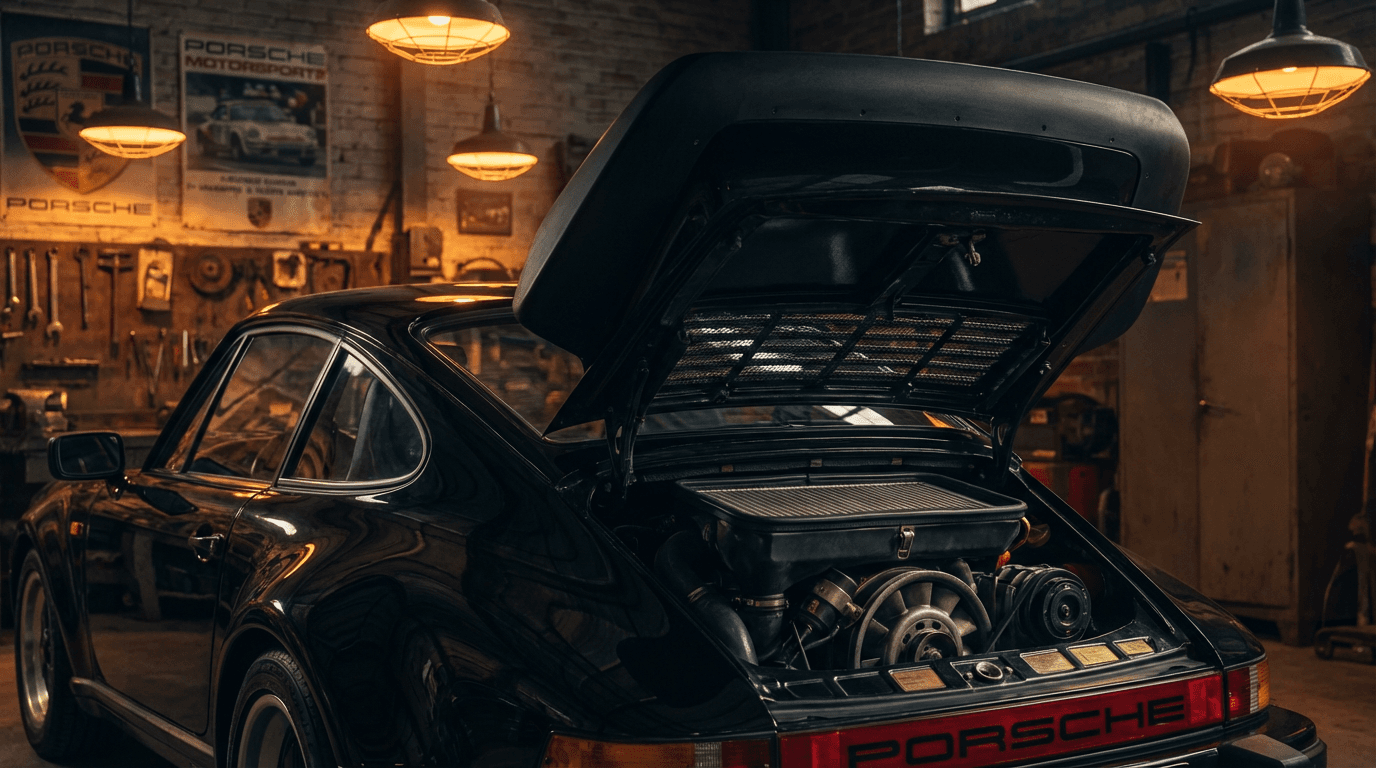
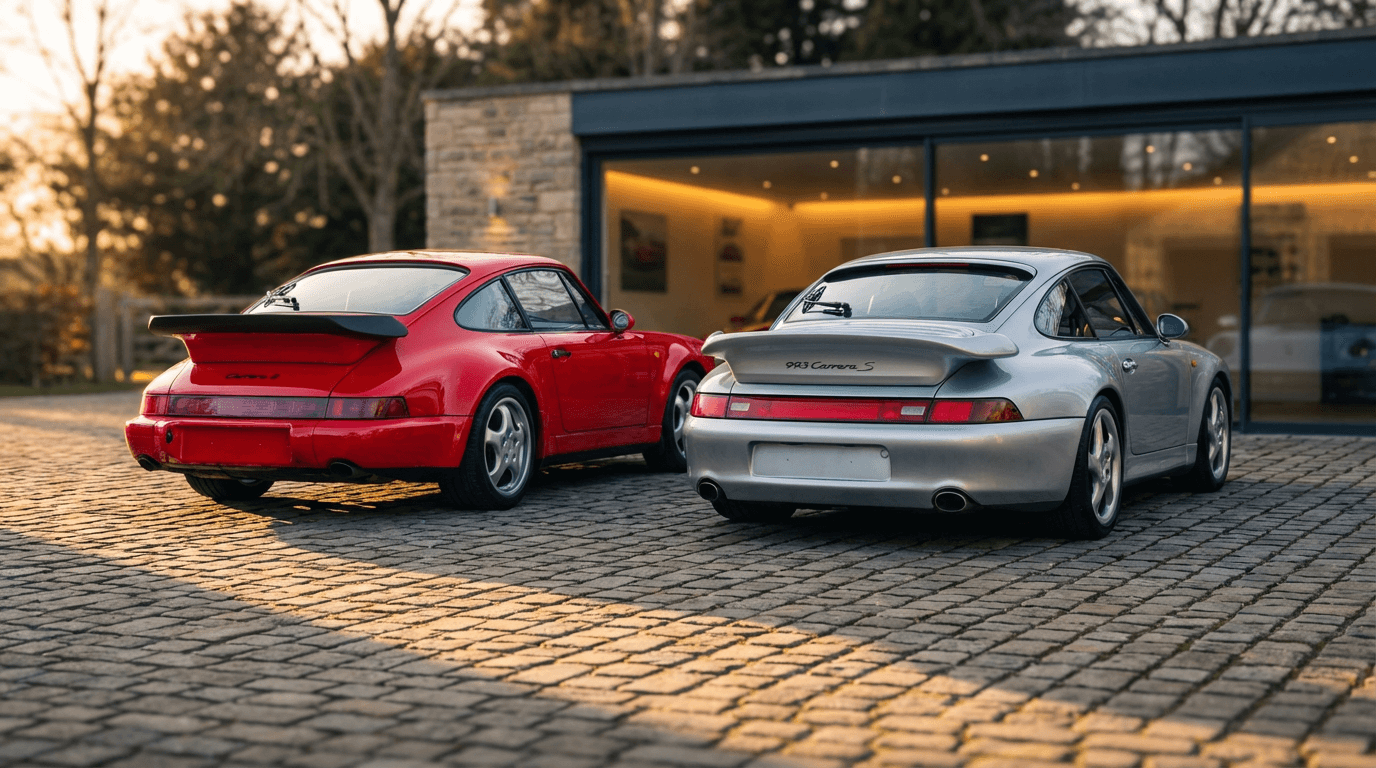
The flat-six engine in air-cooled 911s, 964s, and 993s runs hotter than most owners realize. Without coolant to moderate temperatures, the engine relies entirely on airflow and oil for cooling. That oil runs at higher temperatures, which accelerates gasket and seal degradation over time.
Add in the horizontal cylinder layout — which means oil sits on gasket surfaces under gravity — and you have an engine that is simply more prone to leaks by design. Thermal cycling from heat-up and cool-down stresses every sealing surface, and after 25-30 years, even the best gaskets give up.
The good news is that most air-cooled oil leaks follow predictable patterns. Once you know where to look, diagnosis becomes methodical rather than mysterious.
The Most Common Oil Leak Sources
Valve Cover Gaskets
This is the most frequent leak on air-cooled engines and usually the least concerning. The valve cover gaskets sit on top of the cylinder heads and seal the rocker arm area. They are made of rubber or cork-rubber composite and eventually harden and shrink from heat exposure.
Symptoms: Oil weeping down the sides of the cylinder heads, visible drips on the exhaust, burning oil smell.
Cost to repair: $400-800 depending on the model and whether any additional work is needed while the covers are off.
What I check: When I pull valve covers, I inspect the rocker arms, valve adjustment, and look for any signs of deeper issues. If the engine is due for a valve adjustment, this is the time to do both.
Chain Housing Cover Seals
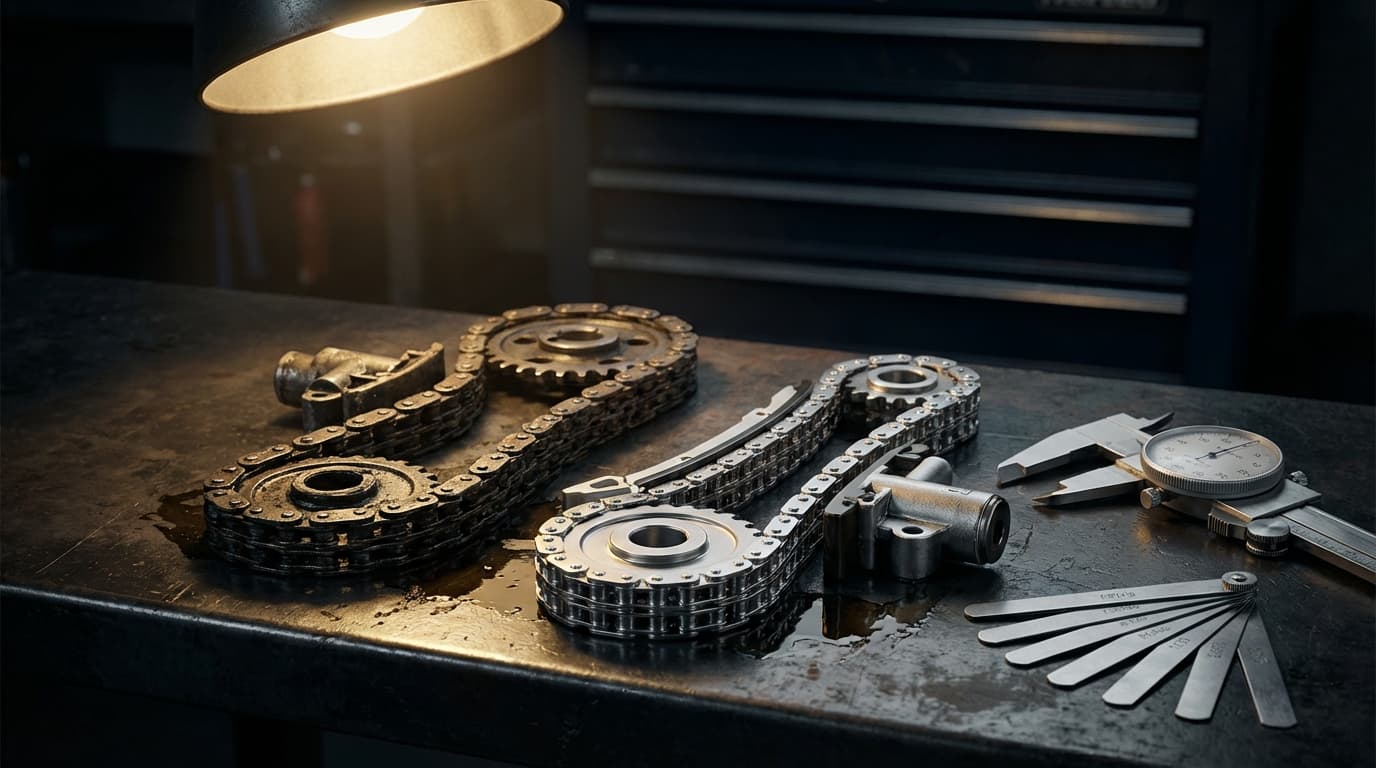
The timing chain housing sits at the back of the engine between the crankcase halves. The cover gasket and its associated seals are a very common leak source, especially on 964 and 993 engines.
Symptoms: Oil leaking from the rear of the engine, often dripping onto the crossmember or heat exchangers.
Cost to repair: $1,200-2,500. This is more labor-intensive than valve covers because access requires removing several components.
Important note: If you are seeing oil from this area, I always inspect the chain tensioners at the same time. A failed tensioner can destroy the engine, and you are already in the neighborhood.
The Triangle of Death
This is shop slang for the junction where the crankcase breather system, oil return lines, and various hoses converge at the top rear of the engine. On 964 and early 993 models, this area uses multiple rubber hoses, O-rings, and banjo fittings that all age and leak simultaneously.
Symptoms: Oil dripping from the top-center-rear of the engine. Often mistaken for a rear main seal leak because the oil migrates downward.
Cost to repair: $800-1,500. The parts are inexpensive but the labor to access and replace everything properly is not trivial.
What makes it tricky: Oil from this area runs down the engine case and can look like it is coming from somewhere else entirely. This is why systematic diagnosis matters — you need to clean the engine, run it, and trace the leak back to its actual source.
Cam Tower Oil Return Tubes
The 964 and 993 engines have oil return tubes that run from the cam towers back to the crankcase. These tubes use O-rings at their connections that harden over time and begin to leak.
Symptoms: Oil visible around the cam tower bases, dripping down the cylinder barrels.
Cost to repair: $600-1,200. Requires pulling the intake manifold on most models to access properly.
Rear Main Seal (Flywheel Seal)
The rear main seal sits between the crankshaft and the transmission bellhousing. This is a significant leak because it can contaminate the clutch and flywheel.
Symptoms: Oil on the bellhousing, oil drips between the engine and transmission, clutch slipping in advanced cases.
Cost to repair: $2,000-3,500. The transmission must be removed to access the seal. If the clutch and flywheel show contamination, plan on replacing those as well.
Oil Pressure Sender
A frequently overlooked source. The oil pressure sender screws into the crankcase and has a sealing washer that can weep. Because it sits in a high-pressure area, even a small leak produces a surprising amount of oil.
Symptoms: Oil around the sender unit, sometimes mistaken for a case leak.
Cost to repair: $150-300 for the sender and washer replacement. One of the easiest and cheapest fixes on this list.
Front and Intermediate Shaft Seals
On 964 and 993 models, the seals around the intermediate shaft and the front of the crankcase can leak. On 993 VarioRam engines, additional seals in the intake system add more potential leak points.
Symptoms: Oil at the front of the engine, dripping from the engine tin.
Cost to repair: $800-2,000 depending on which seals need replacement and how much disassembly is required.
Why Ignoring Leaks Leads to Catastrophic Failure
I cannot stress this enough: some oil leaks are cosmetic annoyances and some will destroy your engine. Here is why:
Oil starvation: A slow leak that drops your oil level below the pickup tube threshold will cause oil pressure loss under hard cornering or braking. The flat-six design means oil sloshes to one side, and if the level is already low, you lose pressure at the worst possible moment.
Fire risk: Oil dripping onto hot exhaust components is a genuine fire hazard. I have seen it happen. Fuel line replacement gets most of the fire safety attention, but oil leaks on exhaust are just as dangerous.
Secondary damage: Oil contaminating the clutch, alternator, or wiring harness creates expensive secondary problems that dwarf the cost of the original leak repair.
Masking serious issues: A minor leak in one area can mask a developing major leak elsewhere. If you are already adding oil regularly and assume it is just the valve covers, you might miss a failing rear main seal until it takes out the clutch.
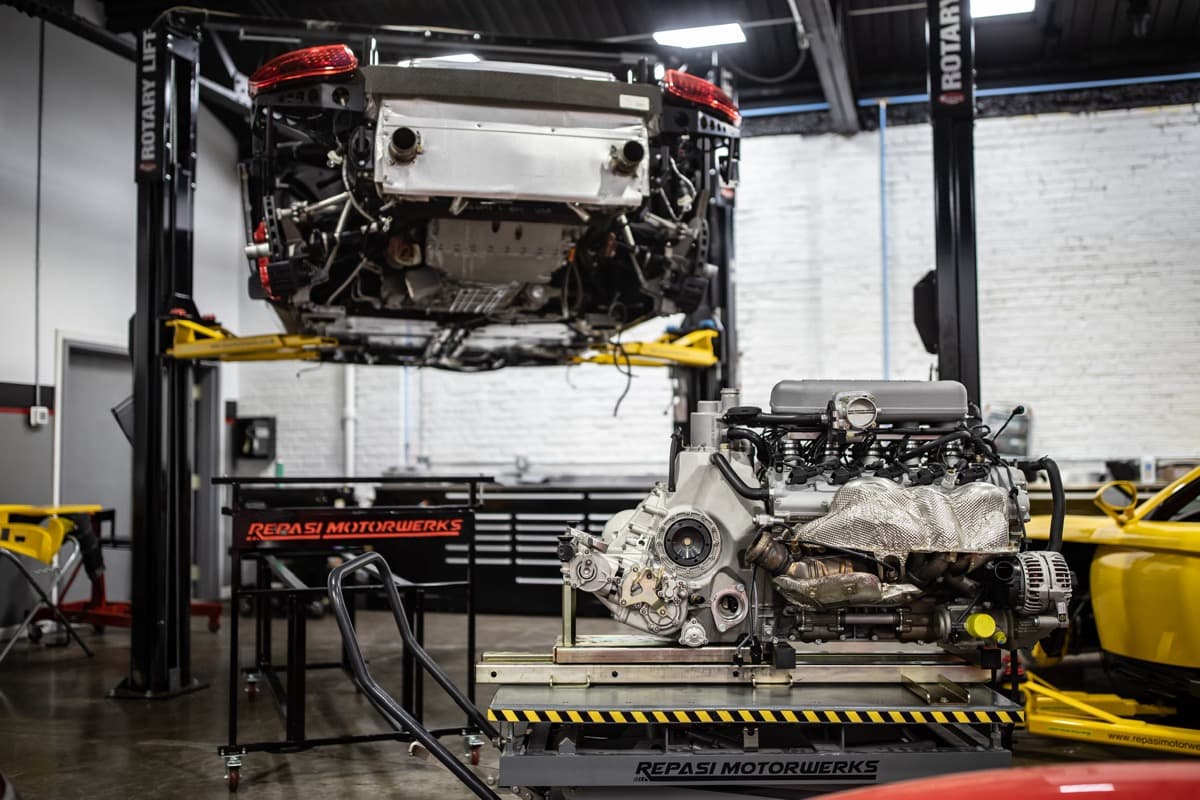
How We Diagnose Oil Leaks at Repasi Motorwerks
I follow a systematic process for every oil leak diagnosis:
Step 1: Clean and Degrease
You cannot trace a leak on a dirty engine. We thoroughly degrease the entire engine and undercarriage first. This takes time but eliminates false leads.
Step 2: Run and Observe
After cleaning, we run the engine to operating temperature and observe. Fresh oil on a clean engine tells you exactly where the leak originates.
Step 3: UV Dye (When Needed)
For intermittent or very small leaks, we add UV dye to the oil and run the engine over several heat cycles. Under UV light, the dye traces the exact leak path.
Step 4: Pressure Testing
For suspected internal leaks or head gasket issues, we perform leak-down testing to check cylinder sealing and oil pressure testing to verify system integrity.
Step 5: Prioritized Repair Plan
Not every leak needs to be fixed immediately. I give owners a prioritized list: what is urgent, what should be done soon, and what can be monitored. This avoids unnecessary spending while addressing genuine risks.
What a Complete Reseal Costs
For an air-cooled 911, 964, or 993 with multiple leak sources, a comprehensive reseal — replacing every external gasket and seal on the engine — typically runs $4,000-8,000 depending on the model and what additional items are addressed during disassembly.
This is often the most cost-effective approach when you have three or more active leak sources. Rather than paying for repeated partial repairs, a complete reseal addresses everything at once and resets the clock on all sealing surfaces.
When to Act
Here is my general rule of thumb:
- Oil on the garage floor: Get it diagnosed. Even if it is minor, you want to know the source.
- Adding oil between changes: Something needs attention. Track how much you are adding and how often.
- Oil on exhaust components: Address this promptly. The fire risk is real.
- Oil on clutch/flywheel: Do not wait. The clutch will fail and you will be stranded.
If you are dealing with oil leaks on your air-cooled Porsche, contact us to schedule a proper diagnosis. We will tell you exactly what is leaking, what it costs to fix, and what priority to assign each repair.