The Porsche 964 uses a dual mass flywheel (DMF) to smooth out the power pulses from the flat-six engine before they reach the transmission. It does this job well — until it does not. And when a DMF starts to fail, the symptoms can be confusing enough that owners chase the wrong problem for months before someone correctly identifies the flywheel.
I replace DMFs on 964s regularly at the shop. It is one of those repairs where knowing the symptoms, understanding your options, and choosing the right parts makes the difference between a good outcome and an expensive do-over.
What a Dual Mass Flywheel Does
A conventional single mass flywheel is a solid disc of metal bolted to the crankshaft. It stores rotational energy and provides a smooth surface for the clutch to engage against.
A dual mass flywheel splits that single disc into two pieces connected by springs and dampers. The engine side absorbs the combustion pulses from each cylinder firing, and the transmission side delivers a smoother, filtered rotation to the gearbox.
On the 964, the DMF serves another critical purpose: it protects the G50 transmission from the torsional vibrations that the 3.6-liter flat-six produces. Without that damping, the transmission gears and synchronizers take significantly more abuse.
Why Dual Mass Flywheels Fail
The springs and dampers inside the DMF are mechanical components that wear out over time. Every engine revolution cycles those springs, and after tens of thousands of cycles, the damping material degrades and the springs lose tension.
Several factors accelerate DMF wear:
- Stop-and-go driving: Frequent clutch engagement at low RPM is harder on the DMF than highway cruising
- Lugging the engine: Running at low RPM in a high gear forces the DMF to absorb larger torsional pulses
- High mileage: Most DMFs start showing wear between 60,000 and 100,000 miles
- Age: Even low-mileage cars can have DMF issues after 25-30 years as the internal damping material hardens
- Aggressive driving: Track use and hard launches increase the load on every engagement
Symptoms of DMF Failure
Low-RPM Vibration
This is usually the first symptom. You will feel a vibration or shudder through the car at low RPM, particularly in higher gears. It is most noticeable between 1,200 and 2,000 RPM and often feels like the engine is misfiring. Many owners and even some shops will chase ignition or fuel delivery problems before someone checks the flywheel.
Clutch Chatter on Engagement
As the DMF springs wear, the two halves of the flywheel develop excess play. This creates a chattering or juddering sensation when you engage the clutch from a stop. It is especially obvious on gentle takeoffs — if you try to feather the clutch smoothly and it grabs unevenly, the DMF is likely the cause.
Rattling at Idle
A worn DMF can produce a rattling or knocking sound at idle, particularly noticeable with the transmission in neutral and the clutch pedal released. The sound usually goes away when you depress the clutch because you are unloading the flywheel. This is a distinctive diagnostic clue.
Gear Engagement Issues
In advanced cases, the excess play in the DMF can make gear engagement rougher, particularly into first and second gear. The transmission is not the problem — the flywheel is introducing slop that the synchronizers have to compensate for.
Freudenberg vs LUK Units
The 964 came from the factory with either a Freudenberg or LUK dual mass flywheel depending on production date and market. Both designs accomplish the same job but differ in internal construction.
Freudenberg DMF: Found on earlier 964 production. Uses a viscous damping medium (silicone fluid) in addition to springs. When these fail, the viscous fluid can leak out, which accelerates the failure.
LUK DMF: Found on later production. Uses a purely mechanical spring and damper design. Generally considered more durable but still a wear item.
When replacing, I typically recommend the LUK replacement unit regardless of what was originally fitted. The LUK units have proven reliable and are more readily available from Porsche parts supply.
The Single Mass Conversion Debate
This is one of the most common questions I get from 964 owners: should I convert to a single mass flywheel to avoid dealing with DMF failures in the future?
Here is my honest take:
Arguments for single mass conversion:
- Eliminates the DMF as a future failure point
- Lighter flywheel means quicker engine response
- Less expensive to replace down the road
- No risk of internal damper failure
Arguments against single mass conversion:
- Increased drivetrain vibration, especially at low RPM
- Additional stress on the G50 transmission synchronizers and gears
- Louder gear rattle at idle
- Changes the driving character of the car
- May not pass inspection in some regions due to noise
What I recommend: For a street-driven 964 that sees occasional spirited driving, I recommend staying with the dual mass flywheel. The NVH (noise, vibration, harshness) difference is significant, and the transmission protection matters for long-term durability. A quality DMF will last another 60,000-80,000 miles before needing attention again.
For a dedicated track car or a car that has already had transmission work, a single mass conversion can make sense. But go in with your eyes open about the NVH tradeoff. It is noticeable.
When to Replace the Clutch at the Same Time
The labor to access the flywheel on a 964 requires removing the transmission. The clutch is right there once the transmission is out. Here is my rule:
Always replace the clutch and pressure plate when replacing the flywheel. The additional parts cost ($600-1,000 for a quality clutch kit) is minor compared to the labor savings of not pulling the transmission again in 20,000 miles when the clutch wears out.
The reverse is also true: if you are replacing the clutch and the DMF has more than 50,000 miles on it, replace the flywheel at the same time.
I also recommend replacing the throw-out bearing, pilot bearing, and rear main seal while the transmission is out. These are inexpensive parts that are a pain to access otherwise. The rear main seal in particular is a common oil leak source and this is the perfect opportunity to address it.
Cost Ranges
Here is what 964 DMF replacement typically costs at Repasi Motorwerks:
| Service | Cost Range |
|---|---|
| DMF replacement only | $2,500-3,500 |
| DMF + clutch kit | $3,000-4,500 |
| DMF + clutch + rear main seal + throw-out bearing | $3,500-5,500 |
| Single mass conversion + clutch | $2,800-4,000 |
These ranges account for parts quality differences and any additional issues discovered during disassembly. I use OEM or OEM-equivalent parts — this is not the place to save money on aftermarket bargains.
The Replacement Process
At Repasi Motorwerks, here is how we approach a 964 DMF replacement:
Inspection
Before committing to the repair, I verify the diagnosis. I check for the classic symptoms, inspect for play in the flywheel with the transmission in place, and rule out other causes of vibration (engine mounts, CV joints, wheel balance).
Disassembly
The transmission comes out, which requires disconnecting the shift linkage, axle flanges, starter, clutch slave cylinder, and various wiring. On the 964, this is a straightforward but time-consuming process.
Evaluation
Once the flywheel is accessible, I inspect it for obvious wear: scoring on the clutch surface, play between the two halves, damaged or leaking damper components. I also inspect the crankshaft flange and pilot bearing bore.
Replacement
The new DMF, clutch disc, pressure plate, throw-out bearing, and pilot bearing are installed with correct torque specifications. The flywheel bolts get fresh thread locker and are torqued in the proper sequence.
Verification
After reassembly, I verify clutch engagement, check for vibrations across the RPM range, and confirm smooth gear changes. A short test drive confirms everything is functioning correctly.
Do Not Ignore These Symptoms
The temptation with a marginal DMF is to live with it — the vibration is annoying but the car still drives. Here is why that is a mistake:
A failing DMF puts increasing stress on the G50 transmission. The synchronizers, input shaft bearing, and gear teeth are absorbing vibrations that the DMF should be filtering out. G50 transmission rebuilds run $6,000-12,000. Replacing the DMF at the first sign of trouble is significantly cheaper than waiting until it takes the transmission with it.
If your 964 is showing any of the symptoms described above, contact us for a diagnosis. We will tell you exactly where things stand and what your options are.
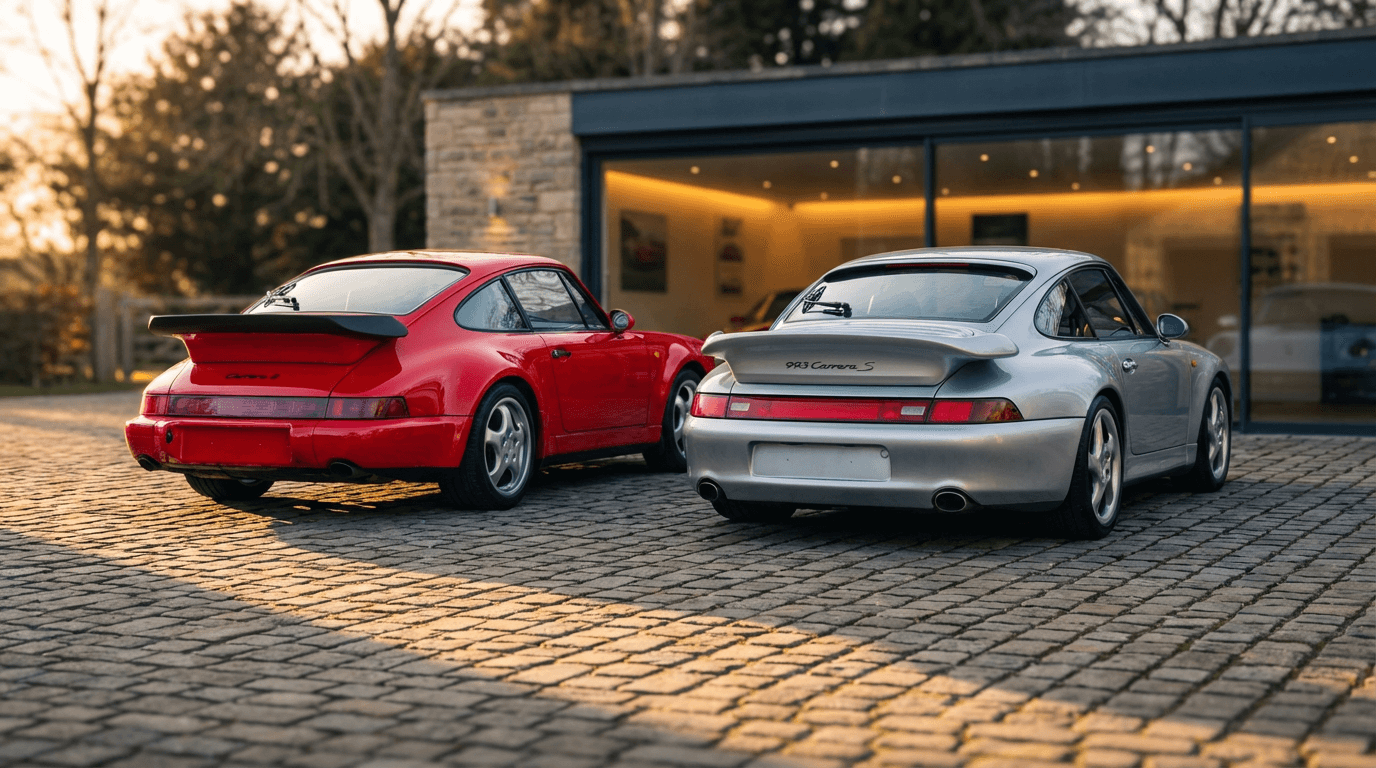
For more on maintaining your 964, see our 964 vs 993 buyer's guide and our complete air-cooled service guide.