The factory maintenance schedule tells you one story. Real-world GT3 ownership often demands a different one.
Porsche publishes service intervals assuming typical use—whatever that means for a car designed to lap the Nürburgring faster than last year's model. The reality is that GT3 owners span a spectrum from careful collectors who add a few hundred miles annually to dedicated track enthusiasts who burn through brake pads and tires like consumables. No single schedule serves everyone. See our Ultimate GT3 Owner's Guide for the complete maintenance picture across all GT3 generations.
At Repasi Motorwerks, we service GT3s across all generations, from 996 cars that predate PDK to current 992s with their double-wishbone front suspension. This experience has taught us when factory intervals make sense and when they fall short.
What Porsche Recommends
The factory schedule calls for minor service—essentially an oil change—every ten thousand miles or annually. Major service comes due at forty thousand miles or four years. Brake fluid should be changed every two years. Spark plugs are replaced at forty thousand miles. Coolant is refreshed at four years or forty-eight thousand miles. PDK fluid, for cars so equipped, gets changed at forty thousand miles.
These intervals work for GT3s driven moderately on public roads, stored properly between uses, and never pushed particularly hard. They represent minimum maintenance for preserving warranty coverage and preventing obvious problems.
They don't represent optimal maintenance for cars that actually get driven like GT3s.
What Real-World Ownership Demands
Every GT3 should receive annual service regardless of mileage. Even garage queens that accumulate a few hundred miles per year need attention.
Oil breaks down over time, not just with mileage. Moisture accumulates in crankcase ventilation systems. Seals and gaskets age whether the car runs or not. Brake fluid absorbs water from the atmosphere, degrading feel and lowering boiling points. Systems need exercise, verification, and attention.
Annual service includes oil and filter change, brake fluid flush, comprehensive multi-point inspection, and diagnostic scan of all electronic systems. This baseline costs between twenty-five hundred and four thousand dollars depending on what the inspection reveals. Finding and addressing small issues early costs far less than dealing with them after they've compounded.
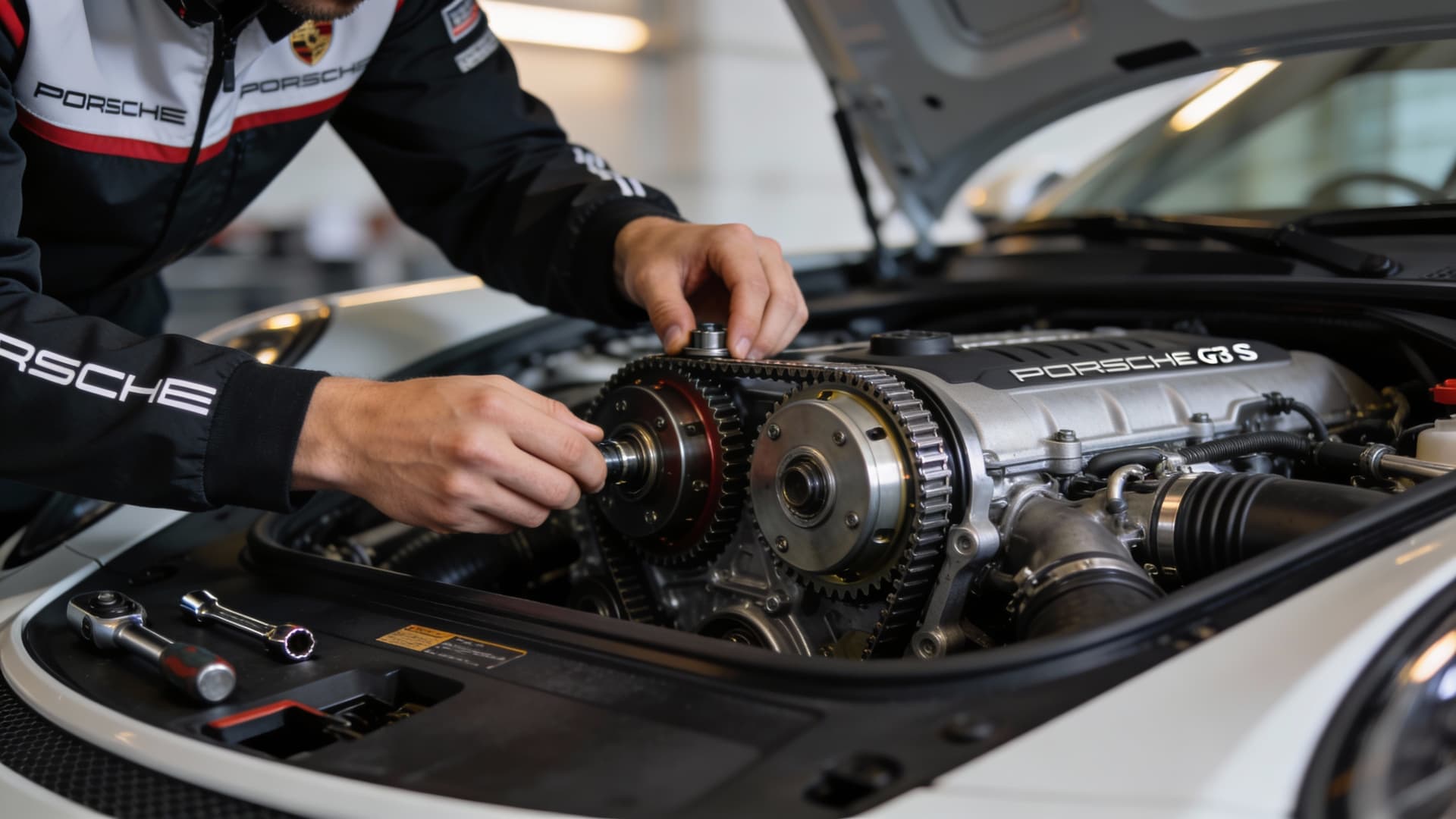
For cars accumulating meaningful mileage, the schedule expands. At ten thousand miles, the car needs oil, filter, and inspection. At twenty thousand, add spark plugs and air filter. At thirty thousand, return to the standard annual items. At forty thousand miles, comprehensive major service covers coolant, PDK fluid, and thorough inspection of everything.
When Track Use Changes the Equation
Track driving accelerates everything. Heat cycles stress fluids in ways that street driving never approaches. Brake systems work orders of magnitude harder. Suspension components endure cornering loads they were designed for but rarely experience on public roads.
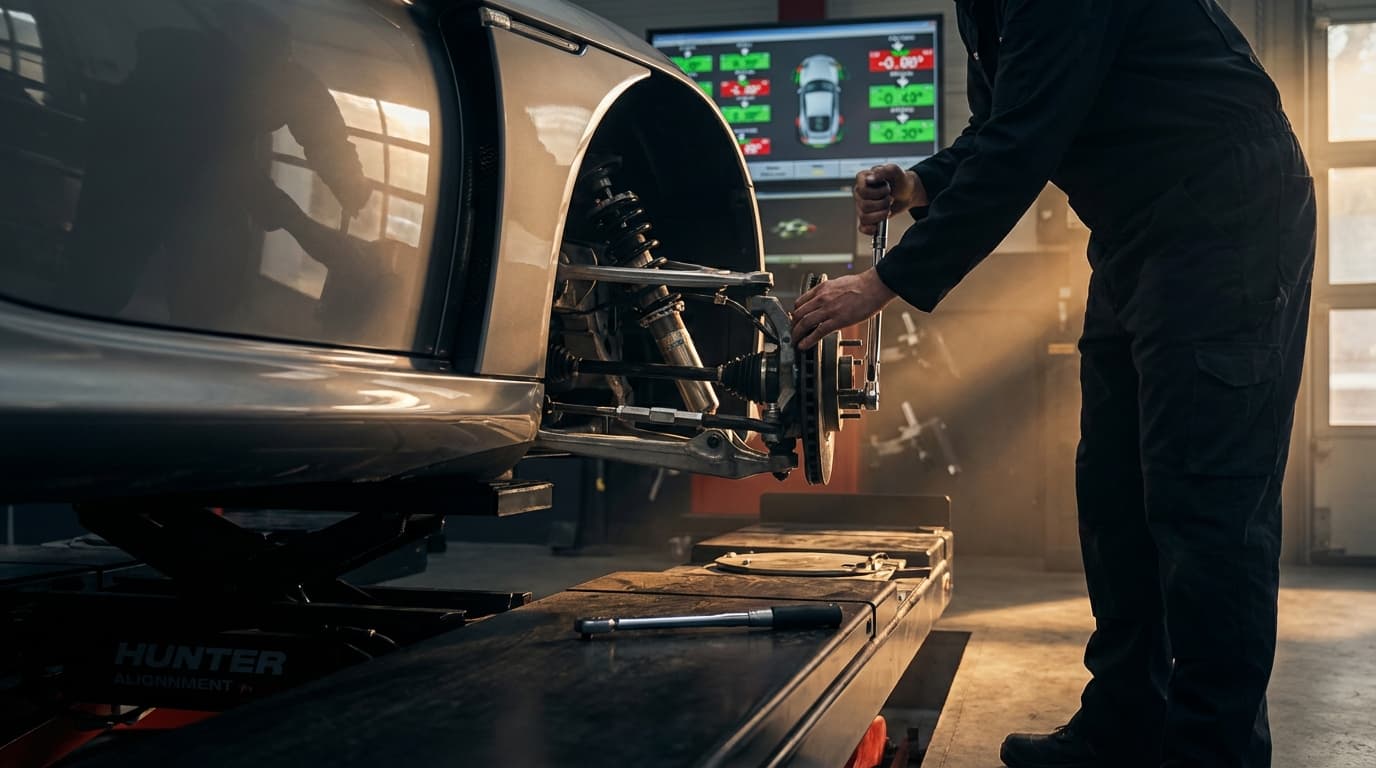
For tracked GT3s, oil changes should happen every five thousand miles or after three to four track days—whichever comes first. Brake fluid should be fresh before each track season, not just every two years. Brake pads require monitoring at every event rather than assuming they'll last twenty-five thousand miles. Alignment should be checked after any significant track sessions because curbs and aggressive driving can shift settings.
Track use doesn't just accelerate the schedule—it changes what you're watching for. Heat-related degradation, component stress fractures, accelerated wear in areas that street driving barely touches. This is why annual costs for regularly tracked GT3s run six to twelve thousand dollars, versus two to four thousand for street-only cars.
How Generations Differ
Each GT3 generation has particular considerations beyond the standard schedule.
The 991.1 GT3 from 2013 to 2016 has specific concerns. Early production cars should have cam followers inspected if this wasn't addressed previously. All cars in this generation are PDK-only, making clutch wear monitoring part of regular service. And PCCB systems on these cars are now a decade old, warranting evaluation for age-related issues.
The 991.2 GT3 from 2017 to 2019 introduced the manual transmission option. Cars so equipped need clutch monitoring as part of regular service—the lightweight flywheel and high-performance clutch can wear faster than owners expect. The revised engine in this generation has proven reliable, with few unique concerns emerging after years of real-world use.
The current 992 GT3 brings new considerations. The double-wishbone front suspension that transformed the car's handling also makes alignment more critical—there are more adjustment points and the settings matter more for tire wear and handling balance. The updated engine is too new for long-term patterns to emerge, but early indications are positive. The advanced electronics require more frequent software updates than previous generations.
What Service Actually Costs
Street-only, low-mileage GT3s cost twenty-five hundred to four thousand dollars annually to maintain properly. Active street driving pushes that to three to five thousand. Light track use adds consumables and accelerated fluid changes, landing between four and seven thousand annually. Regular track use with typical brake, tire, and fluid consumption runs six to twelve thousand per year.
These numbers assume nothing goes wrong. Major service at forty thousand miles typically adds another three to five thousand dollars for the full scope of work: oil, spark plugs, air and cabin filters, brake fluid, coolant, PDK fluid if applicable, and comprehensive inspection.
Brake pad replacement when needed adds a thousand to two thousand for standard pads, more for high-performance track compounds. PCCB rotors, if they ever need replacement, run fifteen thousand or more per axle—though well-maintained systems can last the effective life of the car.
Why Proper Scheduling Matters
GT3s reward attention and punish neglect. The high-strung engines, sophisticated suspension, and demanding brake systems were designed for the kind of performance that stresses components. Deferred maintenance doesn't stay deferred—it becomes expensive repairs.
The cars that come through our shop in excellent condition share common patterns: consistent annual service regardless of mileage, appropriate response to track use, prompt attention to anything unusual. The cars with expensive problems usually have gaps in their service history, deferred maintenance that compounded, or use patterns that outpaced the care they received.
This isn't unique to GT3s—it applies to any high-performance car. But GT3s amplify the consequences because they're designed to be driven hard. The engineering expects proper care in return.
Questions about GT3 service scheduling? Contact Repasi Motorwerks in Stratford, Connecticut. We'll help you develop a maintenance plan that matches how you actually use your car—whether that's careful canyon runs or regular track days.