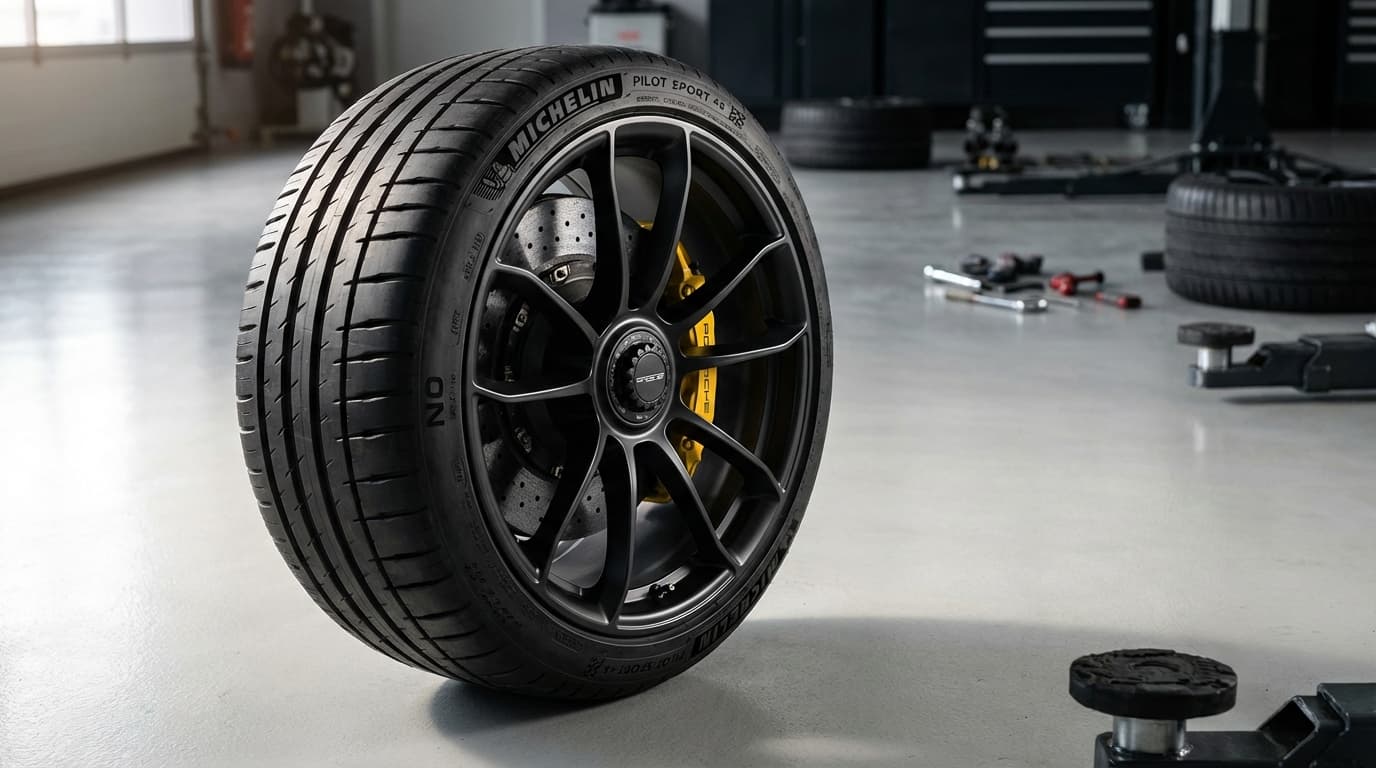
If you own a Porsche, you have probably noticed the small "N0," "N1," or "N2" marking on your tires' sidewall. These are Porsche's N-ratings, and they represent a level of OEM tire specification that goes far beyond what most manufacturers require. Understanding what these ratings mean helps you make informed decisions when it is time to replace your tires.
What N-Rating Means
Porsche is one of the few manufacturers that works directly with tire companies to develop model-specific tire compounds, tread patterns, and constructions. When a tire earns an N-rating, it means Porsche engineers have tested and approved that specific tire for a specific vehicle application.
The rating is not just a rubber stamp. Porsche's tire testing program involves:
- Ride comfort and noise evaluation on specific road surfaces
- Wet and dry handling at the Weissach test track and Nardò Ring
- High-speed stability testing up to and beyond the vehicle's rated top speed
- Braking performance from various speeds in multiple conditions
- Durability under sustained high-speed driving
- Snow and cold weather performance for all-season and winter variants
- Compatibility with TPMS, PSM, and PTV systems
Each vehicle in the Porsche lineup has its own N-rated tire specifications. An N-rated tire for a 911 Turbo S is a fundamentally different product from an N-rated tire for a Cayenne, even if both carry the same brand name and model number.
N0, N1, N2, N3, N4: What the Numbers Mean
The number after the "N" indicates the revision of Porsche's specification:
- N0: First-generation Porsche-approved specification
- N1: Second revision with updated compound or construction
- N2: Third revision
- N3, N4: Further revisions (less common)
Important: A higher number does not necessarily mean a better tire. It means a newer specification. Porsche revises specifications when tire manufacturers update their product lines. N0, N1, and N2 versions of the same tire model may have different compounds, sidewall constructions, or tread patterns.
In general, you should match the N-rating currently specified for your model year. Your owner's manual and the tire placard in the driver's door jamb list the correct specifications.
How N-Rated Tires Differ from Standard Versions
The differences between an N-rated Porsche tire and its consumer equivalent vary by manufacturer and model, but commonly include:
Compound Modifications
- Adjusted rubber compound for the specific weight distribution of the Porsche model
- Modified silica content for wet-weather grip
- Adjusted compounds for consistent performance across the Porsche's operating temperature range
Construction Differences
- Stiffer sidewall construction to handle the Porsche's lateral loads
- Modified bead design for secure seating on Porsche's specific rim profiles
- Adjusted belt angles for high-speed stability
Tread Pattern Changes
- Optimized groove depth and pattern for the car's aerodynamic profile
- Noise reduction tuning specific to the cabin acoustics of each model
- Sipe patterns adjusted for the weight transfer characteristics of each platform
These are not theoretical differences. Back-to-back testing on a 911 with N-rated versus standard-equivalent tires consistently shows measurable differences in braking distance, maximum cornering grip, and transient handling response.
Staggered Fitments: Front vs. Rear
Most Porsche models use staggered tire fitments, with wider tires on the rear than the front. This is particularly pronounced on 911 variants:
- 992 Carrera: 235/40R19 front, 295/35R19 rear
- 992 Carrera S: 245/35R20 front, 305/30R20 rear
- 992 GT3: 255/35ZR20 front, 315/30ZR20 rear
- 992 Turbo S: 255/35ZR20 front, 315/30ZR20 rear
Staggered fitments cannot be rotated front-to-rear. The front and rear tires are different sizes. This means rear tires wear faster on rear-engine 911s (more weight and drive force), and you will replace rears more frequently than fronts. Expect roughly a 2:1 rear-to-front replacement ratio on a 911.
On the Macan and Cayenne, some configurations use square setups (same size all around) that allow traditional rotation patterns. Check your specific model's fitment.
When Non-N-Rated Tires Are Acceptable
Here is an honest assessment from someone who works on these cars daily. N-rated tires are the best choice, but they are not the only acceptable choice:
N-Rated is strongly recommended when:
- The car is under factory warranty (non-N-rated tires can complicate warranty claims)
- You drive at 8/10ths or above on the street or track
- The car has PCCB carbon ceramic brakes (tire-brake system interaction is calibrated together)
- You want the absolute best balanced performance the car was designed for
- The car is a GT model (GT3, GT4, GT2 RS) where tire performance is integral to the chassis tuning
Non-N-Rated alternatives are reasonable when:
- The car is out of warranty
- You primarily drive in daily commuting conditions
- Cost is a significant factor (N-rated tires often cost 10-20% more than equivalent alternatives)
- You need a tire size or season that is not available in N-rated specification
- You are choosing dedicated winter tires for Connecticut's cold season
If you go non-N-rated, choose a quality tire from a reputable manufacturer (Michelin, Continental, Pirelli, Bridgestone) in the correct size and load rating. The difference between an N-rated and premium non-N-rated tire is measurable but modest. The difference between either and a budget tire is dramatic and potentially dangerous.
Alignment and N-Rated Tires
Proper alignment is critical to tire longevity and performance, especially on Porsches with their aggressive camber settings. Our Hunter alignment rack is calibrated for all current Porsche models, including cars with rear-axle steering.
Common alignment-related tire wear issues on Porsches:
- Inside edge wear on front tires: Often indicates excessive negative camber or worn control arm bushings
- Cupping or scalloping: Usually caused by worn dampers or unbalanced tires
- Uneven wear across the rear tires: Can indicate a rear alignment issue or different tire pressures
We check alignment specifications as part of every annual service and recommend a full alignment check with every tire replacement.
Tire Age: The Hidden Factor
Even tires with adequate tread depth degrade with age. Rubber compounds harden and lose grip over time, regardless of mileage. Porsche recommends replacing tires older than 6 years from the date of manufacture, and many tire manufacturers recommend the same.
The date of manufacture is printed on every tire sidewall in a four-digit DOT code. For example, "2423" means the tire was manufactured in the 24th week of 2023. If your tires were manufactured more than 5-6 years ago, they should be inspected carefully and likely replaced regardless of remaining tread depth.
This is particularly relevant for cars that come out of winter storage each spring. A Porsche that is driven only 3,000-5,000 miles per year can easily reach the age limit before the tread wears out.
For tire replacement, service, or alignment on your Porsche, trust a shop that understands the specific requirements of your model. The tires are the only connection between your Porsche's extraordinary engineering and the road.
Ready to schedule your Porsche service? Contact Repasi Motorwerks or call (203) 257-0987.