
GT3
Porsche 911 GT3 & GT3 RS Service & Maintenance
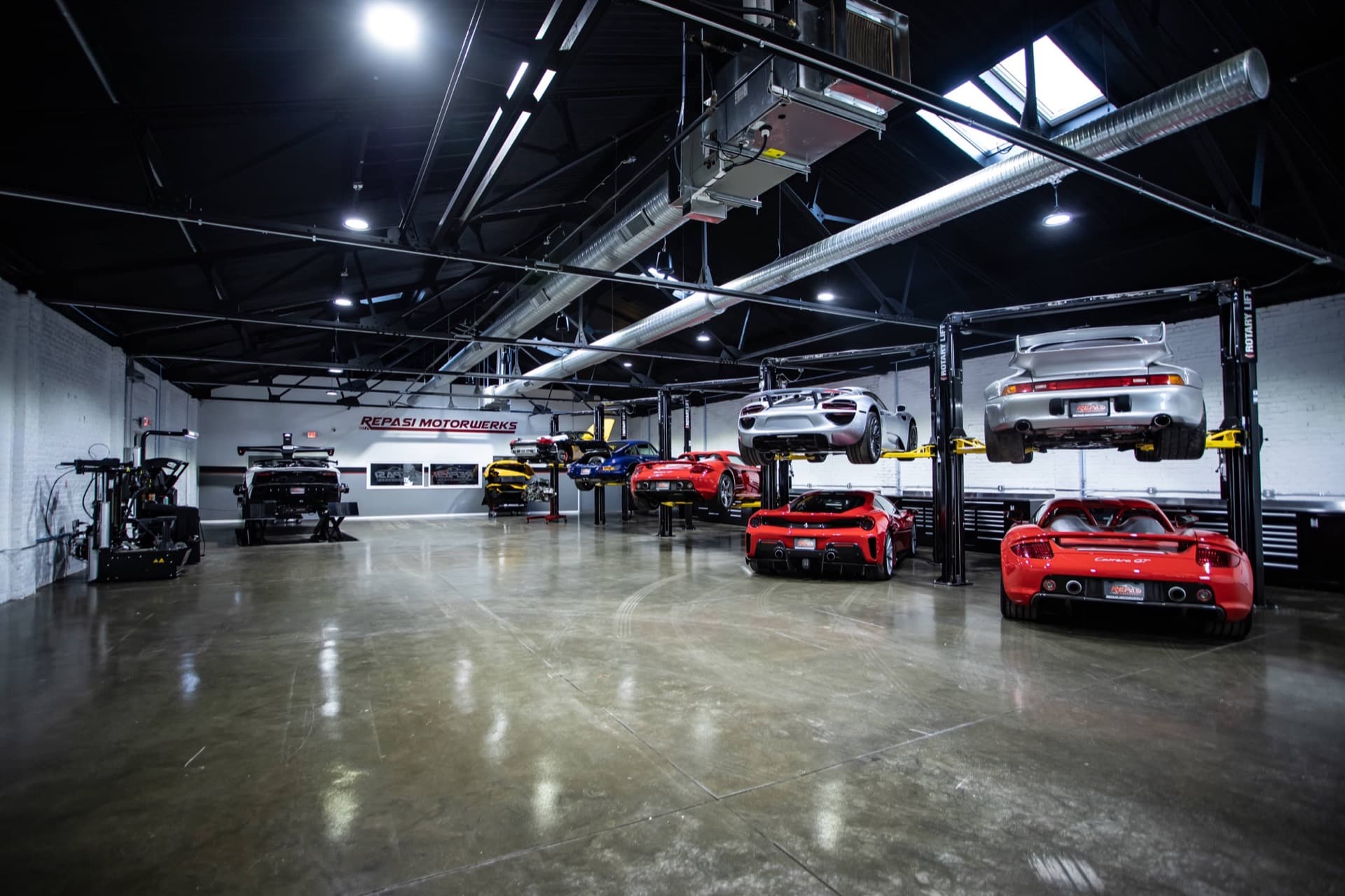
The GT3 represents Porsche's commitment to motorsport for the street. At Repasi Motorwerks, we understand that GT3 owners expect more than basic maintenance—they want technicians who appreciate the car's racing heritage and can maintain it to the standards it deserves.
Gold Meister Certified · PIWIS Factory Diagnostics · Stratford, CT
Our GT3 Expertise
- Mezger engine specialists (996/997.1 GT3)
- 9A1 naturally aspirated engine expertise (997.2/991/992)
- Track preparation and corner balancing
- Roll cage and harness installation
- Performance alignment with race-derived geometry
GT3 Services We Provide
Track Day Preparation
Pre-track inspection, brake bleeding with racing fluid, tire pressures, safety equipment check.
Corner Balance & Alignment
Hunter laser alignment with race-derived geometry. Weight distribution optimization.
Clutch Replacement
Single-mass flywheel and clutch service for manual GT3s. PDK service for later models.
Engine-Out Major Service
Comprehensive inspection with engine removed. Rear main seal, clutch, and complete systems check.
PCCB Service
Carbon ceramic brake inspection and pad replacement. Rotor assessment and replacement when needed.
GT3 Major Services
In-depth service procedures for the most critical GT3 maintenance and repair work.
Engine-Out Major Service
Engine-Out
Why GT3s Need Engine-Out Service
GT3 engines operate at sustained high RPM that street 911s rarely see. The naturally aspirated flat-six revs to 8,250 RPM (Mezger) or 9,000 RPM (9A1/992), creating thermal and mechanical stresses that accelerate wear on rear main seals, clutch components, and engine mounts. Track use compounds these stresses significantly. We recommend engine-out inspection every 30,000-40,000 miles for street-driven GT3s, or after every 2-3 track seasons for cars that see regular circuit use.
- Rear main seal (RMS) replacement: high RPM and crankcase pressure cause seal deterioration, leading to oil leaks at the engine-transmission flange
- Clutch and flywheel inspection: track use accelerates clutch wear — single-mass flywheel GT3s require disc and pressure plate assessment
- Engine mount inspection: GT3 mounts are stiffer than standard 911 mounts and deteriorate under track vibration
- Complete systems inspection while accessible: timing chain tensioners, oil pump, and valve cover gaskets
Mezger vs 9A1 Engine Considerations
The GT3 has used two distinct engine families. The Mezger engine (996.1 GT3, 997.1 GT3/GT3 RS) is derived from the GT1 race car and features a separate, more robust engine case with dry-sump lubrication, individual throttle bodies, and titanium connecting rods. The later 9A1-based engine (997.2 GT3 onward through 991 and 992 GT3) shares its basic architecture with the standard 911 but with extensive modifications including higher compression, revised camshafts, and specific intake and exhaust tuning. Each requires different service approaches and tooling.
- Mezger engines: valve guide wear is common at high mileage — inspection during engine-out determines if guides need replacement
- Mezger dry-sump: oil tank and scavenge pump inspection; debris in the oil tank indicates internal wear
- 9A1 engines: no IMS bearing concern (uses a plain bearing), but cylinder scoring from the M97 generation does not apply to GT3-specific engines
- 992 GT3: 4.0L engine with individual throttle bodies produces 502 hp — service procedures updated from earlier 9A1 variants
Mezger Engine Rebuild
Engine-Out
The Mezger Engine: GT1-Derived Racing Heritage
The Mezger flat-six is one of the most celebrated engines in Porsche history. Derived from the 911 GT1 race car, it was used in the 996 and 997.1 GT3, GT3 RS, and Turbo models. It features a separate, intermediate-shaft-free engine case (no IMS bearing concern), dry-sump lubrication, Nikasil cylinder linings, individual throttle bodies, and titanium connecting rods. Rebuild work on Mezger engines requires specific expertise: the cylinder head architecture differs from standard M96/M97 engines, and the dry-sump system adds complexity to disassembly and reassembly.
- Valve guide replacement: bronze guides wear over 60,000-80,000 miles, causing oil consumption and valve seal seepage
- Cylinder head service: valve seats, springs, and retainers inspected — Ti connecting rod bolts are single-use and replaced during rebuild
- Crankshaft and bearing inspection: main and rod bearings measured against factory tolerances
- Dry-sump oil system: tank inspection, scavenge pump rebuild, and oil line replacement as needed
Rebuild Scope and Documentation
A complete Mezger rebuild includes splitting the case, inspecting the crankshaft, replacing bearings, servicing the cylinder heads, and reassembling with all new gaskets and seals. We measure every critical clearance and document every torque value. For GT3 RS engines with the sport exhaust and higher-output calibration, we verify that all components meet the more demanding RS specifications. The result is an engine that meets or exceeds factory performance with a documented service record that supports the car's value.
- Complete case splitting with crankshaft, bearing, and cylinder inspection
- All gaskets, seals, and single-use fasteners replaced with genuine Porsche parts
- Assembly torque values logged to factory specifications for every critical fastener
- Break-in procedure followed post-rebuild with initial oil analysis at 500 miles to verify internal condition
PCCB Brake System Service
Specialized
Carbon Ceramic Brake Specifics
Porsche Carbon Ceramic Brakes (PCCB) use silicon carbide ceramic rotors that are approximately 50% lighter than equivalent iron rotors. They resist fade far better than iron under sustained track use, but they require specific service knowledge. PCCB pads use different friction material than standard brakes and must be matched to the ceramic rotor surface. Rotor inspection involves checking for thermal cracking patterns — some surface crazing is normal and does not indicate failure, but deep or propagating cracks require rotor replacement. PCCB rotors are expensive (factory replacement costs are significant), so proper pad selection and bedding procedures are essential to maximize rotor life.
- PCCB pad replacement requires ceramic-specific friction compounds — standard metallic pads damage the rotor surface
- Rotor inspection for thermal cracking: surface crazing is normal; deep cracks or delamination require replacement
- Caliper piston retraction requires PIWIS to activate the electronic parking brake retraction procedure
- Brake fluid must be DOT 4 or higher — contaminated fluid with moisture causes corrosion at the caliper interface
Track Use Considerations
GT3 owners who track their cars subject PCCB systems to extreme thermal loads. Pad selection is critical: aggressive track compounds that work well on iron rotors can damage PCCB surfaces. We help GT3 owners select appropriate pad compounds for their use case — street pads for daily driving, intermediate compounds for occasional track days, and dedicated race pads for serious circuit use (though dedicated race compounds accelerate rotor wear). Proper bedding procedure after pad replacement is essential for even pad transfer and consistent braking.
- Pad compound selection matched to driving use: street, mixed, or dedicated track compounds
- Bedding procedure performed after every pad change to ensure proper pad transfer to rotor surface
- Brake fluid flush with high-temperature fluid (Motul RBF 660 or equivalent) before each track season
- Rotor thickness measurement at each service to track wear rate and plan replacement timing
Track Suspension Setup
Specialized
GT3-Specific Chassis Tuning
The GT3 arrives from the factory with a track-capable suspension setup, but factory settings represent a compromise between street comfort and circuit performance. We use Hunter laser alignment equipment and corner balance scales to dial in geometry for your specific use case. Track-focused alignment typically includes increased negative camber (front and rear), reduced toe for less tire scrub, and optimized ride height for aerodynamic balance. Corner balancing ensures equal weight distribution across diagonal wheel pairs for predictable handling at the limit.
- Corner balance to within 5 lbs cross-weight for predictable turn-in and consistent handling
- Alignment specs tailored to your track: high-speed circuits benefit from different settings than tight technical tracks
- Ride height adjustment to optimize front/rear aerodynamic balance and rake angle
- Damper adjustment guidance: PASM settings for different track conditions and driving styles
Clutch & Flywheel Replacement
Engine-Out
Manual GT3 Clutch Service
Manual GT3s use a single-mass flywheel and high-performance clutch assembly designed for the elevated torque and RPM range of the GT3 engine. Track use accelerates clutch wear significantly — aggressive launches and high-RPM shifts generate heat that glazes the friction surfaces and reduces clamping force. We measure clutch disc thickness through PIWIS adaptation values and physically during engine-out inspection. When replacement is needed, we install genuine Porsche or equivalent performance clutch kits with new release bearing and pilot bearing.
- Single-mass flywheel surface inspected for heat checking, scoring, and runout — resurfaced or replaced as needed
- Release (throw-out) bearing replaced as standard practice during clutch service to prevent premature failure
- Pilot bearing and clutch fork pivot inspected and replaced if worn
- Clutch hydraulic system bled with fresh DOT 4 fluid to ensure consistent pedal feel
PDK GT3 Service
Later GT3 models (991.2 and 992) offer PDK alongside the manual option. The GT3 PDK uses the same seven-speed architecture as other 911 PDK variants but with revised software calibration for faster shifts and higher RPM tolerance. PDK fluid and filter changes follow the same 40,000-mile interval, but track-driven GT3 PDKs benefit from more frequent fluid changes due to higher thermal loads on the clutch packs.
- PDK fluid and filter service at 40,000 miles or sooner for track-driven cars
- Clutch pack wear values monitored via PIWIS — track use accelerates clutch disc wear
- Mechatronic unit software updates applied during service for latest shift calibration
Common GT3 Issues & Solutions
Every model has its common issues. Here's what we see and how we address them.
Rear Main Seal Leaks
Engine-out service to replace rear main seal. Common on all GT3 generations after track use.
Valve Guide Wear (996/997.1 Mezger)
Valve guide replacement during cylinder head service. Prevents oil consumption issues.
Wheel Bearing Wear
Track use accelerates bearing wear. Regular inspection and replacement as needed.
PCCB Rotor Wear
Inspection for thermal cracking. Rotor replacement when wear indicators show.
GT3 Service Intervals
Factory-recommended maintenance schedule to keep your GT3 performing at its best.
Annual / 10,000 miles (or after every track season)
- Oil and filter change
- Brake inspection and fluid test
- Suspension check for wear
- Multi-point track-focused inspection
Every 2 years / 20,000 miles
- Spark plug replacement
- Gearbox oil change
- Differential fluid
- Complete brake system service
Every 4 years / 40,000 miles
- Coolant flush
- Suspension refresh evaluation
- Engine-out inspection (recommended)
- Clutch wear assessment
Why Your GT3 Needs a Specialist
GT3s are track-capable machines that experience stresses far beyond normal street driving. Our Gold Meister technicians understand the unique demands of high-RPM naturally aspirated engines, carbon ceramic brakes, and motorsport-derived suspension. We speak your language and maintain your GT3 to the standard it was built.
GT3 Service FAQs
- Does the Porsche GT3 use the same engine as the regular 911?
- No. The 997 and earlier GT3 models use the Mezger flat-six engine, which is a fundamentally different design from the M96/M97 found in standard 911s. The Mezger engine has a separate oil sump, dry-sump lubrication, stronger internals, and does not suffer from IMS bearing or bore scoring issues. Starting with the 991.1 GT3, Porsche switched to a direct-injection version of the standard engine platform, though it is heavily reinforced for high-RPM use.
- How often should PCCB brakes be replaced on a GT3?
- Porsche Ceramic Composite Brakes can last 80,000 to 120,000 miles on street-driven cars. Track use significantly reduces that lifespan — heavy track use can wear rotors in as few as 20,000 miles. Unlike iron rotors that show wear gradually, ceramic rotors can crack suddenly if they are not inspected regularly. Annual inspections should include measuring rotor thickness and checking for hairline cracks.
- What maintenance does a GT3 need after track use?
- After a track day, a GT3 should receive a fluid check including brake fluid temperature assessment, a brake pad and rotor inspection, an alignment check, and an engine oil analysis to check for elevated metal particulates. Cars that are tracked regularly benefit from more frequent oil changes (every 3,000 miles or after every two track days), transmission fluid changes, and suspension bushing inspections.
- How much does a Mezger engine rebuild cost?
- A full rebuild of the Mezger flat-six typically ranges from $15,000 to $25,000 depending on the extent of wear. This includes new bearings, piston rings, valve guides, chain tensioners, and cylinder honing. If cylinder liners need replacement or the crankshaft requires regrinding, costs can approach $30,000. The Mezger engine is extremely durable, so rebuilds are usually only necessary above 100,000 miles or after sustained track abuse.
- Can I convert my GT3 from PCCB to steel brakes?
- Yes, converting from PCCB ceramic brakes to a steel rotor setup is a common modification, especially for cars that see heavy track use. Steel rotors are far less expensive to replace and offer more consistent feel when cold. The conversion requires new rotors, calipers, brackets, and recalibration of the ABS system. Budget approximately $5,000 to $8,000 for a complete conversion with quality components.
Ready to Schedule Your GT3 Service?
Contact us today to schedule your appointment. Our Gold Meister certified technicians are ready to provide factory-level care for your Porsche 911 GT3 & GT3 RS.
GT3 Service Areas
We serve GT3 owners across CT, NY, NJ, MA, and PA.