GT2 RS
Porsche 911 GT2 RS Service & Maintenance
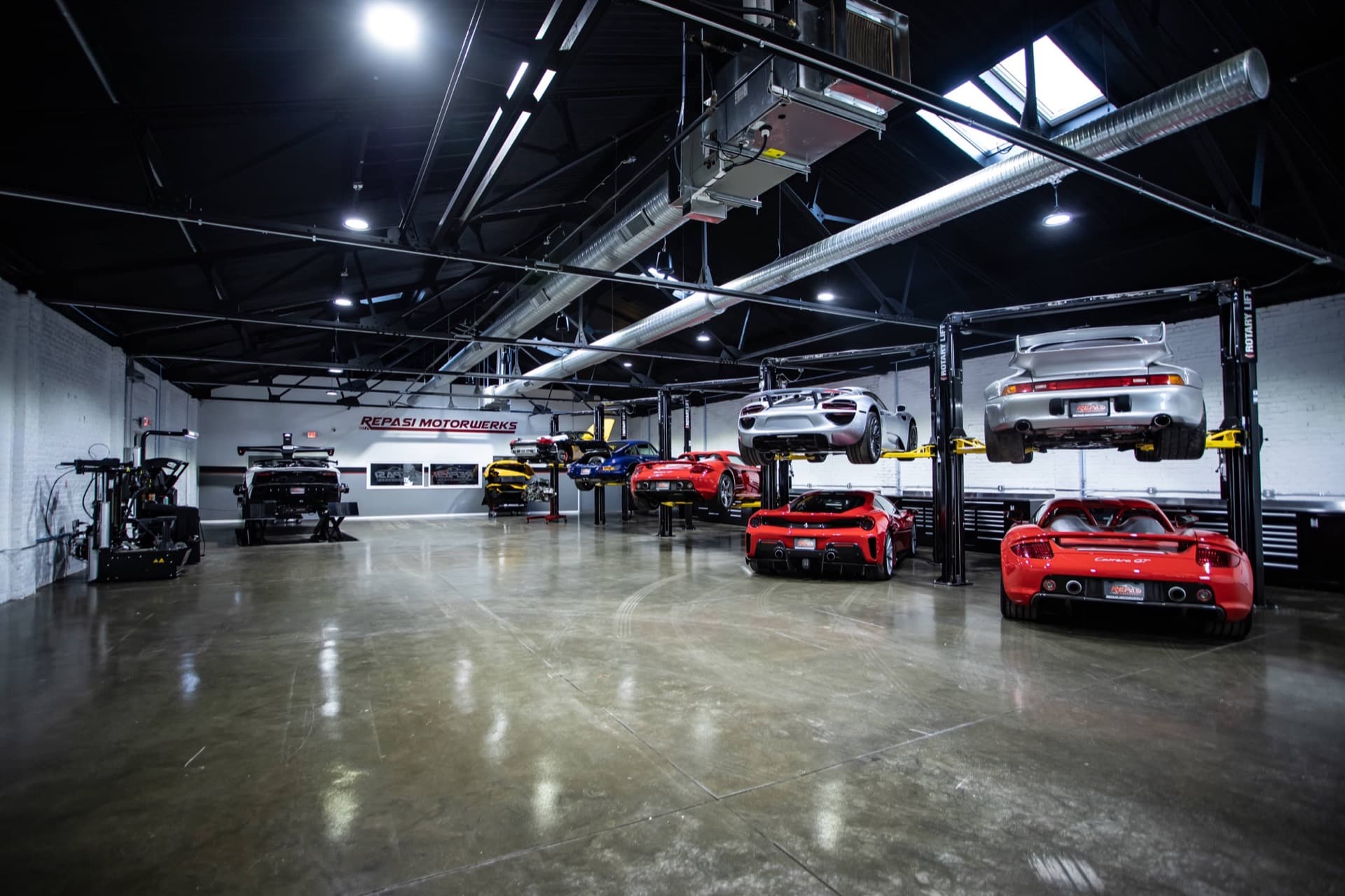
The GT2 RS is Porsche's most extreme turbocharged 911—a 700-horsepower rear-wheel-drive weapon built for the track. At Repasi Motorwerks, we understand that GT2 RS owners demand absolute precision. Our Gold Meister certified technicians have the expertise and equipment to maintain these rare machines to the highest standards.
Gold Meister Certified · PIWIS Factory Diagnostics · Stratford, CT
Our GT2 RS Expertise
- 991 and 992 GT2 RS platform expertise
- Twin-turbo 3.8L flat-six specialists
- Weissach Package carbon fiber care
- Track preparation and corner balancing
- PIWIS factory diagnostics for complete system access
- Rear-wheel-drive turbo chassis setup expertise
GT2 RS Services We Provide
Track Day Preparation
Pre-track inspection, brake fluid flush with racing fluid, turbo system check, tire pressures, and comprehensive safety inspection.
Turbo System Service
Twin-turbo inspection, boost leak testing, wastegate calibration, and intercooler system maintenance.
Corner Balance & Alignment
Hunter laser alignment with track-focused geometry. Weight distribution optimization critical for RWD turbo handling.
PCCB Service
Carbon ceramic brake inspection, pad replacement, and rotor assessment. Essential for track use.
PDK Service
Seven-speed PDK transmission fluid and filter. Mechatronic inspection for track-stressed components.
Engine-Out Major Service
Comprehensive service with engine removed. Rear main seal, turbo inspection, and complete systems check.
GT2 RS Major Services
In-depth service procedures for the most critical GT2 RS maintenance and repair work.
Twin-Turbo System Rebuild
Specialized
700 HP Turbo System Demands
The GT2 RS produces 700 horsepower from a twin-turbocharged 3.8-liter flat-six — the most powerful production 911 engine Porsche has built. The turbochargers operate at higher boost pressures than the standard 911 Turbo, creating extreme thermal and mechanical demands on the turbo bearings, wastegate actuators, and oil feed system. Track use compounds these stresses significantly: sustained high-boost operation heats the turbo housings and oil feed lines to temperatures that accelerate wear. Turbo system service includes inspection of both turbochargers, the wastegate mechanisms, charge piping, and intercooler system.
- Twin-turbo system operating at elevated boost pressures: higher thermal load than standard 911 Turbo
- Turbo oil feed and return lines: high-temperature exposure causes line hardening and potential cracking — preventive replacement recommended
- Wastegate actuator inspection: electronic wastegate control requires PIWIS testing for proper boost regulation
- Intercooler system: charge air cooling efficiency affects power output and detonation resistance
Turbo Inspection and Rebuild Procedure
Turbo inspection begins with a boost leak test to identify any charge piping leaks that reduce performance. Each turbocharger is inspected for shaft play (both radial and axial), compressor wheel condition, and turbine housing integrity. Oil feed and return lines are inspected for hardening, cracking, or restriction. When rebuild is required, we work with specialized turbo rebuild facilities that maintain OEM-equivalent specifications for Porsche turbochargers.
- Boost leak test at operating pressure to identify charge pipe, coupler, and intercooler leaks
- Turbo shaft play measurement: radial and axial clearance checked against factory tolerances
- Compressor wheel and turbine blade inspection for erosion, tip contact, or foreign object damage
- Oil return line flow test: restricted return lines cause turbo seal failure and oil consumption
Engine-Out Major Service
Engine-Out
GT2 RS Engine-Out Scope
Engine-out service on the GT2 RS provides access to the turbochargers, rear main seal, clutch pack (PDK), and the complete exhaust manifold system. The 700 hp engine generates higher crankcase pressures than standard 911 Turbos, accelerating rear main seal wear particularly under track use. With the engine removed, we perform a comprehensive inspection of the turbo oil feed system, all gasket and seal surfaces, engine mounts, and the PDK transmission interface.
- Rear main seal replacement: higher crankcase pressure from elevated boost accelerates seal wear
- Turbo oil feed and return line replacement while accessible — these lines are buried when the engine is installed
- Complete exhaust manifold gasket inspection: high-boost operation stresses exhaust connections
- Engine mount replacement if deteriorated — critical for chassis alignment and handling on track
PCCB Brake Service
Specialized
Braking 700 HP on Track
The GT2 RS uses the largest PCCB rotors available on any 911 — 410mm front and 390mm rear. Stopping 700 horsepower from track speeds generates enormous thermal energy, and even PCCB systems reach their limits under sustained circuit use. Pad selection is critical: overly aggressive compounds accelerate rotor wear, while insufficiently aggressive compounds fade during long track sessions. We help GT2 RS owners select the optimal pad compound for their specific use pattern and provide brake system preparation tailored to track events.
- 410mm front / 390mm rear PCCB rotors — the largest available on any production 911
- Pad compound selection for your specific use: street, mixed street/track, or dedicated track
- Brake duct inspection and cleaning: adequate cooling airflow is critical for sustained track braking
- Brake fluid flush with Motul RBF 660 or equivalent racing-spec fluid before track events
PDK High-Performance Service
Specialized
PDK Under Extreme Loads
The GT2 RS is PDK-only, and the seven-speed dual-clutch transmission handles the full 700 hp and 553 lb-ft of torque. Track use with launch control and aggressive shifting generates significant heat in the clutch packs and mechatronic unit. PDK fluid degrades faster under these conditions, and clutch pack wear accelerates. We recommend more frequent PDK fluid and filter changes for track-driven GT2 RS cars — every 20,000 miles or annually, versus the standard 40,000-mile interval.
- Accelerated fluid change interval for track-driven cars: 20,000 miles or annually vs standard 40,000 miles
- Clutch pack wear values monitored via PIWIS — adaptation values track remaining clutch life
- Mechatronic unit inspection: solenoid response and pressure accumulator testing under load
- Transmission cooler inspection: adequate cooling capacity is essential for sustained track use
Cooling System Overhaul
System
Managing 700 HP Heat
The GT2 RS has the most demanding cooling requirements of any 911 variant. Multiple radiators, an intercooler system, and oil coolers work together to manage the heat generated by twin turbos and 700 horsepower. Cooling system health is critical: any degradation in cooling capacity leads to heat soak that triggers boost reduction, power loss, and potentially engine damage under sustained track conditions.
- Front-mounted radiators: inspected for debris, damage, and airflow restriction — even minor blockage affects cooling
- Intercooler system: charge air temperature directly affects power output and detonation resistance
- Engine oil cooler: oil temperature management is critical for turbo bearing longevity
- Coolant pipe inspection: plastic pipes replaced with aluminum upgrades as preventive maintenance
Common GT2 RS Issues & Solutions
Every model has its common issues. Here's what we see and how we address them.
Turbo Oil Feed Line Leaks
Inspection and replacement of turbo oil feed and return lines. Critical for turbo longevity.
Rear Main Seal Leaks
Engine-out service for rear main seal replacement. Common on track-driven GT2 RS due to high boost pressures.
PCCB Rotor Wear (Track Use)
Carbon ceramic brake inspection for thermal cracking from aggressive track use. Rotor replacement when wear indicators show.
Coolant Pipe Concerns
Preventive replacement of coolant pipes. High heat from twin-turbo system accelerates component wear.
Wheel Bearing Wear
Accelerated bearing wear from track use and high horsepower. Regular inspection and replacement as needed.
GT2 RS Service Intervals
Factory-recommended maintenance schedule to keep your GT2 RS performing at its best.
Annual / 6,000 miles (or after every track season)
- Oil and filter change with track-grade oil
- Turbo system inspection
- Brake inspection and fluid test
- Suspension and chassis inspection
- Multi-point track-focused inspection
Every 2 years / 12,000 miles
- Spark plug replacement
- PDK fluid and filter
- Complete brake system service
- Turbo boost and wastegate calibration
Every 4 years / 24,000 miles
- Coolant flush (all circuits)
- Differential fluid
- Suspension refresh evaluation
- Engine-out inspection (recommended for track cars)
Why Your GT2 RS Needs a Specialist
The GT2 RS combines 700 horsepower with rear-wheel drive—a combination that demands respect and expertise. The twin-turbo flat-six operates under extreme conditions, especially on track. Our Gold Meister technicians understand the unique stresses on turbo components, the importance of proper boost management, and how to maintain these cars for both street enjoyment and track domination. Your GT2 RS deserves technicians who appreciate what makes it special.
GT2 RS Service FAQs
- How is the GT2 RS different from the 911 Turbo for maintenance?
- The GT2 RS uses a more aggressive version of the 911 Turbo's twin-turbocharged flat-six with larger turbochargers, higher boost pressure, and rear-wheel drive only. Maintenance intervals are the same as the Turbo, but the GT2 RS demands more attention to cooling system integrity due to higher thermal loads. The lack of AWD eliminates front differential maintenance but puts greater stress on the rear drivetrain components.
- How often do PCCB brakes need replacement on a GT2 RS?
- On a street-driven GT2 RS, PCCB rotors can last 60,000 to 100,000 miles. With regular track use, expect 15,000 to 30,000 miles depending on driving intensity. Ceramic pads wear faster than the rotors and may need replacement every 20,000 to 30,000 miles on street cars. Unlike steel rotors, ceramic rotors should never be resurfaced — once worn below the minimum thickness specification, they must be replaced.
- What cooling system upgrades are recommended for a track-driven GT2 RS?
- While the GT2 RS comes with an aggressive factory cooling package, sustained track use can still push coolant and oil temperatures to their limits. Recommended upgrades include high-flow thermostats, auxiliary oil coolers, and upgraded charge air cooling. The factory engine oil cooler is generally adequate, but monitoring oil temperature with a PIWIS-connected data logger during track sessions helps identify whether additional cooling is needed.
- How much does PDK service cost on a GT2 RS?
- PDK transmission service on the GT2 RS involves fluid and filter changes every 40,000 miles, costing approximately $800 to $1,200. A full mechatronic unit inspection and clutch pack measurement adds $500 to $1,000 in diagnostic time. The GT2 RS PDK is calibrated for faster shifts and higher torque capacity than the standard 911 Turbo unit, so using the correct Porsche-specified fluid is essential.
Ready to Schedule Your GT2 RS Service?
Contact us today to schedule your appointment. Our Gold Meister certified technicians are ready to provide factory-level care for your Porsche 911 GT2 RS.
GT2 RS Service Areas
We serve GT2 RS owners across CT, NY, NJ, MA, and PA.