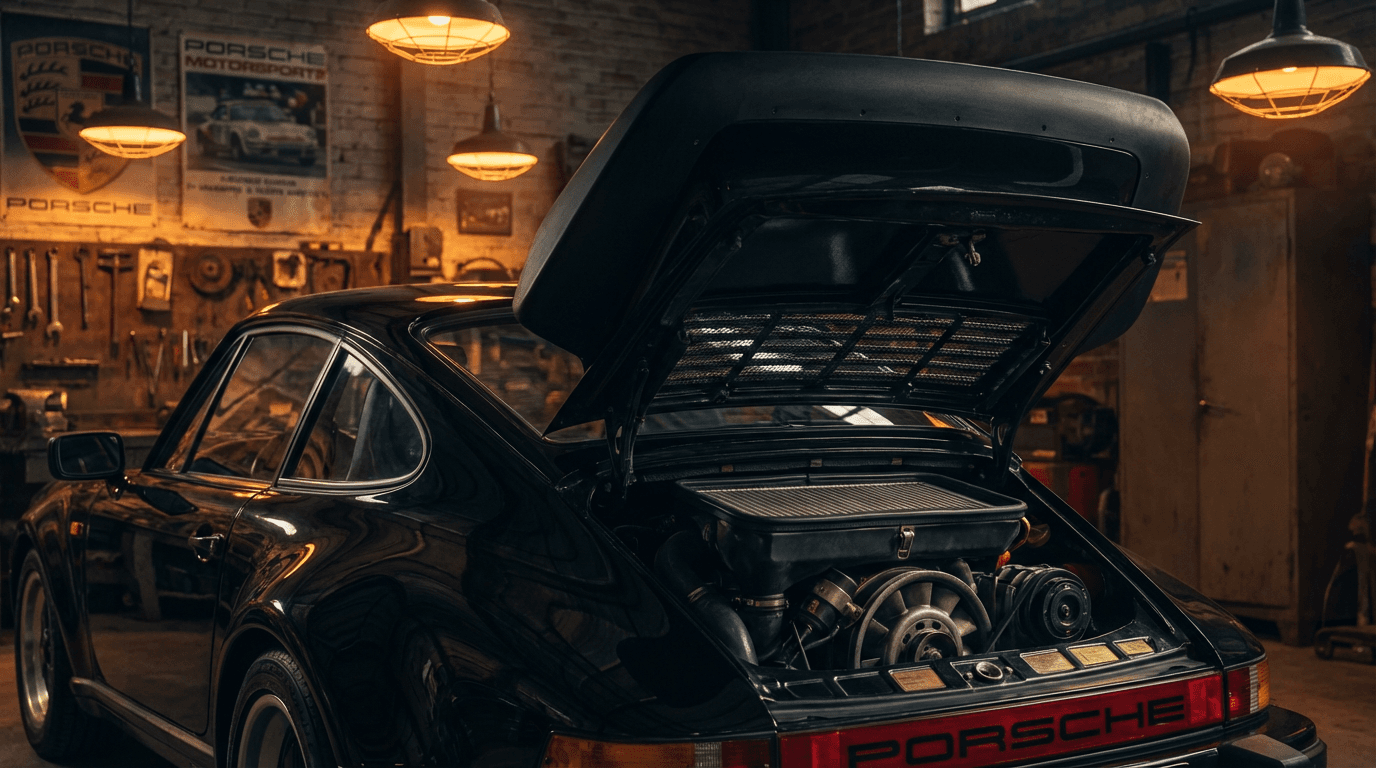
The air-cooled Porsches occupy their own universe within the automotive world. Everything that came after—the water-cooled 996, the hybrid 918, the electric Taycan—represents progress in measurable ways. Faster, more reliable, more refined. But the air-cooled cars hold something that progress cannot replicate: the direct mechanical connection between driver and machine that defined Porsche for its first five decades.
When you climb into a 964 or an early 911 or a 356, you're not operating a computer with wheels. You're communicating with physical systems through your hands and feet. The engine behind you breathes through intakes you can hear. The gearbox tells you exactly when you've matched revs properly. The steering reports road surface through your palms. This visceral experience is what keeps these cars valuable and desirable long after their objective performance has been surpassed by modern SUVs.
But this mechanical directness comes with responsibility. Air-cooled Porsches do not tolerate neglect the way modern cars do. They reward proper maintenance with decades of reliable enjoyment. They punish inattention with failures that can be expensive to address. Understanding what these cars need—and what can go wrong when they don't get it—is essential to owning one well.
The Evolution of Air Cooling
Porsche's air-cooled lineage spans five decades, from the 356 of 1948 through the 993 that ended production in 1998. Each era brought refinement while retaining the fundamental engineering approach: a rear-mounted flat engine cooled by forced air rather than water.
The 356 established the template. A four-cylinder boxer engine, cable-operated systems, drum brakes eventually giving way to discs. Pure mechanical simplicity. A competent technician with proper knowledge can address virtually any issue without diagnostic computers because there's nothing digital to diagnose.
The 911 that replaced it evolved dramatically over twenty-five years while keeping its essential character. Early cars ran 2.0-liter engines with carburetors or mechanical fuel injection—systems of legendary complexity that reward specialists and punish generalists. The impact-bumper generation of 1974 through 1989 brought Bosch CIS fuel injection, the first turbocharged models, and gradual refinement toward civility.
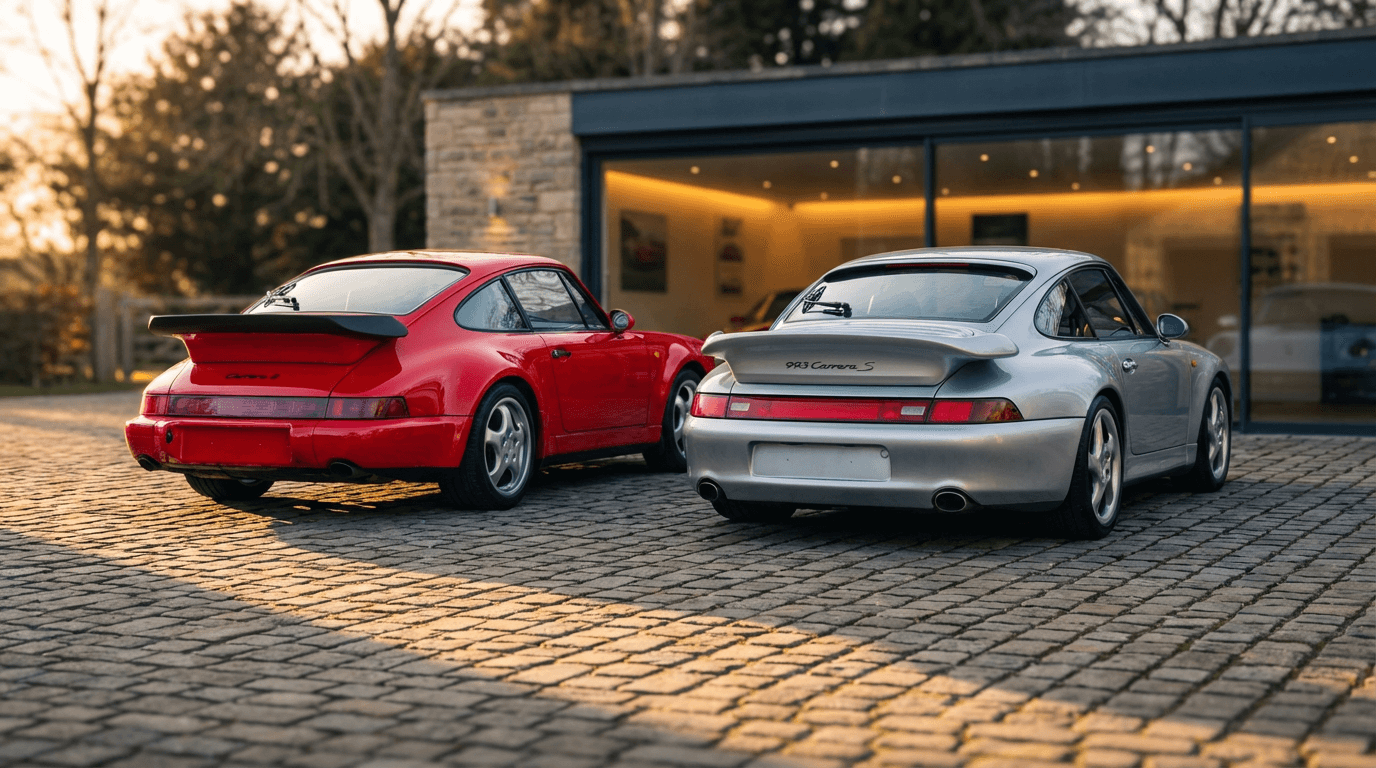
The 964 of 1989 represented the first major modernization: power steering, ABS, and increased electronic integration while retaining air cooling. The 993 that followed became the final statement, incorporating multilink rear suspension and the Varioram induction system while preserving the air-cooled essence. When the 996 arrived with water cooling, the air-cooled era ended—and the collector market began its gradual ascent toward current valuations.
What Makes Maintenance Different
The absence of a traditional cooling system doesn't mean air-cooled Porsches require less cooling system attention. It means the cooling happens differently, through systems that need their own specific care.
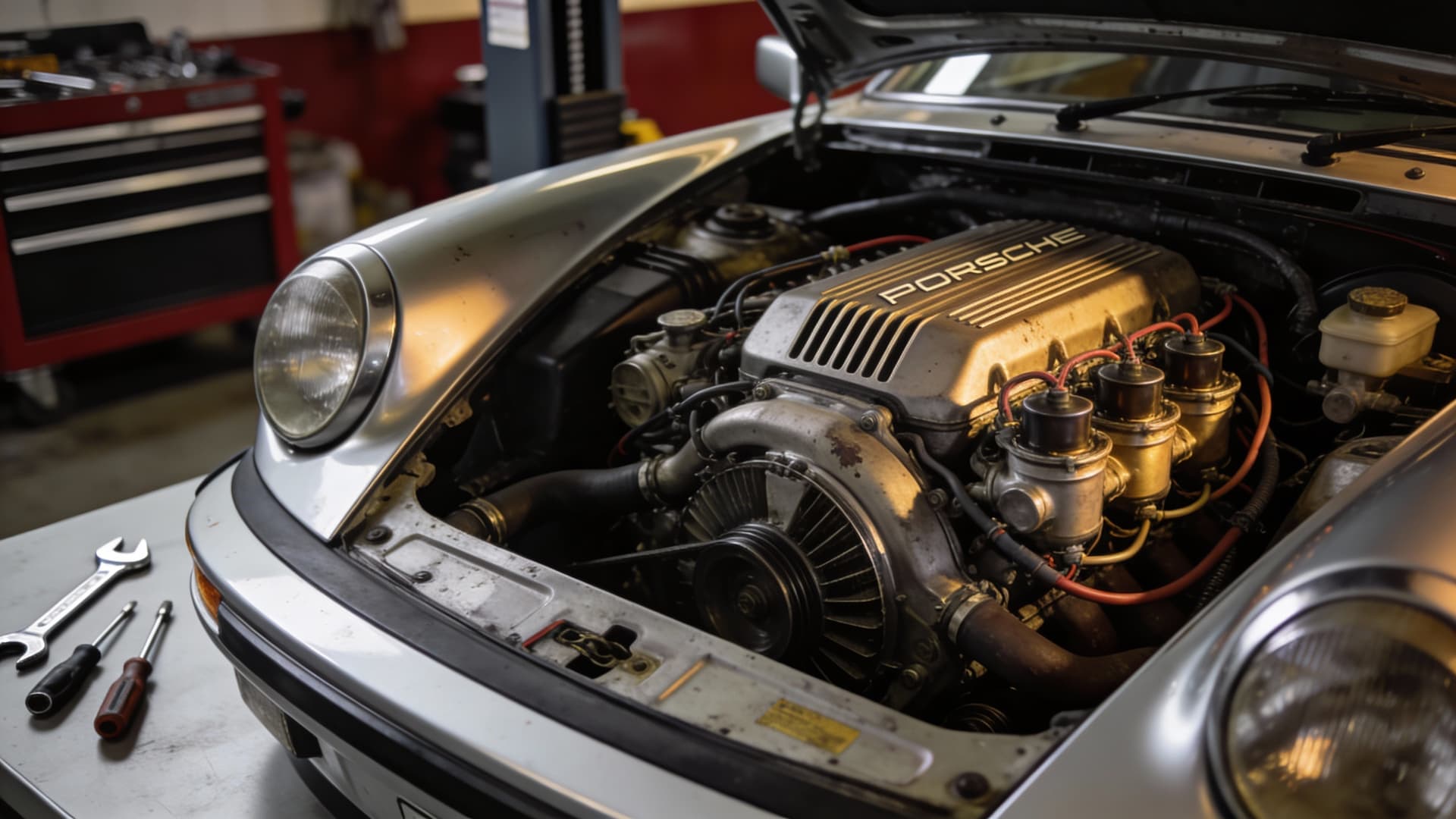
The engine-driven fan forces air across the cylinder heads and over the oil cooler. The sheet metal shrouding directs that airflow precisely where it needs to go. Worn belts, failing fan bearings, or damaged tin cause uneven cooling and hot spots that can lead to engine damage. I've seen engines with perfect service histories develop problems because someone removed a piece of shrouding during previous work and never reinstalled it.
Engine oil in an air-cooled Porsche carries more responsibility than in water-cooled cars. Beyond lubrication, oil absorbs significant heat from the combustion process and transfers it to external coolers. This dual duty means oil quality matters enormously, and change intervals should be more aggressive than modern cars require. Three to four thousand miles between changes suits most driving patterns—longer intervals ask the oil to carry heat loads it wasn't designed to sustain.
The choice of oil itself requires consideration. Full synthetic oils with aggressive detergent packages can mobilize deposits in older engines, creating problems they're supposed to prevent. Many specialists recommend semi-synthetic or conventional oils for engines without recent major work. Consult someone who knows your specific engine before defaulting to whatever the parts store recommends.
Valve Adjustment: The Forgotten Maintenance
Here's something that catches many air-cooled owners by surprise: these engines need periodic valve adjustment. Modern cars with hydraulic lifters self-adjust automatically. Air-cooled Porsches don't have that luxury.
Improper valve clearances affect idle quality, power delivery, and engine longevity. Too tight, and the valves can't seat fully against the head, leading to burned valves. Too loose, and the valvetrain makes excessive noise while wearing faster than necessary. Either way, the engine doesn't perform as it should.
Adjustment intervals vary by era. A 356 might need attention every three to six thousand miles. An early 911 every six to fifteen thousand depending on the specific engine. The 964 and 993 stretch intervals to around fifteen thousand miles. None of these numbers should be ignored indefinitely. I've worked on cars whose owners didn't know valve adjustment was even a thing—and the engines showed it.
Era-Specific Concerns
Each generation of air-cooled Porsche developed its own characteristic issues, patterns we've learned to anticipate through decades of working on these cars.
The 356 faces the challenges of age more than design flaw. Floor pan rust is endemic—these cars are old, and steel corrodes. Battery boxes, rocker panels, and anywhere moisture collects require careful inspection and often repair. Charging systems built to 1950s specifications fail with regularity. Transmission synchros wear, particularly in first and second gears. These aren't signs of poor engineering so much as accumulated decades of use on components designed for 1950s expectations.
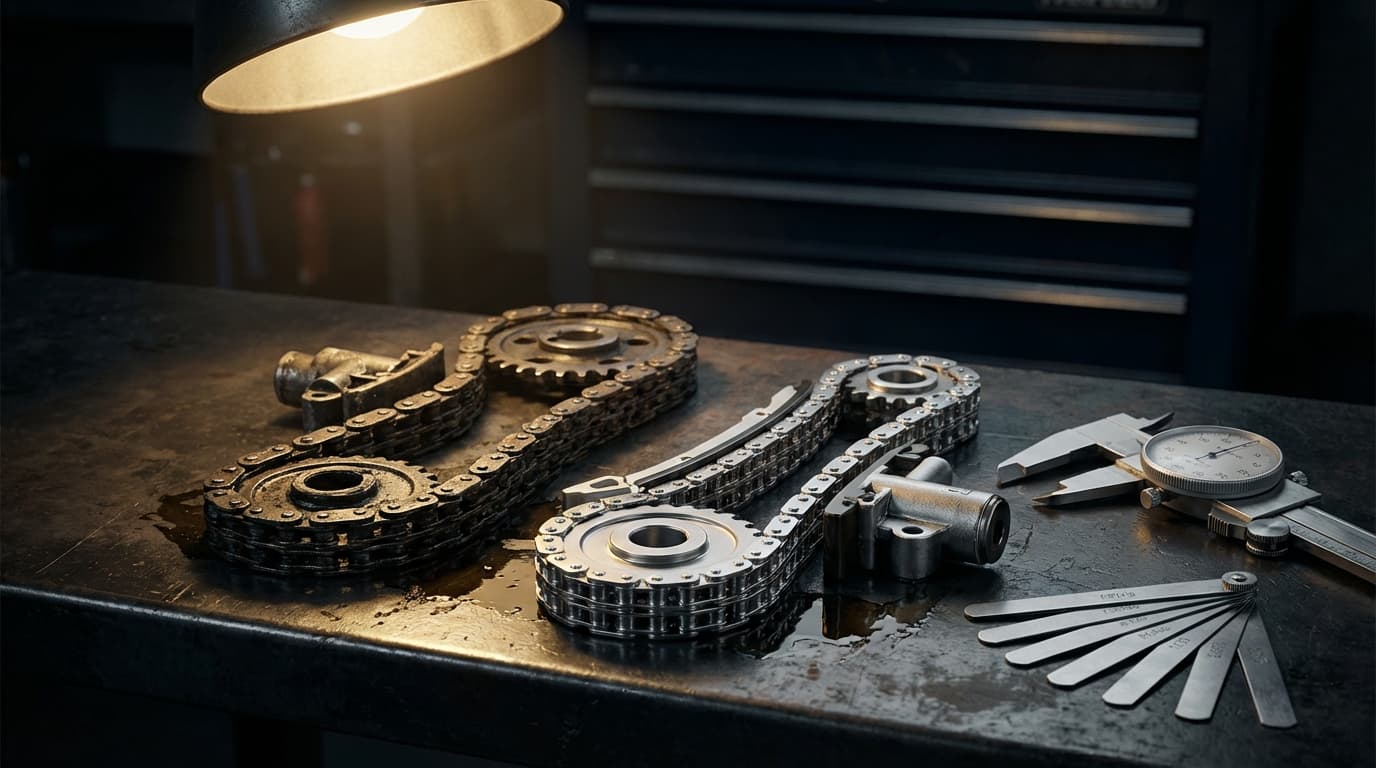
Early 911s from 1964 through 1973 have their own catalog of concerns. Timing chain tensioners in certain model years can fail catastrophically, allowing the chains to skip or break with consequences that require complete engine rebuilds. The mechanical fuel injection system—legendary for its complexity—demands specialist expertise and commands premium pricing when things go wrong. Exhaust heat exchangers that provide cabin warmth develop corrosion and leaks, creating safety concerns that require attention.
The impact-bumper generation brought CIS fuel injection, which trades mechanical complexity for its own set of finicky behaviors. Vacuum leaks cause running problems. Warm restart difficulties plague cars whose control pressure regulators have deteriorated. Fuel distributors eventually need rebuilding. Certain model years carry timing chain tensioner concerns similar to their predecessors. Battery boxes in the front trunk area develop corrosion from acid exposure.
The 964 introduced modern conveniences like power steering and ABS—and the maintenance requirements they bring. Dual-mass flywheels on early cars fail with regularity, requiring replacement with either OEM parts or aftermarket single-mass solutions. Rear main seals leak with predictable frequency. ABS pumps fail and cost serious money to address. Power steering systems develop the leaks that hydraulic systems inevitably develop.
The 993, for all its reputation as the best of the air-cooled 911s, carries its own known issues. Oil cooling pipes running through the cylinder banks can develop leaks, requiring engine-out repair if ignored. Varioram actuators on later cars develop problems. The dual-mass flywheel and clutch system develops the shudder that characterizes worn components.
Finding the Right Care
Air-cooled Porsches require different expertise than modern cars. A technician brilliant with 992s may have never touched an early 911's mechanical fuel injection. The diagnostic skills essential for current cars matter less when there's nothing digital to diagnose.
What matters is mechanical expertise, hands-on experience with specific eras, and access to parts networks that stock components for cars sometimes six decades old. These qualifications don't overlap perfectly with modern Porsche expertise—someone can excel at one without knowing the other.
Philosophy matters too. Some owners want strict preservation of original specifications, maintaining numbers-matching components even when superior alternatives exist. Others prefer thoughtful modifications that improve reliability and safety while maintaining the car's character—electronic ignition hidden inside stock distributors, improved brake components that fit within original appearances, concealed fire suppression for peace of mind.
Neither approach is wrong, but the shop you choose should share your philosophy. A preservation-focused specialist might not understand why you want to upgrade components. A performance-oriented shop might not appreciate why you're willing to accept period limitations for originality's sake.
The Rewards of Proper Care
Air-cooled Porsches that receive appropriate maintenance deliver decades of reliable enjoyment. I know cars with two hundred thousand miles that run beautifully because their owners stayed on top of the care these machines require. I've also seen low-mileage examples that sat neglected and need extensive work to become roadworthy again.
The value proposition has become undeniable as the collector market has matured. A well-maintained 993 commands premium pricing that exceeds many newer 911s. Early 911s with proper documentation have appreciated beyond what anyone predicted. Even everyday 964s have climbed into territory that rewards careful ownership.
But the real reward isn't financial. It's the experience of driving something that communicates directly with you, that requires your engagement, that offers feedback modern cars have engineered away in the pursuit of refinement. That experience deserves the maintenance that keeps it available.
Related Reading
- Porsche 964 vs 993: The Air-Cooled Buyer's Dilemma
- Porsche 930 Turbo Maintenance: Taming the Widowmaker
- Chain Tensioner Failure in Air-Cooled Porsches: Prevention & Repair
Own an air-cooled Porsche that deserves proper care? Contact Repasi Motorwerks in Stratford, Connecticut. Our technicians understand these cars from decades of hands-on experience—and we'd be happy to discuss what your specific car needs.