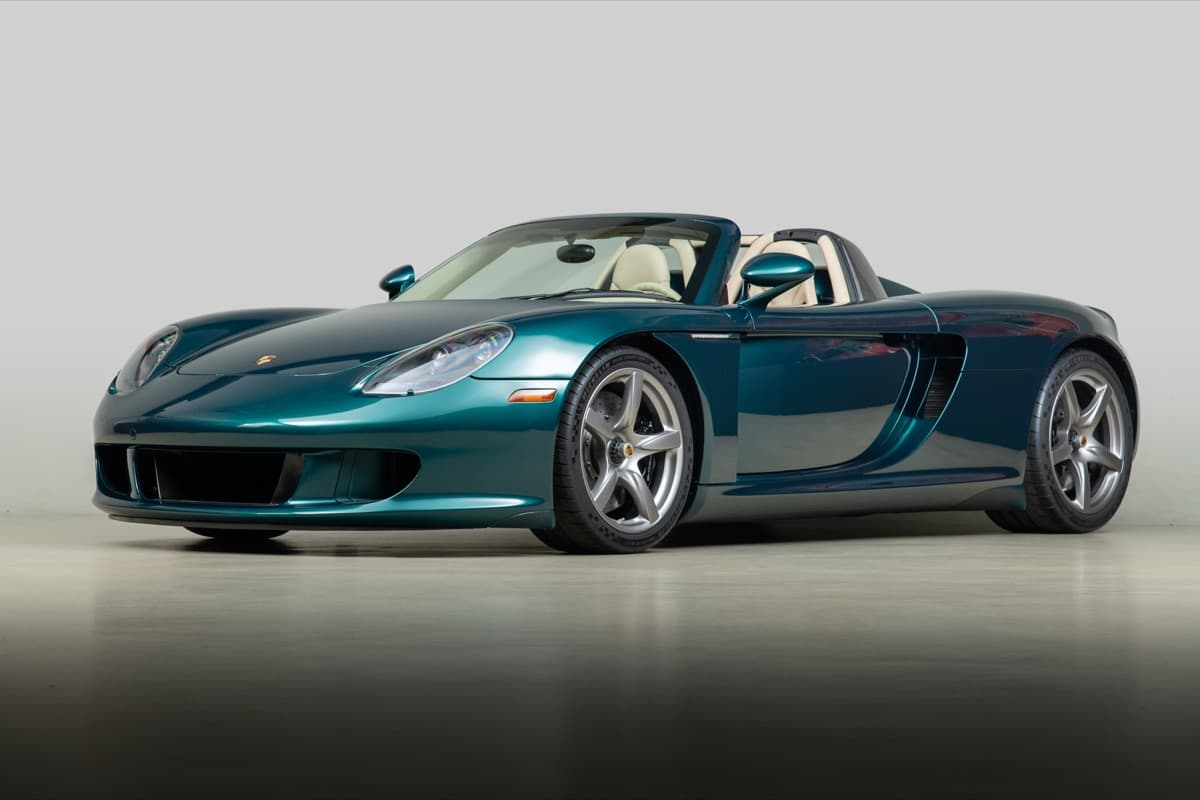
The phone calls all start the same way. Someone found a forum thread, or heard a story at a car show, or watched a YouTube video where a Carrera GT owner described their clutch replacement as a financial catastrophe. Now they're panicking. Is the clutch really a $25,000 time bomb? Should they just sell the car before it grenades?
We talk a lot of owners off this particular ledge. After performing more Carrera GT clutch replacements than we can count, we've developed a more nuanced view than the internet horror stories suggest. Yes, clutch replacement is expensive. No, it's not the unpredictable disaster many fear. Understanding what's actually involved—the costs, the process, and most importantly, the factors that determine how long your clutch will last—turns this from an anxiety-inducing mystery into a manageable aspect of ownership. For the full picture of CGT maintenance, see our Carrera GT resource center.
What Makes This Clutch Different
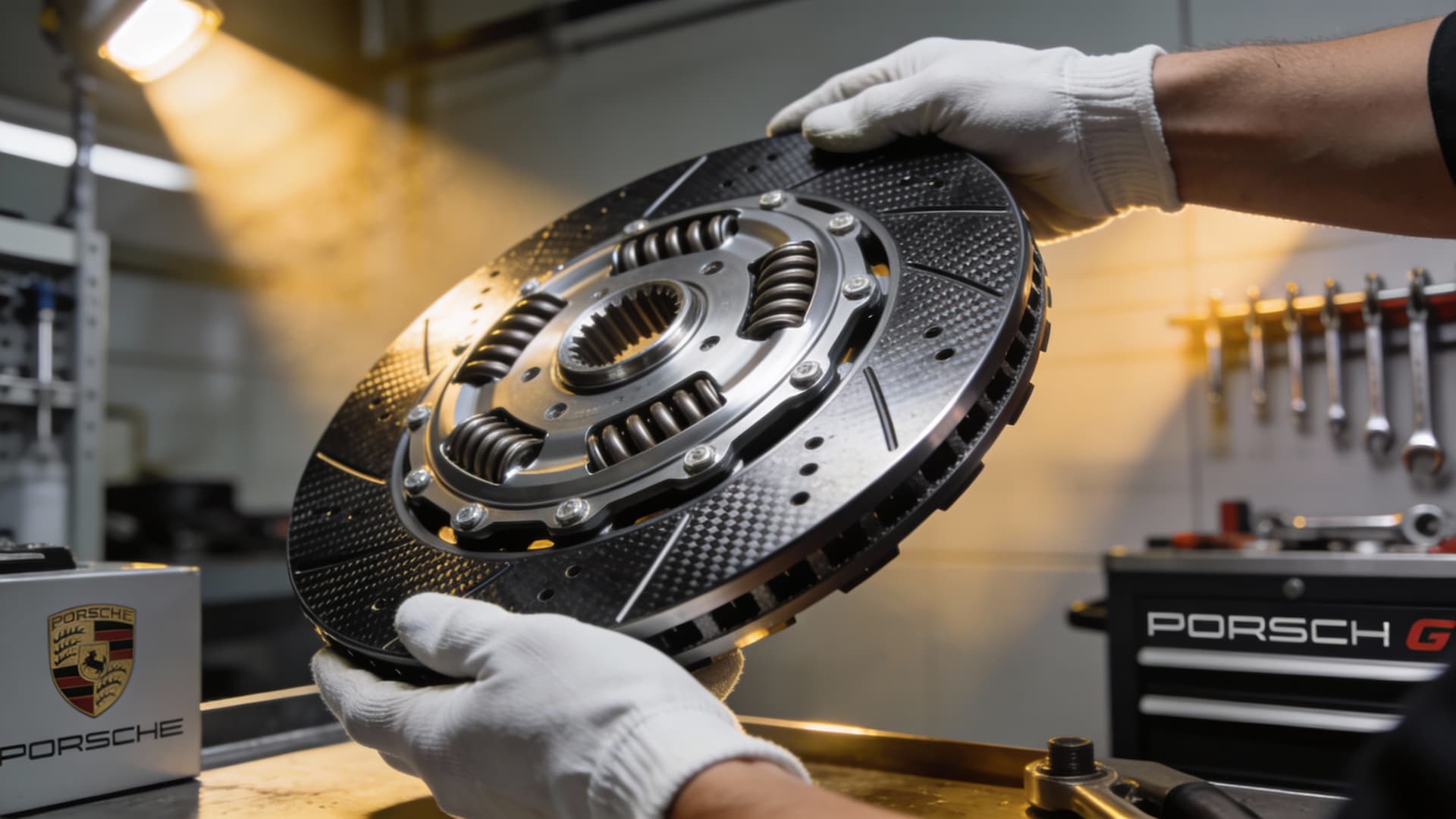
The Carrera GT's clutch wasn't designed for your morning commute. It was designed for racing, then adapted for street use with minimal compromise. The single-disc ceramic composite unit measures just 169mm in diameter—smaller than many econobox clutches—yet handles 605 horsepower from a V10 that revs to 8,400 RPM.
The carbon-carbon composite material and single-mass flywheel were chosen for minimal rotational inertia, allowing that engine to build revs with supernatural speed. The trade-off is an engagement character that feels nothing like a conventional car. There's no gradual friction zone to modulate. The clutch is essentially binary—it's either engaged or it's not. Drivers describe it as feeling like an on-off switch compared to the progressive engagement they're used to.
This design rewards decisive inputs. Professional racing drivers engage clutches quickly at high RPM because slipping wastes time and generates heat. The Carrera GT's clutch works the same way. Drivers who try to baby it—slipping at low RPM, treating it gently—actually accelerate wear. Those who learn to engage it crisply at 2,500 RPM or above find it serves them well for tens of thousands of miles.
The Real Cost Breakdown
When clients ask what clutch replacement costs, they want a single number. We understand the impulse, but the honest answer requires context. The range spans from roughly $12,500 on the low end to over $25,000 in complex cases. Understanding why helps you plan appropriately.
The clutch disc itself runs between $5,000 and $7,000—a single piece of carbon fiber the size of a dinner plate. The pressure plate adds another $2,500 to $4,000. A release bearing costs $800 to $1,200. Miscellaneous hardware runs $500 to $800. So far, that's roughly $9,000 to $13,000 in parts for a straightforward replacement where everything else checks out fine.
But the flywheel tells its own story. If the flywheel shows wear or heat damage, replacement adds $3,000 to $5,000 to the parts bill. If the slave cylinder needs attention—and it sometimes does—that's another $600 to $1,000. Parts alone typically total anywhere from $9,400 on a clean case to $19,000 when related components need replacement.
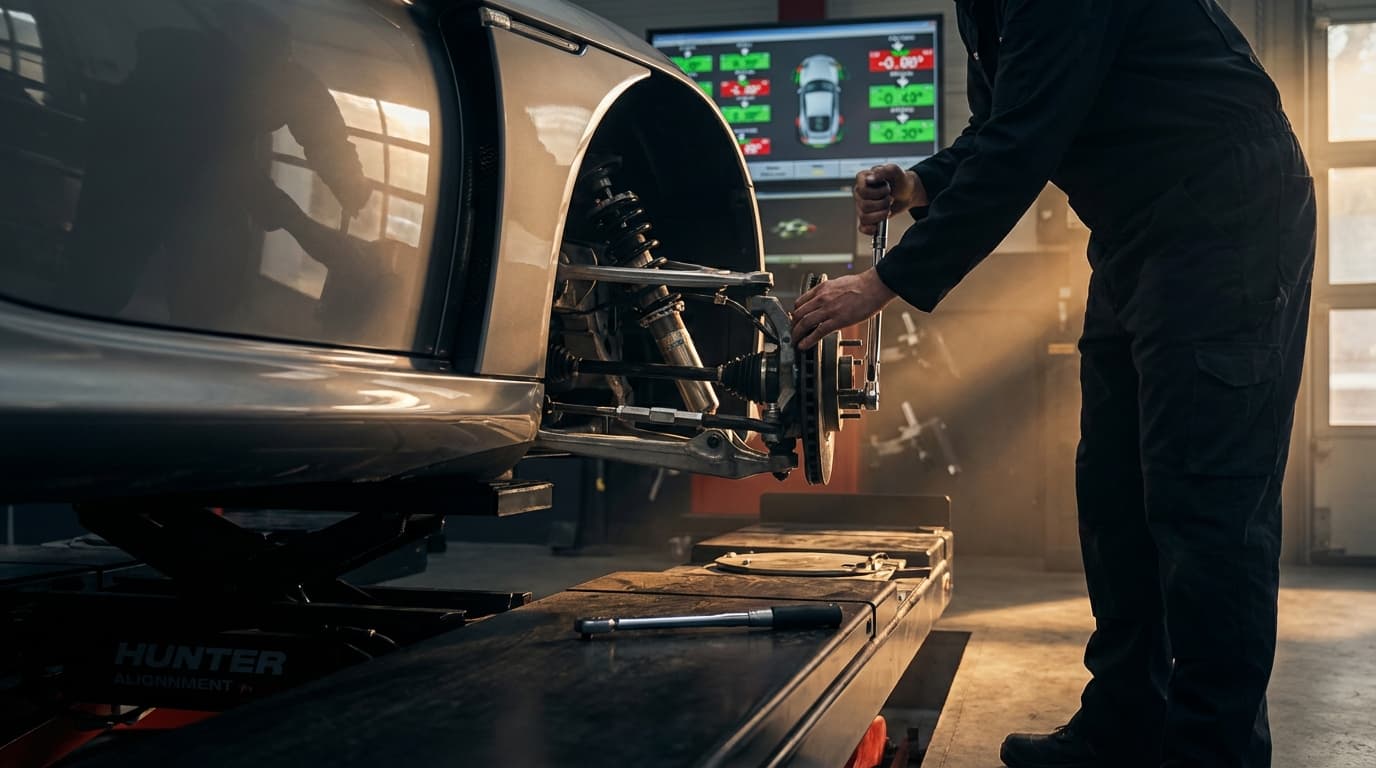
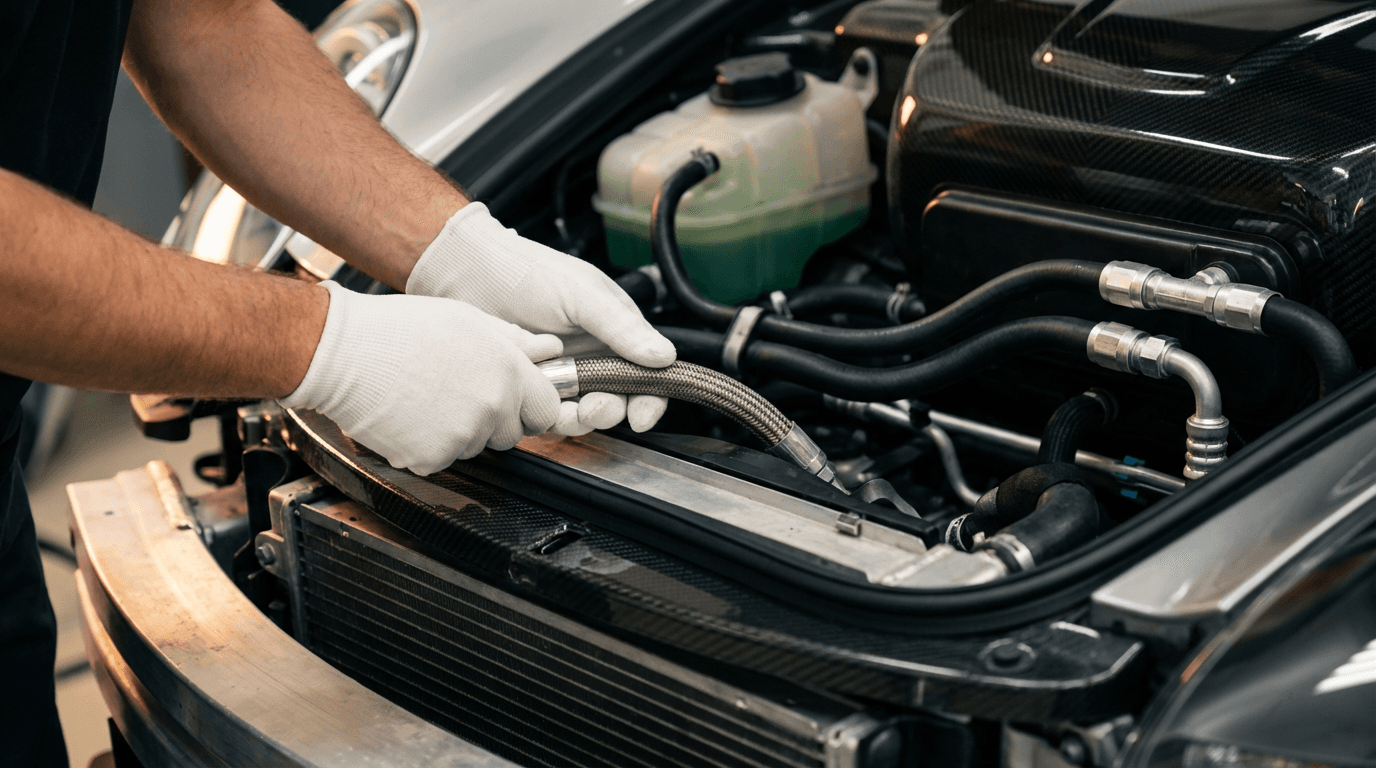
Labor is where this job's complexity becomes apparent. We're not just pulling an inspection cover and swapping a disc. The engine and transmission must come out as a unit—there's no shortcut. Fluids get drained, exhaust and intake removed, every connection disconnected, and then the entire powertrain drops from the car on a specialized fixture. After the clutch swap, everything goes back together, fluids get refilled, and extensive testing confirms proper operation.
This process takes 18 to 25 hours of skilled labor depending on what we find along the way. At specialist rates of $175 to $225 per hour, labor runs $3,150 to $5,625. Add parts and labor together, and a standard replacement where the flywheel can be reused lands between $12,500 and $17,000. Cases requiring flywheel replacement push into the $16,000 to $24,000 range. If we discover additional issues during disassembly—and with 20-year-old cars, we sometimes do—costs can exceed $25,000.
What Actually Determines Clutch Life
Here's what the forum threads usually get wrong: miles don't kill Carrera GT clutches. Driving style does. We've seen clutches fail at 2,000 miles under owners who never adapted their technique. We've also seen original clutches exceed 20,000 miles with plenty of life remaining because the owner understood how to drive the car.
Traffic is the enemy. Every stop-and-go intersection means another clutch engagement. A car that sees 5,000 miles of Manhattan traffic will wear its clutch faster than one with 15,000 highway miles. We actually tell owners in urban environments to consider alternative transportation for their daily errands if they want to preserve clutch life. Drive the Carrera GT for the experiences it provides, not for trips to the grocery store.
Technique matters enormously. The owners who do well are the ones who engage the clutch quickly and decisively at higher RPM—typically 2,500 to 3,500—rather than slipping it at low RPM trying to be gentle. It feels counterintuitive, but aggressive engagement actually generates less wear than timid slipping. The car was designed for drivers who commit to their inputs.
Track driving, interestingly, often wears the clutch less than city driving when done properly. Sustained high-performance driving uses the clutch less frequently than stop-and-go traffic. Launch control and repeated aggressive standing starts are different—those do generate significant wear. But a track day spent in the middle and upper rev range, with minimal launching, is easier on the clutch than a week of commuting.
Recognizing When It's Time
The clutch communicates its condition if you know how to listen. Early warning signs include the engagement point moving higher in the pedal travel, slight juddering during cold starts, reduced resistance in the pedal feel, and the engagement zone feeling longer than it used to. None of these symptoms demand immediate action, but they indicate the clutch is wearing and you should start planning.
More advanced wear announces itself more obviously. A burning smell after normal driving suggests the clutch is slipping under load. Actual slip during acceleration—where RPMs climb faster than vehicle speed—means replacement is becoming urgent. Difficulty finding the engagement point consistently, or vibration during engagement, both warrant prompt attention.
If you experience complete clutch slip, inability to hold torque under acceleration, metallic grinding sounds, or no engagement regardless of pedal position, the clutch has failed. At that point, the car needs flatbed transport to a shop rather than being driven.
We can measure clutch wear objectively using specialized tooling inserted through an inspection port. Readings above 7.0mm indicate significant life remaining. Between 5.0 and 7.0mm, we recommend monitoring and planning for eventual replacement. Below 5.0mm, replacement should happen soon. Under 3.0mm is immediate territory.
How We Handle the Job
Every clutch replacement at our shop follows the same methodical process refined over 15 years of Porsche GT work. We don't skip steps or take shortcuts, even when everything looks straightforward. The stakes are too high and the car too valuable for anything less than comprehensive attention.
We start with verification. Sometimes what presents as clutch issues actually stems from hydraulics, the slave cylinder, or other systems. Before committing to a major job, we confirm the clutch is actually the problem. We measure wear, check related systems, and discuss findings before any disassembly begins.
The actual replacement spans multiple days. Day one focuses on preparation and removal—draining fluids, removing exhaust and intake and accessories, disconnecting every connection, then supporting and lowering the engine and transmission assembly. Day two addresses the clutch itself—removing the old assembly, inspecting the flywheel, installing new components, and verifying all tolerances. Day three handles reassembly—reinstalling the powertrain, reconnecting all systems, refilling fluids, and beginning initial testing. Day four completes extended road testing to verify engagement character and overall operation before owner delivery.
We photograph every step, creating documentation that becomes part of the car's permanent record. Every torque specification follows factory standards. Every test procedure confirms proper operation. This systematic approach exists because we know what can go wrong, and we'd rather prevent problems than discover them later.
After the Replacement
A new clutch requires proper break-in to achieve full longevity. For the first 500 miles, we advise gentle engagement, no aggressive starts, and definitely no track use. The clutch needs time to bed in and reach its optimal operating characteristics.
Between 500 and 1,000 miles, gradually increase engagement speed toward normal operation. Regular driving becomes acceptable, but avoid extreme conditions. After 1,000 miles, the clutch is ready for full performance use, including track driving if that's your intention.
Long-term care follows the same principles that preserve any Carrera GT clutch. Maintain proper technique—quick, decisive engagement at appropriate RPM. Minimize unnecessary traffic exposure. Store the car properly between drives. Address any abnormalities promptly rather than hoping they'll resolve themselves.
Planning Rather Than Panicking
The Carrera GT clutch replacement isn't the unpredictable catastrophe that forum mythology suggests. It's a significant but manageable maintenance expense that proper technique can delay substantially. Owners who understand their cars and drive accordingly often go many years between clutch services. Those who struggle with technique or expose their cars to heavy traffic may see accelerated wear.
We measure clutch wear during every major service, tracking progression over time. This data lets owners plan ahead rather than being surprised. Some clients budget annually for eventual replacement. Others monitor their measurements and adjust driving patterns to extend clutch life. Both approaches work—the key is understanding where you stand.
If you're concerned about your Carrera GT's clutch, whether you're evaluating a purchase or monitoring a car you already own, we're happy to measure wear and discuss what the numbers mean for your situation. Knowledge beats anxiety every time.