Valve adjustment is the kind of maintenance that separates well-cared-for air-cooled Porsches from the ones heading toward expensive engine problems. It is not glamorous, it is not exciting, and it does not make the car faster. But skipping it will cost you far more than doing it on schedule.
On air-cooled Porsche engines with mechanical valve lifters — which includes every 911 through the 964 and the 930 Turbo — valve adjustment is a required service interval item. The 993 is the exception, and I will explain why below.
What Valve Lash Is
Valve lash (also called valve clearance) is the gap between the tip of the valve stem and the rocker arm that pushes it open. This gap exists because metals expand when they get hot, and an air-cooled engine gets very hot.
When the engine is cold, there needs to be a specific amount of clearance so that when everything expands at operating temperature, the valve can still close completely. Too much clearance and the valve opens late and closes early, reducing performance. Too little clearance and the valve cannot close fully when hot, which leads to burnt valves and lost compression.
On air-cooled Porsche engines, the intake and exhaust valves have different lash specifications because they operate at different temperatures. The exhaust valves run significantly hotter and require more clearance.
Typical specifications:
- Intake: 0.10mm (0.004 inches)
- Exhaust: 0.10mm (0.004 inches) — though this varies by model year and engine type
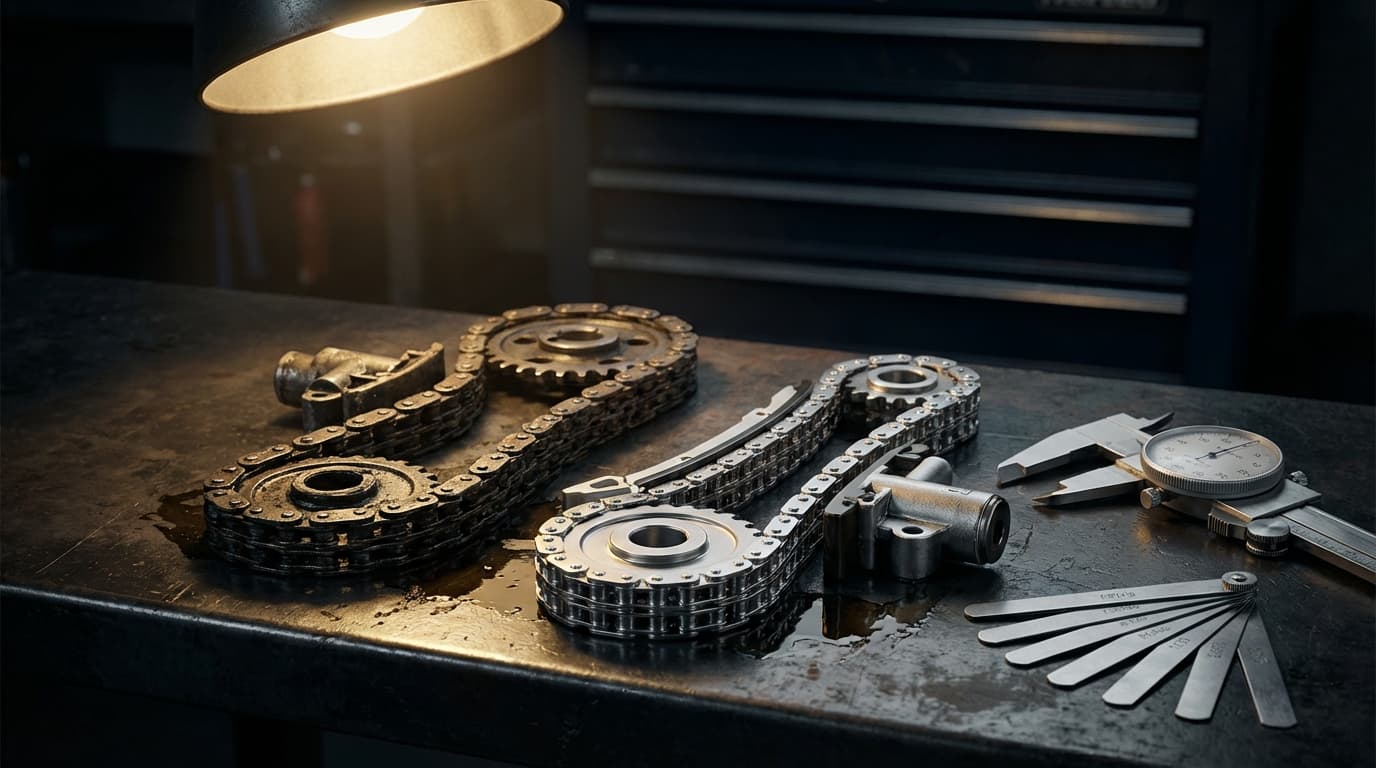
These numbers are checked and set with the engine cold, using precision feeler gauges. There is no margin for sloppiness here — we are talking about thousandths of an inch.
Why Air-Cooled Engines Need Manual Adjustment
Most modern engines use hydraulic valve lifters that automatically maintain correct valve lash. The lifters use engine oil pressure to take up any slack, self-adjusting as they wear.
Air-cooled Porsche engines from the 964 and earlier use mechanical (solid) lifters. These are simple, robust, and reliable, but they do not self-adjust. As the valve seats wear, the valves sit slightly deeper in the head, which increases the lash. As the rocker arm tips and valve stem tips wear, the clearances change further.
This is why periodic adjustment is necessary. The components are slowly and predictably wearing, and the clearances need to be brought back into specification.
The 993 Exception
The Porsche 993 engine was the first air-cooled 911 to use hydraulic valve lifters. This means 993 engines do not require manual valve adjustment under normal circumstances.
However, 993 hydraulic lifters can fail. Symptoms include:
- Ticking or clattering that does not go away after the engine warms up
- Ticking that worsens with engine speed
- Collapsed lifter (valve not opening fully)
Failed hydraulic lifters on a 993 need to be replaced, not adjusted. This is a more involved job than a simple valve adjustment because it requires cam tower disassembly.
If you own a 993 and hear persistent ticking, do not assume it is just the lifters need adjusting — they are hydraulic and self-adjusting. The noise means something else is going on.
How Often to Adjust
For 964 and earlier air-cooled engines (including the 930 Turbo):
Porsche recommended interval: Every 15,000 miles
My recommendation: Every 12,000 miles or every 2 years, whichever comes first
I recommend a slightly shorter interval than Porsche for two reasons:
- Most of these engines are 25-35 years old, and worn components go out of spec faster than new ones
- The valve adjustment appointment gives me an opportunity to inspect other items — condition of the valve train, gasket seepage, and general engine health
For engines that see track use, I recommend checking lash before and after every track weekend. Sustained high-RPM operation can accelerate wear patterns.
Symptoms of Incorrect Valve Lash
Excessive Clearance (Too Loose)
- Audible ticking: A rhythmic tapping sound, especially noticeable at idle. This is the rocker arm slapping against the valve stem across the excess gap.
- Reduced power: The valve is not opening as far or staying open as long as it should, which reduces cylinder filling and exhaust scavenging.
- Rough idle: Uneven valve events across six cylinders create an uneven idle.
Insufficient Clearance (Too Tight)
This is the more dangerous condition:
- Hard starting when hot: The valve cannot close completely when the engine is at operating temperature, causing compression loss.
- Power loss: A valve that does not seat fully leaks compression during the power stroke.
- Burnt valves: This is the worst case. A valve that cannot close fully is exposed to combustion gases on every cycle. The exhaust valve is particularly vulnerable — the seat contact is how it sheds heat, and a valve that does not seat fully overheats and burns. A burnt exhaust valve requires head removal and valve replacement — a $2,000-4,000 repair that was entirely preventable.
- Backfiring: Incomplete valve sealing can allow combustion to leak into the intake or exhaust, causing popping and backfiring.
What Happens When Valve Adjustment Is Neglected
I see engines that have gone 30,000, 50,000, even 80,000 miles without a valve adjustment. Here is the typical progression:
Early neglect (15,000-25,000 miles overdue): Valves are slightly out of spec. The engine runs a bit rough at idle, maybe a faint tick. No damage yet, but the clock is running.
Moderate neglect (25,000-50,000 miles overdue): Exhaust valves are running tight enough that seating is compromised at operating temperature. Hot restart problems develop. Power feels down but the owner attributes it to other causes.
Severe neglect (50,000+ miles overdue): One or more exhaust valves are burnt. Compression test shows significant variation between cylinders. The engine needs head work to replace the damaged valves, cut new seats, and restore sealing. What would have been a $500 adjustment is now a $3,000-5,000 repair.
This progression is entirely avoidable. A valve adjustment every 12,000 miles costs a fraction of a valve replacement.
What a Valve Adjustment Costs
At Repasi Motorwerks, a valve adjustment on an air-cooled Porsche runs $400-800 depending on the model and accessibility:
| Model | Typical Cost |
|---|---|
| 911 (pre-964) | $400-600 |
| 964 | $500-700 |
| 930 Turbo | $500-800 |
The cost reflects 2-3 hours of skilled labor. The engine must be cold (room temperature) for accurate measurement, so this is typically a drop-off appointment.
If valve cover gaskets are leaking, I recommend replacing them during the adjustment since the covers are already off. This adds $100-200 in parts.
What I Check During a Valve Adjustment
A valve adjustment at Repasi is more than just checking twelve clearances. While the valve covers are off, I inspect:
- Rocker arm condition: Worn rocker arm tips or shafts affect both clearance and valve actuation
- Valve stem tips: Mushroomed or pitted tips indicate excessive wear
- Cam lobes: Visual inspection for pitting or unusual wear patterns
- Rocker arm shafts: Checking for scoring or excessive play
- Oil flow: Verifying oil is reaching all lubrication points in the valve train
- Gasket surfaces: Checking head and cover mating surfaces for damage
- General engine condition: Looking for anything unusual while the engine is partially exposed
This inspection catches developing problems early. I have found cracked rocker arms, failing cam chain tensioners, and other issues during routine valve adjustments that would have become serious failures if left undiscovered.
The Adjustment Process
Here is how we perform a valve adjustment:
1. Cold Engine Verification
The engine must be at ambient temperature — ideally, it has sat overnight. Even a warm engine will give inaccurate readings because thermal expansion changes the clearances.
2. Valve Cover Removal
Both valve covers come off, exposing the rocker arms, valve springs, and cam lobes.
3. Cylinder-by-Cylinder Measurement
Each cylinder is brought to top dead center on the compression stroke (both valves closed). Then the intake and exhaust clearances are measured with precision feeler gauges.
4. Adjustment
If the clearance is out of specification, the lock nut on the adjusting screw is loosened, the screw is turned to achieve the correct clearance, and the lock nut is re-tightened — then the clearance is verified again, because tightening the lock nut can change the setting.
5. Double-Check
After all twelve valves are adjusted, I go back through and verify every one. The lock nut re-tightening step can sometimes shift the adjustment slightly, and I want every valve within specification.
6. Reassembly
New valve cover gaskets are installed (or the existing ones if they are in good condition), covers are reinstalled, and the engine is run to verify proper operation.
Common Questions
Can I adjust the valves myself?
Technically, yes — it is one of the more accessible DIY maintenance items on these engines. But it requires the correct feeler gauges, a good understanding of the firing order and TDC procedure, and a careful hand. If you are not confident in your ability to accurately read a feeler gauge to within 0.02mm, have a professional do it.
Does it matter who adjusts them?
It matters less than some other services, but experience helps. An experienced tech will notice wear patterns, developing problems, and other issues that someone just checking clearances might miss.
My engine ticks right after an adjustment — is that normal?
A slight tick that disappears as the engine warms up is normal — that is the cold lash you just set, closing up as the metals expand. A tick that persists at operating temperature means something needs re-examination.
For routine maintenance on your air-cooled Porsche, including valve adjustments, contact us to schedule an appointment. We will make sure your valve train is in specification and catch any developing issues before they become expensive problems.
See also our complete air-cooled Porsche service guide for a full overview of recommended maintenance intervals.