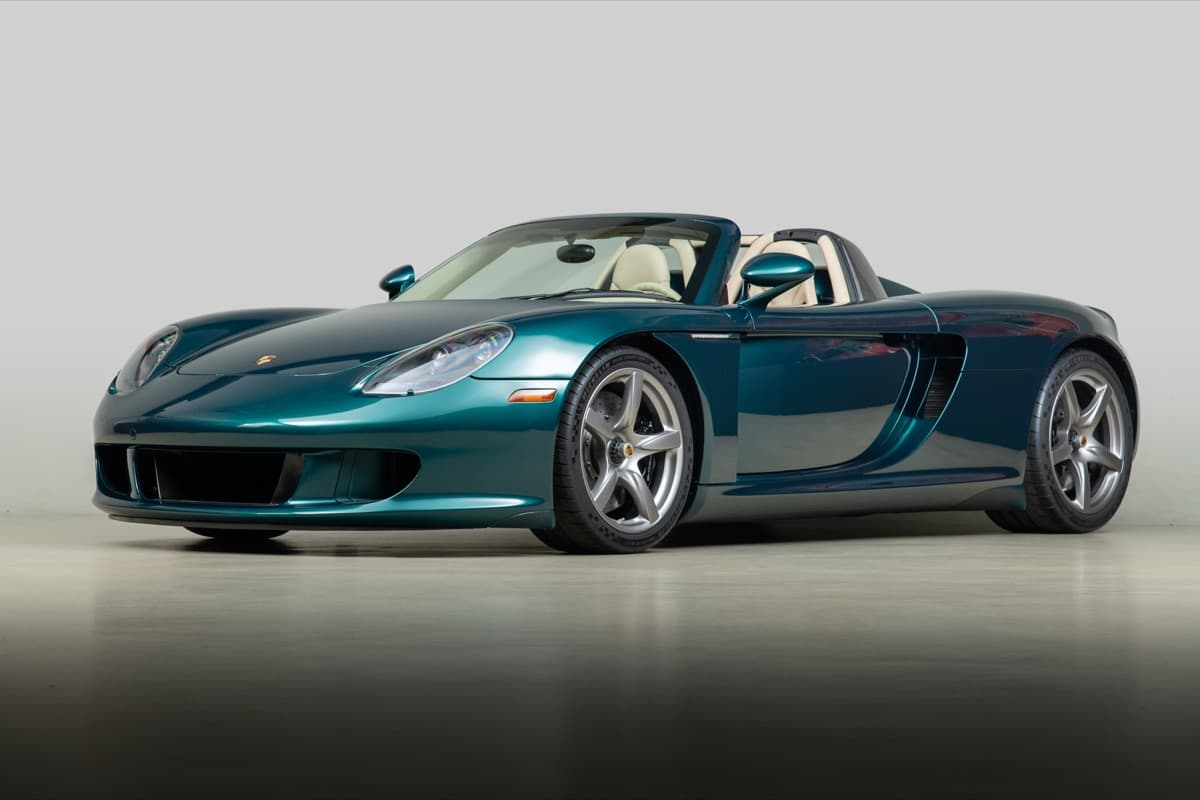
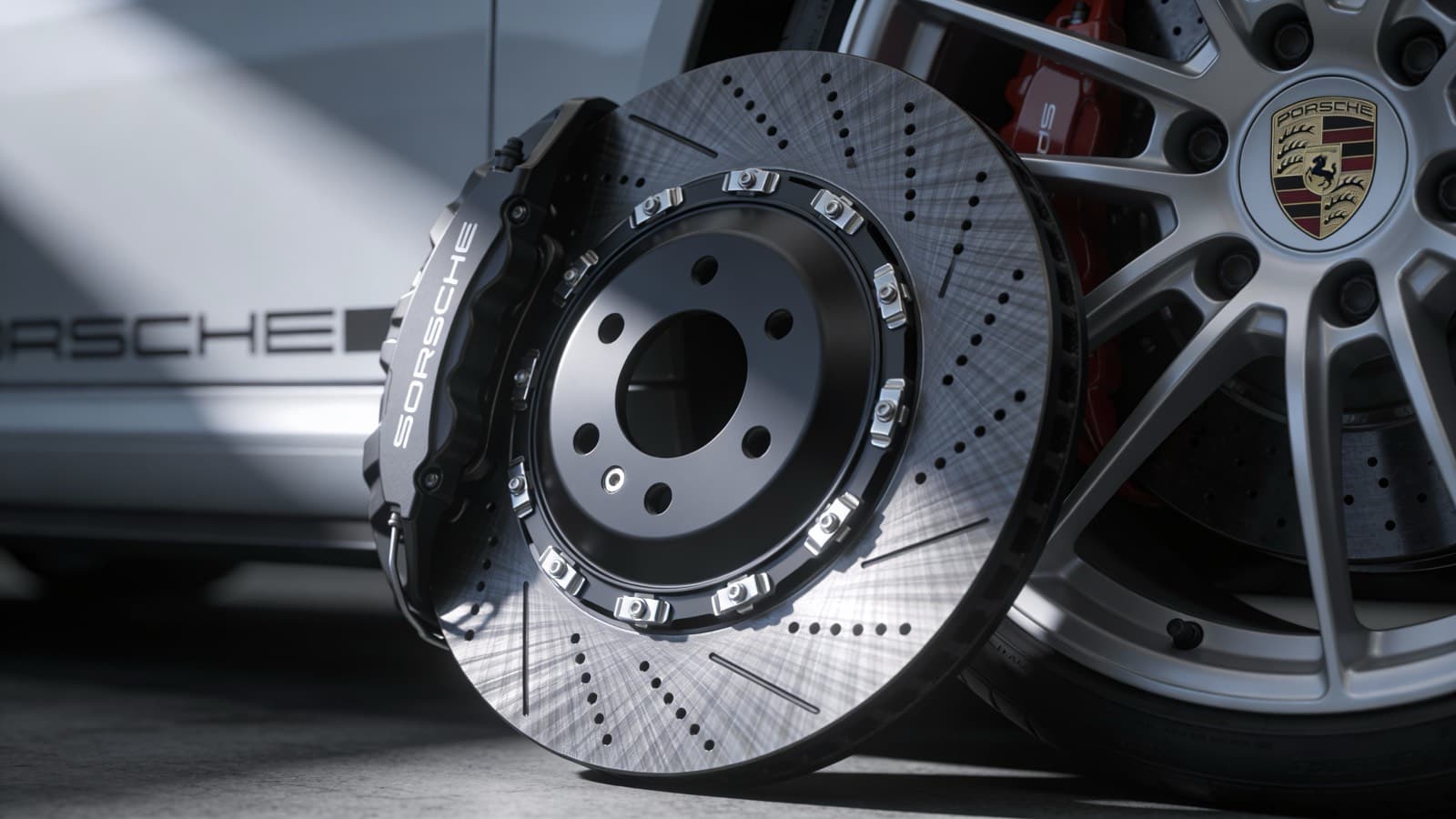
Every Carrera GT owner eventually faces the brake rotor question. The original Porsche Ceramic Composite Brakes represented cutting-edge technology in 2004, offering weight savings, fade resistance, and longevity that exceeded what steel brakes could deliver. But two decades later, those rotors have aged into a situation where replacement requires choosing between scarce factory parts and emerging alternatives that incorporate twenty years of materials science advancement.
After extensive research, real-world testing, and feedback from owners with various driving priorities, we've become advocates for Surface Transforms carbon ceramic rotors. Understanding why requires context about both what the original system offers and what newer technology achieves. For more on maintaining and upgrading the Carrera GT, visit our Carrera GT resource center.
The Original System's Strengths and Limitations
The factory PCCB on the Carrera GT was remarkable for its era. Carbon-ceramic construction reduced weight by roughly fifty percent compared to steel—fifteen pounds per corner at the front, twelve at the rear. This matters particularly because the weight sits at the corners, where unsprung mass affects handling most directly. Fade resistance under repeated hard use exceeded what steel brakes could sustain. Under normal driving conditions, the rotors lasted essentially indefinitely.
But carbon-ceramic technology of that period had limitations that subsequent development has addressed. Cold-weather performance required a warm-up period before full braking capability was available. Initial bite from a cold stop felt less immediate than drivers expected. The rotors, while long-lasting, were not immortal—they wear with miles, and they can develop stress cracks with age.
The supply situation has complicated replacement decisions. Factory rotors, when available, cost ten to fourteen thousand for a front pair and eight to twelve thousand for rears. Lead times are increasingly unpredictable, sometimes stretching to months. And the technology itself represents a manufacturing process that has been surpassed by subsequent development.
What Surface Transforms Brings
Surface Transforms is a British manufacturer that supplies carbon-ceramic brake systems to contemporary supercar manufacturers. Their technology represents the current state of the art, incorporating materials science advancement that didn't exist when the original PCCB was developed.
We first encountered Surface Transforms through industry connections. Initial skepticism—natural when considering departures from OEM specifications on cars worth millions—gave way to interest as we learned about their engineering approach and the OEM relationships that validate their capabilities.
The technical differences matter in practice. Their carbon-silicon carbide matrix provides more consistent friction characteristics across temperature ranges. The result: rotors that work immediately when cold while maintaining excellent performance when hot. This isn't marketing language—it's observable in daily driving.
We didn't simply accept manufacturer claims. Before recommending Surface Transforms to any client, we installed them on a customer car whose owner agreed to serve as a test case. The rotors had over eight thousand miles now, including two track day events, and we've maintained detailed records of owner impressions and any service requirements. Additional installations have followed, each providing data points that validate our initial conclusions.
What Owners Actually Experience
Cold brake performance improvement is the most immediately noticeable difference. With original PCCB, owners learn to moderate their first few stops after leaving the garage, understanding that full capability requires warm-up. With Surface Transforms, the brakes feel ready from the first application. One owner described it simply: with the original brakes, he was always aware of that first stop. Now he doesn't think about it.
Modulation—the ability to apply precise braking pressure—feels more linear across the temperature range. This contributes to driver confidence during spirited driving when brake temperature varies significantly throughout a session. The pedal tells you what you need to know without requiring mental calibration for temperature.
For track use, the Surface Transforms rotors have shown excellent fade resistance through full sessions. Performance remains consistent in ways that heavily used original PCCB sometimes cannot match. Brake dust with matched pads is minimal, comparable to or less than original PCCB. Noise is essentially non-existent during normal driving.
Installation Considerations
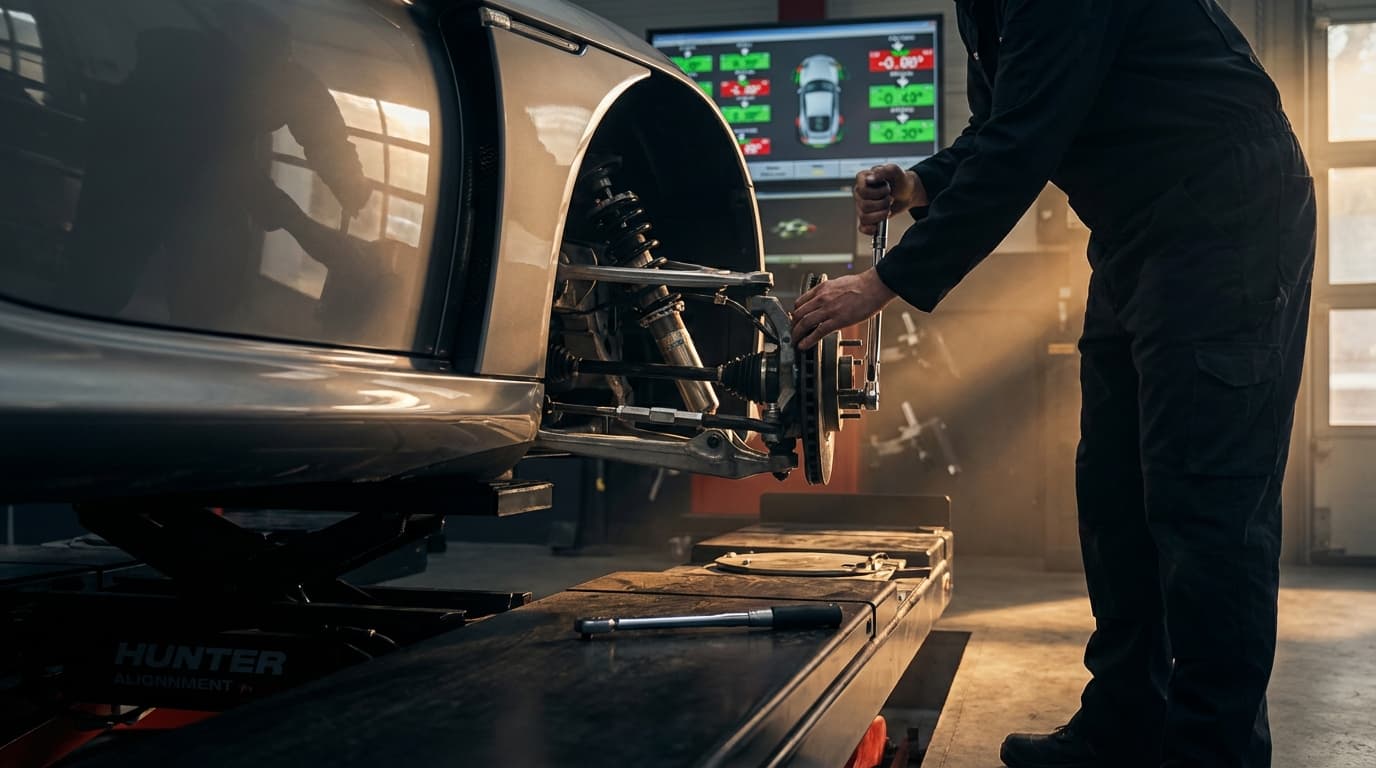
Converting to Surface Transforms isn't a simple rotor swap, though the parts are direct dimensional replacements. Proper installation requires attention to details that affect long-term performance.
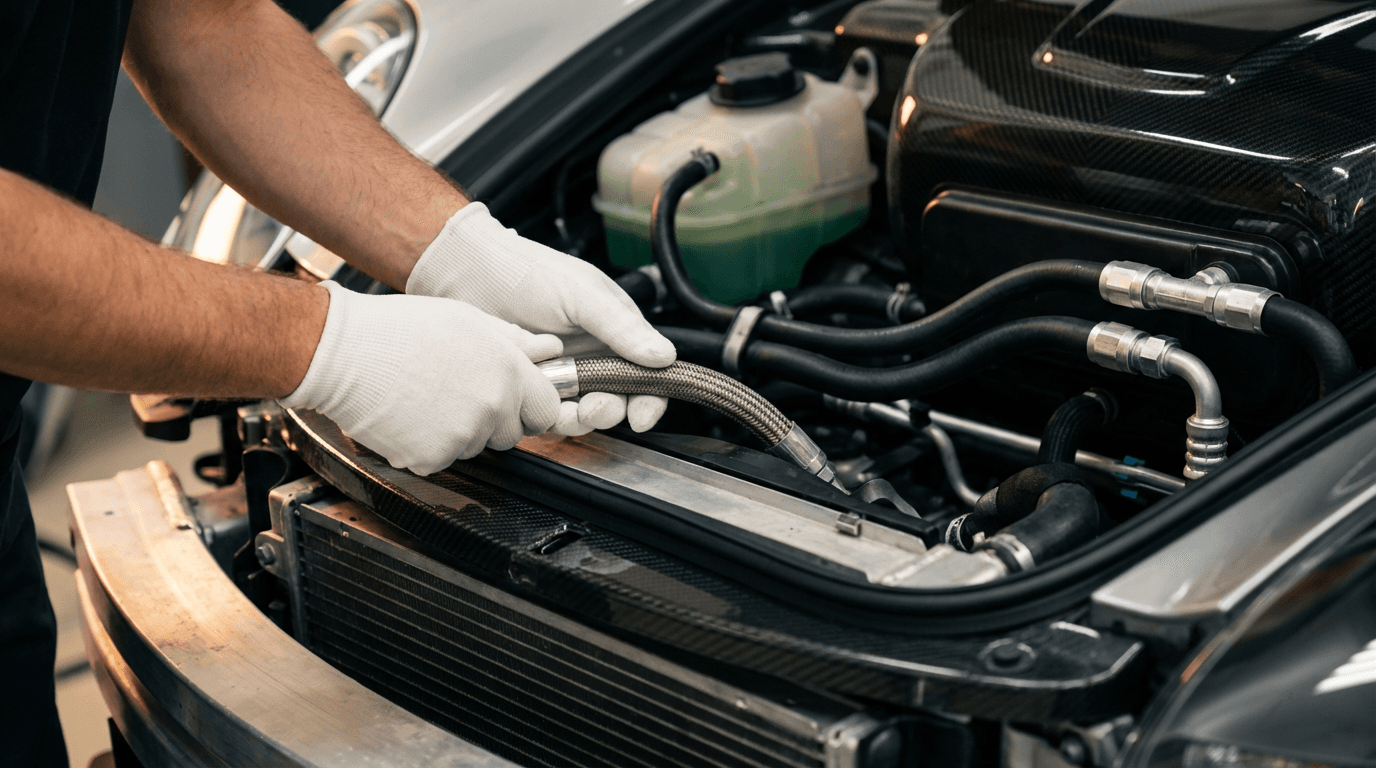
We inspect calipers thoroughly before installing new rotors—piston seal condition, slide pin function, bleeder valves, caliper bodies for cracks or damage. Installing expensive new rotors on marginal calipers would be false economy. The brake system gets flushed with fresh DOT 4 racing-spec fluid. And the bedding procedure—a series of progressively harder stops that deposits a friction layer essential for proper performance—follows Surface Transforms' specified protocol exactly.
Complete installation, including inspection, fluid service, and proper bedding, typically takes a full shop day. We provide detailed documentation of what was installed, when, and at what mileage. This record protects value by demonstrating proper maintenance with quality components.
The Economics
The cost comparison favors Surface Transforms while delivering improved performance. A complete conversion—front and rear rotors, matched pads, fluid, and installation—runs roughly fifteen to twenty thousand dollars depending on current pricing and specific requirements.
Factory PCCB replacement for all four rotors, with pads and installation, reaches twenty to thirty thousand dollars when parts are available. The savings from Surface Transforms typically cover most or all of the installation cost, making it essentially equivalent or less expensive than factory replacement while providing improved capability.
For cars that will be driven and enjoyed rather than preserved for concours judging, this makes the decision relatively straightforward from both financial and performance perspectives.
Alternatives We've Considered
Steel rotor conversion eliminates carbon-ceramic complexity entirely and reduces replacement costs significantly. But the trade-offs are meaningful. Adding twenty-five to forty pounds of unsprung weight per corner changes vehicle dynamics noticeably. Brake pedal feel changes. The original driving character shifts in ways that affect what made the car special. For cars treated as collectibles, this modification may affect value.
We generally advise against steel conversion for Carrera GTs that will be maintained as collectible examples. For cars that will be heavily tracked and treated primarily as sports cars rather than investments, the conversation differs—but that describes very few Carrera GT owners.
Other carbon ceramic suppliers exist, and we've evaluated alternatives with mixed results. Quality varies significantly. Some products showed fitment issues or lacked proper engineering documentation. Surface Transforms' OEM relationships and engineering depth—the same capabilities that have them supplying current production supercars—provide confidence in their product that alternatives haven't matched.
Our Recommendation
For Carrera GT owners facing brake rotor replacement, we recommend Surface Transforms for most applications. The combination of improved performance, reasonable cost, reliable availability, and proper engineering makes it our preferred option.
The exception would be concours-level cars where absolute originality is paramount. For those vehicles, sourcing OEM replacements—despite the cost and difficulty—may be appropriate to maintain factory-correct presentation.
For cars that are driven and enjoyed, Surface Transforms represents a logical evolution that respects the car's character while improving on technology that has been surpassed by twenty years of development.
Facing brake rotor decisions on your Carrera GT? Contact Repasi Motorwerks in Stratford, Connecticut. We'll evaluate your current system and discuss which approach makes sense for your car and your priorities.